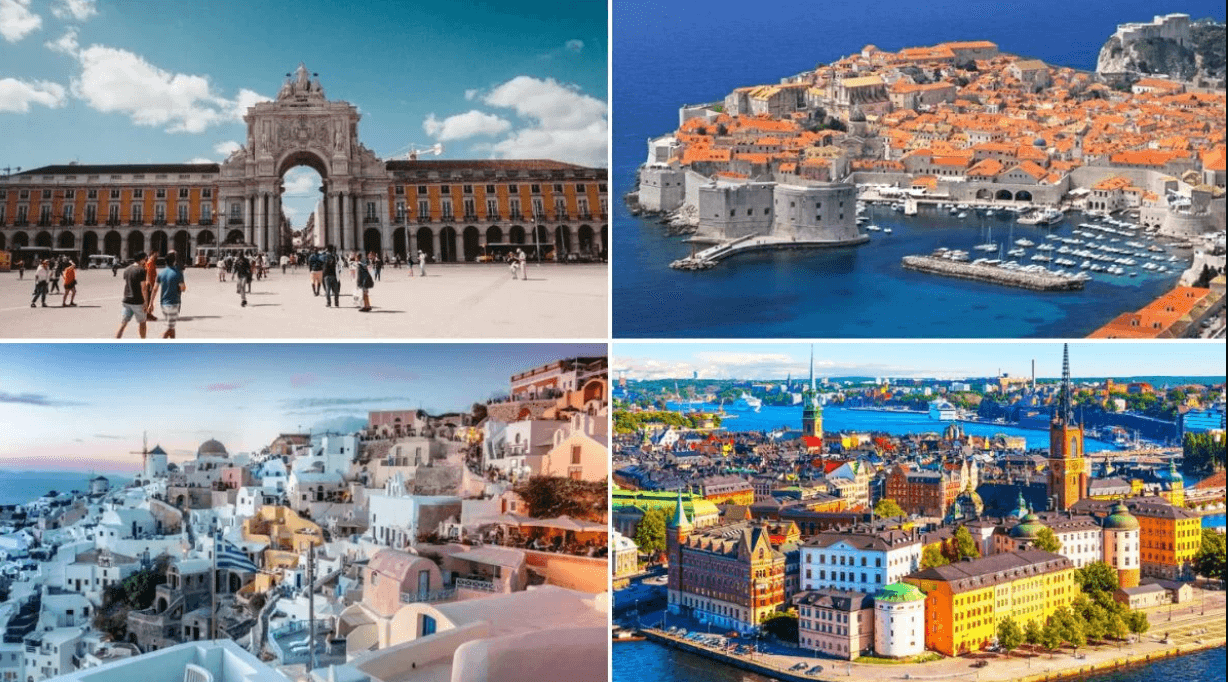
10 Hidden European Destinations to Escape the Crowds This Summer
Editorial Perspective: Curated by GoAway.pt's travel team based on direct destination research. Every destination has been vetted for accessibility, cultural value, and authenticity.
Summer in Europe conjures images of packed terraces in Paris, endless queues at the Colosseum, and overpriced sunbeds on overcrowded beaches. But Europe's real magic often lies away from the tourist trail — in cobblestone towns where locals still outnumber visitors, in landscapes that haven't yet been filtered a million times on social media.
If you're planning a European summer and want authentic experiences without the crowds, these ten hidden gems should be at the top of your list.
Quick Answer: The best hidden European destinations for summer include Gjirokastër (Albania), Lucca (Italy), Sintra (Portugal), Terschelling (Netherlands), Ohrid (North Macedonia), Kotor (Montenegro), Valletta (Malta), Sibiu (Romania), Piran (Slovenia), and Ronda (Spain) — all offering rich history, authentic culture, and far fewer tourists than the usual hotspots.
1. Gjirokastër, Albania — The City of Stone
Nestled in the foothills of the Albanian Alps, Gjirokastër is a UNESCO World Heritage Site characterised by its Ottoman-era architecture and steep cobblestone streets. The imposing Gjirokastër Castle affords breathtaking views over the surrounding mountains and Drino valley below. The local cuisine — slow-cooked lamb, fresh dairy, and regional cheeses — reflects centuries of pastoral tradition.
Best time to visit: May–September. Nearest airport: Tirana (TIA), approx. 2.5 hours by road.
2. Lucca, Italy — Tuscany's Best-Kept Secret
Often overshadowed by Florence and Pisa, Lucca offers a genuinely serene retreat in the heart of Tuscany. Enclosed by some of the best-preserved Renaissance city walls in Europe, Lucca invites visitors to cycle along the ramparts, browse independent boutiques, and linger over espresso at outdoor cafés. Unlike its more touristy Tuscan neighbours, Lucca retains its authentic daily rhythm.
Best time to visit: April–June, September–October. Nearest airport: Pisa (PSA), 20 minutes by train.
🏨 The Florence Hills Resort & SPA
3. Sintra, Portugal — Palaces in the Mountains
While Lisbon and Porto attract most of Portugal's visitors, Sintra is often only experienced as a day trip — which means overnight guests have the palaces largely to themselves. A UNESCO World Heritage Site, Sintra is famous for the fairy-tale Pena Palace and the mysterious Quinta da Regaleira. The cool microclimate makes it a refreshing escape even in peak summer.
→ See our Lisbon guide
🏨 Lisbon Suite Home 🏨 Lisbon Angels Hostel
4. Terschelling, Netherlands — Island of Dunes and Silence
Tucked away in the Wadden Sea — a UNESCO World Heritage natural area — Terschelling is a tranquil island with broad sandy beaches, pine forests, and the annual Oerol Festival, a world-class performing arts event held each June in natural outdoor settings across the island.
Getting there: Ferry from Harlingen, approximately 2 hours.
5. Ohrid, North Macedonia — The Jerusalem of the Balkans
Often called the "Jerusalem of the Balkans," Ohrid sits on the shore of one of Europe's oldest and deepest lakes — a UNESCO dual World Heritage Site recognised for both its natural and cultural significance. The old town holds more than 365 churches, ancient amphitheatres, and Byzantine fortifications. Boat trips to the monastery of St. Naum and fresh-water trout at local restaurants make Ohrid uniquely complete.
Nearest airport: Ohrid Airport (OHD), 10 km from the city centre.
6. Kotor, Montenegro — The Adriatic's Hidden Jewel
While neighbouring Dubrovnik draws enormous crowds, Kotor offers an equally stunning experience in a more measured setting. Surrounded by dramatic limestone mountains plunging directly into Boka Kotorska bay, Kotor's walled old town is a labyrinth of Venetian-influenced squares and medieval churches. The hike to the fortress of St. John (1,350 steps) rewards with one of the most dramatic views in the Mediterranean.
Best time to visit: May–June, September. Nearest airport: Tivat (TIV), 7 km away.
→ Kotor also features in our 2026 emerging destinations guide
7. Valletta, Malta — A Capital City on a Human Scale
The capital of Malta packs baroque palaces, the world-class St. John's Co-Cathedral (home to Caravaggio's largest surviving painting), and vibrant food markets into a city walkable end-to-end in 20 minutes. A UNESCO World Heritage Site, Valletta's Upper Barrakka Gardens offer unforgettable sunset views across the Grand Harbour.
Best time to visit: March–May, October–November. Airport: Malta International Airport (MLA), 6 km away.
8. Sibiu, Romania — Transylvania's Cultural Capital
Once the capital of Transylvania, Sibiu is a European Capital of Culture (2007) whose baroque old town remains refreshingly off the mass-tourism radar. The colourful Piata Mare square, the covered "Bridge of Lies," and the city's rich Saxon heritage make for a uniquely atmospheric city break. The Sibiu International Theatre Festival — one of the largest performing arts events in Europe — takes place each June.
Nearest airport: Sibiu International Airport (SBZ), 5 km from the centre.
9. Piran, Slovenia — Venetian Charm on the Adriatic
This compact coastal town looks and feels like a fragment of Venice transported to the Balkans. With terracotta rooftops, Venetian Gothic architecture, and narrow lanes leading to sea-view terraces, Piran rewards slow exploration. The local seafood and the nearby Sečovlje salt pans make it an ideal base for exploring the Slovenian coast and Istrian peninsula.
→ See our underrated European beach towns guide
10. Ronda, Spain — Andalusia Above the Clouds
Perched atop a dramatic gorge in the mountains of Andalusia, Ronda's Puente Nuevo bridge spans the 100-metre El Tajo gorge and has become one of Spain's most iconic images — yet the town receives only a fraction of the tourists that flock to Seville or Granada. Beyond the bridge: whitewashed streets, Spain's oldest bullfighting ring (La Maestranza, 1785), excellent tapas bars, and sweeping countryside views.
Best time to visit: March–May, September–November. Nearest airport: Málaga (AGP), 100 km.
Planning Your Trip
Each of these destinations offers something the major tourist cities simply cannot: space to breathe, genuine local interaction, and the sense of discovery that makes travel meaningful. Book early for July–August even in lesser-known spots, and consider shoulder seasons (May–June, September) for the best combination of weather and thin crowds.
Planning further ahead? Explore our emerging destinations guide for 2026 or discover unique travel experiences you didn't know existed.