Adelaide, Australia Travel Guide 2026: A New Direct Flight, Wine Country, and Wild Kangaroo Island
For seventy years, there was no way to fly nonstop between South Australia and the United States. That changed on December 11, 2025, when United Airlines launched the first-ever direct service between San Francisco and Adelaide, flying a Boeing 787-9 Dreamliner three times a week. It is a small scheduling detail with a big consequence: Adelaide, long overshadowed by Sydney and Melbourne on American itineraries, is suddenly one connection away from the West Coast instead of two or three. This Adelaide, Australia travel guide covers exactly what that new access is worth to you: the wine country on the city's doorstep, the wildlife-packed Kangaroo Island a short ferry ride away, and the practical details of visas, weather, and getting around, all checked against airline announcements, government tourism sources, and South Australian visitor authorities so you can plan with confidence rather than guesswork.
Why Adelaide Just Became Every US Traveler's Newest Direct-Flight Destination
United's new SFO–ADL route is genuinely a first: South Australia's state government confirmed it as the region's first-ever nonstop flight to the United States, and the airline's fourth Australian destination overall alongside Sydney, Melbourne, and Brisbane. The Dreamliner service departs San Francisco Monday, Thursday, and Saturday nights and lands in Adelaide roughly 15 hours later, with Polaris business class, premium economy, and standard economy cabins on board. From San Francisco, United also connects onward to more than 75 US cities, so travelers from the East Coast or Midwest can now reach Adelaide with a single, familiar layover instead of routing through Los Angeles or Sydney.
The route launched as a seasonal service for the 2025–26 southern summer, so it's worth double-checking current schedules before booking, since seasonal long-haul routes are sometimes adjusted year to year. Still, the symbolic and practical shift is real: Australia bookings from US travelers were already climbing sharply through 2026 according to travel-industry trend coverage, and a dedicated nonstop link gives Adelaide a genuine argument for a standalone trip rather than a rushed add-on to a Sydney–Melbourne loop.
Best Time to Visit Adelaide and South Australia
Adelaide has a Mediterranean-style climate, which means the shoulder seasons are the sweet spot. March through May (autumn) and September through November (spring) bring mild, mostly dry days in the high teens to low 20s Celsius (60s–70s Fahrenheit), ideal for walking the city, touring wineries, or spending a full day outdoors on Kangaroo Island without summer heat or winter chill working against you.
Summer (December–February) is warm to hot and reliably sunny, with daytime highs often reaching the high 20s Celsius, and it's when Adelaide's festival calendar is busiest — this is peak season for both crowds and accommodation prices. Winter (June–August) is the coolest and wettest stretch, with daytime temperatures dropping into the teens; it's a quieter, cheaper time to visit but less pleasant for the outdoor-heavy itinerary this region rewards. Given United's flight currently operates through the December–March window, travelers flying the new nonstop route will land in Adelaide during its warmest, liveliest months.
Adelaide City: Markets, Parklands, and a Walkable Downtown
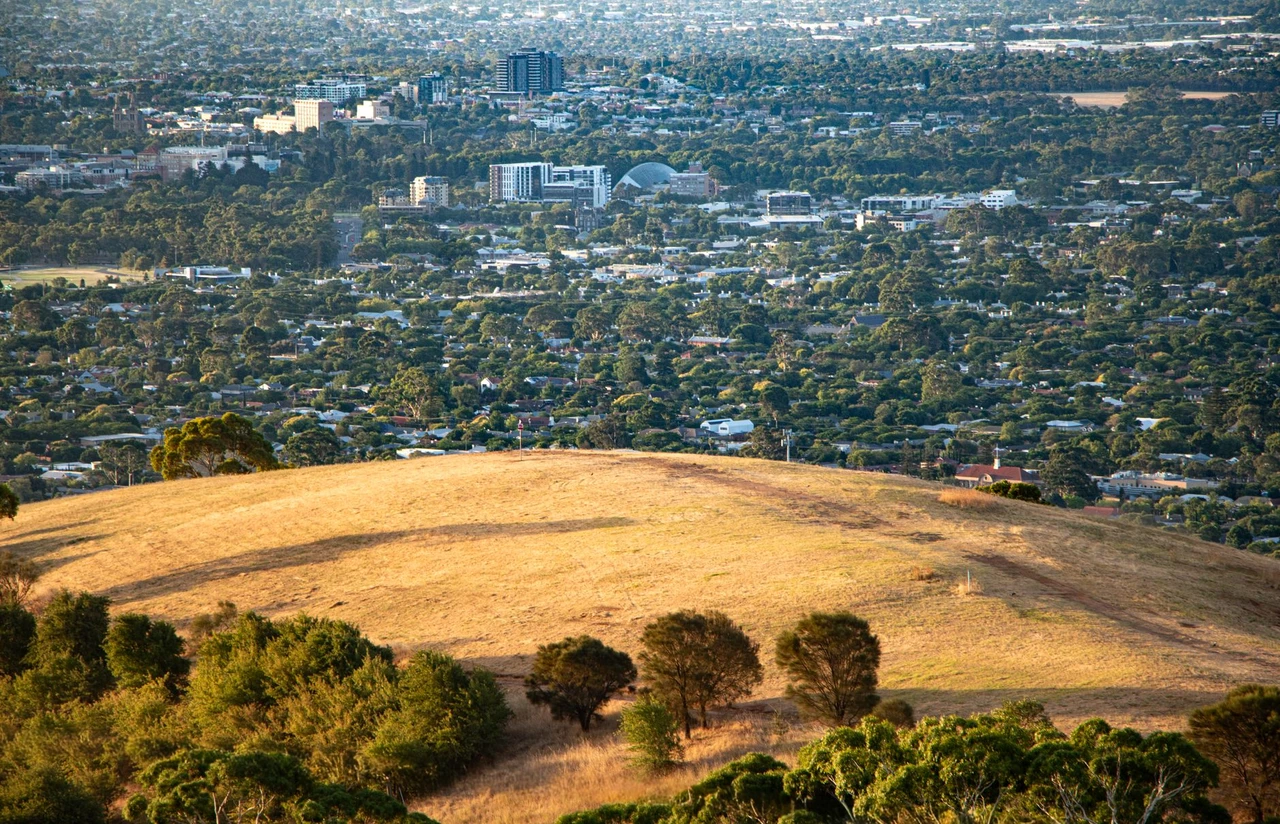
Adelaide was laid out in the 1830s by colonial surveyor Colonel William Light around a compact city grid ringed by parklands, which is why locals still call it the "20-minute city" — most of the center is walkable, and a free city-loop tram and bus network covers the rest. Start at Adelaide Central Market, one of the largest fresh-produce markets in the Southern Hemisphere, with stalls selling everything from South Australian cheese and cured meats to Vietnamese, Greek, and Chinese food stands reflecting the city's migrant history. From there, North Terrace is Adelaide's cultural boulevard, home to the Art Gallery of South Australia, the South Australian Museum, and the State Library, all an easy stroll apart.
Rundle Street and the East End are the city's dining and nightlife strip, worth an evening for South Australian wine by the glass and modern Australian cooking. Adelaide has also carried a UNESCO City of Music designation, so it's worth checking what's on at a live venue during your stay — the city punches well above its size for live music and festivals, particularly during the Adelaide Fringe in February and March.
Barossa Valley: Australia's Oldest Fine-Wine Region
About an hour's drive northeast of Adelaide, the Barossa Valley has been producing wine since German Lutheran settlers planted the first vines in the 1840s, making it one of the oldest continuously operating wine regions in the country. It's best known internationally for full-bodied Shiraz, though cellar doors here pour everything from Semillon to fortified wines with genuine history behind them.
A day trip typically means picking two or three cellar doors rather than trying to see it all: long-established names like Rockford Wines and Chateau Tanunda both offer tastings in historic buildings, and Seppeltsfield is worth visiting for its Centennial Cellar, where every vintage since 1878 is stored. Between tastings, Seppeltsfield Road is one of the region's most photographed drives, lined with date palms and vineyards, and Maggie Beer's Farm Shop is a good stop for regional cheese, pâté, and produce if you'd rather picnic than sit down for a full lunch. Because public transport barely reaches the Barossa, a rental car or a organized day tour from Adelaide is the practical way to visit.

Kangaroo Island: Australia's Wildest Wildlife Encounter
Kangaroo Island, Australia's third-largest island, sits off the tip of the Fleurieu Peninsula and is reached either by a roughly two-hour drive from Adelaide to Cape Jervis followed by a 45-minute SeaLink ferry crossing to Penneshaw, or by a short flight direct from Adelaide Airport to Kingscote. Either way, it's a genuine day-trip-or-longer destination, not a quick detour, and most visitors find a full day feels rushed.
The island's wildlife access is its main draw: Seal Bay Conservation Park runs guided beach walks that bring you within a few meters of a resting colony of wild Australian sea lions, one of the few places in the world where that's possible on foot with a ranger rather than from a boat. Flinders Chase National Park, on the island's western end, is home to free-roaming koalas, echidnas, and wallabies, plus two of South Australia's most photographed rock formations, the wind-sculpted Remarkable Rocks and the natural bridge at Admirals Arch. That western end of the island was hit hard by bushfires in the 2019–2020 fire season, and while the landscape and wildlife populations have been recovering steadily in the years since, it's a reminder to check current park conditions before visiting, as access to some trails can vary seasonally.

Practical Planning: Visa, Currency, and Getting Around
US citizens need an Electronic Travel Authority (ETA, subclass 601) to enter Australia, applied for through the official Australian ETA app rather than a paper visa. It's a quick process — scan your passport's chip, submit a selfie, and pay a AUD 20 service fee — and it typically permits stays of up to three months per visit. Requirements can change, so confirm the current process on Australia's official immigration site before you travel rather than relying on older advice.
The currency is the Australian Dollar (AUD), and card payments are widely accepted across Adelaide, including for small purchases. Within the city, Adelaide Metro's trams and buses cover downtown well, including a free city-loop tram along North Terrace and King William Street, but once you're heading to the Barossa or Kangaroo Island, a rental car (or a booked tour) is genuinely the easiest option, since public transport to both is limited or nonexistent outside organized tours.
A Sample 5-Day Adelaide Itinerary
Day 1: Land, settle in, and ease into the city with a wander through Adelaide Central Market and an evening on Rundle Street. Day 2: North Terrace's museums and galleries in the morning, then the Adelaide Botanic Garden or a walk through the Adelaide Park Lands in the afternoon. Day 3: Full-day Barossa Valley trip — two or three cellar doors, lunch at a winery restaurant or Maggie Beer's Farm Shop, and the Seppeltsfield Road drive. Day 4: Cross to Kangaroo Island via the Cape Jervis ferry or a short flight, and spend the day at Seal Bay Conservation Park and Flinders Chase National Park. Day 5: A second, slower morning on Kangaroo Island or, if you flew over and back the same day, an Adelaide Hills detour through Hahndorf's historic German-settler village before your flight home.
Frequently Asked Questions
How do I get to Adelaide from the United States?
United Airlines operates the only nonstop route, flying a Boeing 787-9 Dreamliner between San Francisco and Adelaide three times a week. It launched in December 2025 as a seasonal service, so check current schedules before booking. Alternatively, most US travelers still connect through Sydney, Melbourne, or Brisbane on Qantas or other carriers.
Is Adelaide worth visiting?
Yes, particularly if you're interested in wine, food, and wildlife without the crowds and cost of Sydney or Melbourne. Adelaide's compact, walkable center, its access to the Barossa Valley wine region within an hour, and Kangaroo Island within a couple of hours make it one of Australia's better-value multi-day bases.
How many days do you need in Adelaide?
A minimum of 4–5 days lets you cover the city itself, a full-day Barossa Valley trip, and at least one full day on Kangaroo Island. Add extra days if you want to explore the Adelaide Hills or spend two nights on Kangaroo Island rather than a single long day.
Do US citizens need a visa for Australia?
Yes. US citizens need an Electronic Travel Authority (ETA, subclass 601), applied for online or via the Australian ETA app, which typically permits stays of up to three months per visit for tourism.
What is the best time of year to visit Adelaide and Kangaroo Island?
March–May and September–November offer the most comfortable weather for outdoor days on Kangaroo Island and in the Barossa. December–February is warm and lively but busier and pricier, while June–August is cooler and quieter, with more rain.
Plan Your Adelaide Trip
Adelaide's new nonstop link to the US turns what used to be an awkward multi-stop detour into a straightforward long weekend or week-long trip, with world-class wine country and one of Australia's best wildlife encounters both within easy reach of the city. If you're building out a broader Australia and Asia-Pacific itinerary, or just love a destination that's still ahead of the crowds, it's worth comparing notes with some of our other under-the-radar picks: our Georgia travel guide covers another historic wine region on the opposite side of the world, our Kyrgyzstan travel guide is for travelers who want wide-open nature with far fewer visitors, and our Zanzibar guide is a good next stop if island wildlife and beaches are what drew you to Kangaroo Island in the first place. Start checking flight availability now, and you could be sipping Barossa Shiraz or walking a Kangaroo Island beach sooner than you'd think.