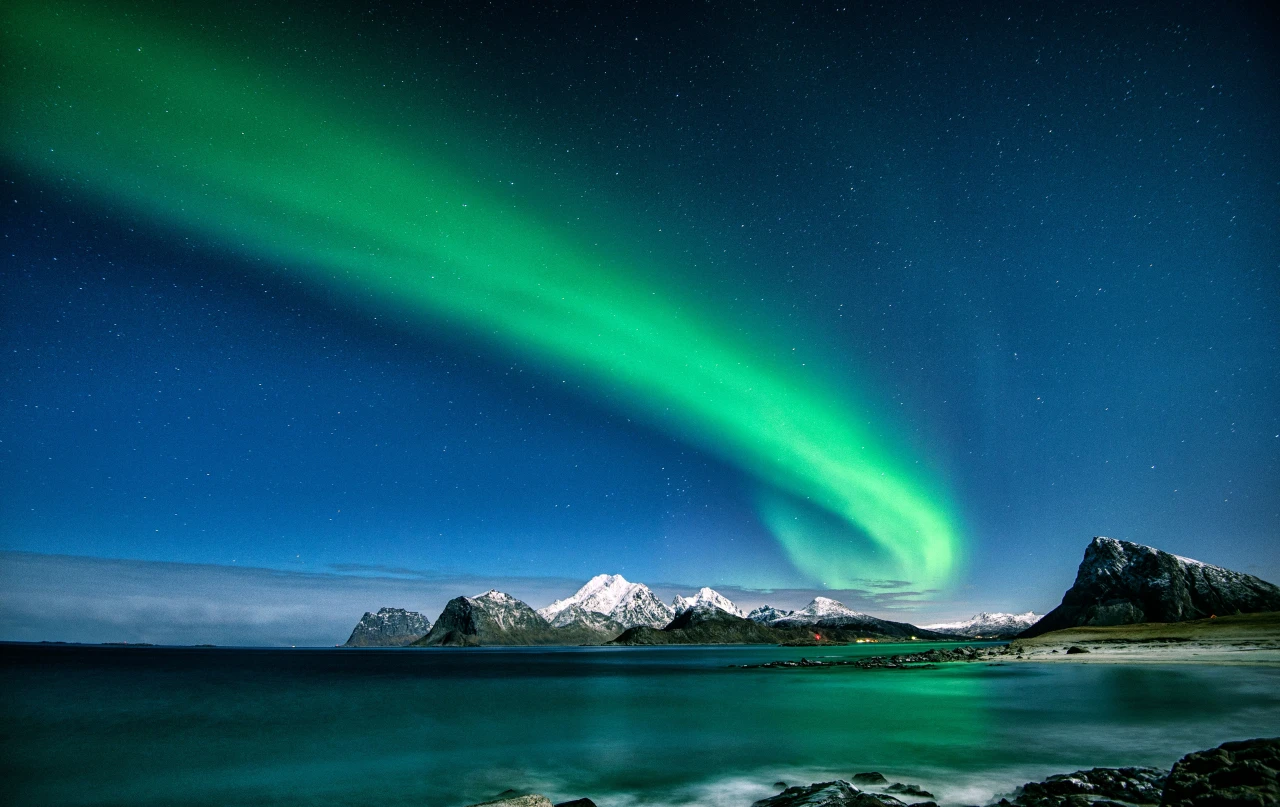
Best Places to See the Northern Lights in 2026: A Complete Aurora Season Guide
Every autumn, a familiar ritual plays out across travel forums and group chats: someone posts a green-and-purple photo from Tromsø or Fairbanks, and a dozen friends reply asking how to plan the same trip. The northern lights, or aurora borealis, are one of the few natural events that reliably go viral every single year, and interest has only kept climbing as more travelers add "see the aurora" to their bucket list. The good news is that you do not need a specialist tour operator or a five-figure budget to see them. You need the right season, the right latitude, and a plan that accounts for clouds, moonlight, and a little patience. This guide walks through when to go, which destinations give you the best realistic odds, and how to photograph what you see once the sky finally cooperates.
Why Aurora Season 2026 Is Worth Planning For
The northern lights are caused by charged particles from the sun colliding with gases in Earth's upper atmosphere, and how often and how strongly they appear depends on the sun's roughly 11-year activity cycle. Solar physicists tracking the current cycle have pointed to the mid-2020s as a period of elevated solar activity, and that heightened activity typically continues to produce strong, frequent auroras for a year or two after the peak itself. In practical terms, that means the next couple of aurora seasons are shaping up to be some of the more active in over a decade, which is one reason search interest in "northern lights" trips has been climbing so steadily.
None of this guarantees a sighting on any single night, since clouds and light pollution matter just as much as solar activity. What it does mean is that your odds across a full week-long trip in a good viewing zone are better right now than they have been in years. If seeing the aurora is on your list, this is a sensible window to actually book the trip rather than keep postponing it.
Best Time of Year and Time of Night to Go
Aurora visibility depends on darkness, not temperature, which is why the viewing season runs roughly from late August through early April across the Arctic and sub-Arctic. Midsummer is a dead zone everywhere north of the Arctic Circle because the sky never gets dark enough, no matter how active the sun is.
The Best Months
September and March deserve special mention because the equinox periods are statistically associated with more geomagnetic activity, a pattern researchers call the Russell-McPherron effect. Combine that with milder shoulder-season weather and lower hotel prices than the deep-winter peak, and early autumn or early spring often gives you a better overall trip than the coldest months of December and January.
The Best Hours
Most sightings cluster between 10pm and 2am local time, once the sky is fully dark and your eyes have adjusted. Checking a local aurora forecast or KP-index app on the night itself is far more useful than picking an exact date months in advance, since activity can spike or fade within hours.
Norway: Tromsø and the Lofoten Islands
Tromsø is the most accessible major aurora hub in Europe, with direct flights from several European capitals and a compact city center you can base yourself in without renting a car. Its position well above the Arctic Circle, combined with the relatively mild climate the Gulf Stream provides for its latitude, makes it a reliable starting point for a first aurora trip.
For a quieter, more dramatic backdrop, the Lofoten Islands a few hours south offer jagged peaks that drop straight into the sea, so the aurora reflects off fjords rather than city lights. It takes more planning to reach and a rental car is genuinely useful there, but the payoff for photographers is considerable. Either base works; Tromsø suits travelers who want convenience and a few backup activities like whale watching or dog sledding on cloudy nights, while Lofoten suits travelers prioritizing scenery over logistics.
Finland and Sweden: Lapland's Dark-Sky Villages
Finnish Lapland, centered on Rovaniemi and the smaller village of Inari, is built around aurora tourism in a way few other regions are, with glass-roofed cabins, heated viewing platforms, and guides who track forecasts nightly. The flat terrain and low light pollution across much of the region mean you often do not need to travel far from your accommodation to get a clear view.
Across the border, Abisko in northern Sweden has a genuine claim to some of the most consistent viewing conditions in Europe. The surrounding mountains create a local microclimate that keeps the sky clearer than much of the surrounding region, which is why the Aurora Sky Station there has operated as a dedicated viewing point for visitors for decades. Both regions work well for travelers who want cold-weather activities like snowshoeing or a sauna built into the same trip.
Iceland: Reykjavik and the Ring Road
Iceland offers the easiest short-haul option for travelers coming from Western Europe or the US East Coast, with Reykjavik itself close enough to dark countryside that a short drive out of the city on a clear night is often enough. For better odds and darker skies, the Snæfellsnes Peninsula and the Westfjords add real distance from artificial light without requiring the full Ring Road commitment.
Iceland's trade-off is weather volatility. The same Atlantic storm systems that make the country dramatic and photogenic also bring frequent cloud cover, so a longer stay of five to seven nights meaningfully improves your odds compared with a quick two-night stopover on the way to somewhere else.
Canada and Alaska: Yellowknife and Fairbanks
If your priority is the highest possible odds over the fewest nights, Yellowknife in Canada's Northwest Territories and Fairbanks in Alaska are consistently ranked among the most reliable viewing locations on the planet. Both sit directly beneath the auroral oval, the ring-shaped zone where activity concentrates, and both have famously dry, clear winter climates compared with the coastal weather patterns of Norway or Iceland.
The trade-off is cold: temperatures well below freezing are normal through the winter viewing season, so trips here lean on purpose-built heated viewing domes, guided night tours, and serious cold-weather gear rather than casual walks outside. For travelers who have tried and failed to see the aurora elsewhere, this region is often the fallback that finally delivers.
How to Photograph the Northern Lights
A tripod is the single most important piece of equipment, since even a bright aurora requires a multi-second exposure that handheld shots cannot manage. Beyond that, a wide-angle lens, a manual focus set to infinity, and a starting exposure around 2-5 seconds at a high ISO give you a reasonable baseline to adjust from once you see how the sky is behaving. Most modern smartphones now have dedicated night modes that can capture a surprisingly usable aurora photo if you brace the phone against something solid and let the exposure run its full cycle. Whatever camera you use, dress warmer than feels necessary. Standing still for an hour waiting for the sky to shift is far colder than walking around, and cold fingers make fiddling with camera settings much harder.
Frequently Asked Questions
What is the best country to see the northern lights?
There is no single best country, since the choice depends on your priorities. Norway and Iceland are the most accessible from Europe, Finland and Sweden offer the most purpose-built aurora infrastructure, and Yellowknife or Fairbanks offer the driest skies and statistically the best odds per night.
Do you need a tour to see the northern lights?
No, but a local guide with access to real-time forecasts and a vehicle can save you from wasting a clear night in the wrong spot. Independent travelers with a rental car and a good aurora forecast app can absolutely see the lights on their own.
How many nights should I plan for?
A minimum of four to five nights gives a realistic chance even with average weather, since you need at least a couple of clear nights within that window. Shorter trips of one or two nights carry meaningfully higher risk of missing the aurora entirely due to cloud cover.
Which months in 2026 are the best for viewing?
September through early November and February through March tend to combine dark skies, milder shoulder-season weather, and the equinox-linked uptick in geomagnetic activity, making them a strong overall choice for a first trip.
Can you see the northern lights without leaving a city?
In cities within the auroral zone, such as Tromsø or Reykjavik, a strong display can sometimes be visible from the edge of town, but light pollution will always mute what you see. A short drive to darker countryside dramatically improves both visibility and photo quality.
Planning Your Own Aurora Trip
The northern lights reward patience more than luck: pick a destination that matches your budget and cold tolerance, build in enough nights to survive a few cloudy ones, and check a real-time aurora forecast once you land rather than relying on any date picked months in advance. If you are stitching this into a longer Europe itinerary, our guide to the cheapest European cities for a weekend getaway pairs well with a Nordic leg, and travelers who enjoyed the underrated-destination angle of our North Macedonia travel guide will find a lot to like in Arctic Scandinavia's own off-the-radar villages. For another destination built around a rare natural spectacle, see our guide to the Azores. Start checking aurora forecasts for your chosen region a few weeks out, book flexible accommodation near a dark-sky area, and give yourself more than one night under the stars.