Best Street Food Cities in the World 2026: Where Locals Actually Eat
Ask any seasoned traveler where the best meal of their trip happened, and there's a good chance it wasn't in a restaurant at all — it was standing at a plastic stool on a street corner, watching a vendor who has cooked the same dish for twenty years. That instinct now has data behind it. In late July 2026, Time Out published a fresh global ranking of the best street food cities in the world, built from survey responses of roughly 24,000 locals rather than editors' opinions alone, and Forbes followed with independent coverage of the same findings days later. The result is a rare, genuinely current snapshot of where street food culture is thriving right now, from a new frontrunner in Vietnam to old favorites in Mexico, Thailand, and Morocco holding their ground.
This guide breaks down the 2026 rankings city by city, explains what makes each destination's food scene distinct, and — just as importantly — covers how to actually eat street food safely, respectfully, and on a reasonable budget wherever your travels take you.
How the 2026 Street Food Rankings Were Determined
Time Out's 2026 street food list stands out because of its methodology: rather than a small editorial panel, the publication surveyed thousands of residents in cities worldwide and asked them to rate their own city's street food scene, then combined that local approval rating with editorial input from Time Out's global writer network. Ho Chi Minh City topped the list with a 63% local approval rating, with Mexico City and Manila tying for second place at 58%, and Hanoi, Johannesburg, and Bangkok rounding out the top tier.
The ranking arrived in the same week that Travel And Tour World published its own separate Top 50 Food Destinations report for 2026, which ranked Mexico the world's top overall food destination ahead of Italy and Spain — a reminder that "best food country" and "best street food city" are related but different questions, and that both rankings point toward the same handful of places building genuine, sustained reputations rather than one-off viral moments.
Ho Chi Minh City, Vietnam: The World's New #1 Street Food Capital
Ho Chi Minh City's win reflects something locals have known for decades: this is a city built around eating outside. Street-side pho stalls open before sunrise, banh mi carts multiply near office blocks at lunchtime, and by evening the sidewalks around districts like Binh Thanh and District 1 fill with grills sending charcoal smoke into the air. Signature dishes to seek out include banh xeo (crispy turmeric pancakes folded around shrimp and bean sprouts), com tam (broken rice with grilled pork), and the ever-present bowl of pho bo, still argued over by generations of Vietnamese families as to whose neighborhood makes it best.
What separates Ho Chi Minh City from a simple tourist food crawl is affordability paired with consistency — a bowl of pho or a banh mi typically costs a small fraction of a sit-down restaurant meal, and quality remains high because turnover is constant and competition between neighboring stalls is fierce. For travelers who have already explored Hanoi or central Vietnam, a visit to Quy Nhon on Vietnam's south-central coast offers a quieter, beach-side complement to the capital's food-forward energy.

Mexico City and Manila: Tied for the Top Tier
Mexico City's tie for second place is consistent with a broader pattern: Mexico has spent the last two years accumulating food-tourism accolades, culminating in Travel And Tour World naming the country the world's #1 overall food destination for 2026. In the capital, taquerias built around a single specialty — al pastor, barbacoa, or carnitas — anchor entire neighborhoods, while markets like Mercado de San Juan and countless unnamed corner stalls serve tlacoyos, esquites, and tamales throughout the day. Readers who want a deeper dive into Mexican street food, including a full breakdown of Oaxacan specialties and mezcal culture, can find one in this tenant's dedicated Mexico food guide.
Manila's tie for the top tier is a less predictable headline outside food-industry circles, but it reflects a Filipino street food culture built on bold, sour-savory flavors and quick, affordable eating: isaw (grilled skewers), fish balls served with a choice of sweet or spicy dipping sauce, and halo-halo as a shaved-ice finish to a hot afternoon. Manila's inclusion in the same tier as Mexico City is a useful reminder that "best street food" rankings increasingly reward cities with deep, everyday food culture rather than only those with the highest existing tourist profile.
Bangkok, Hanoi, and Johannesburg: Asia and Africa's Street Food Powerhouses
Rounding out Time Out's top tier were Hanoi, Johannesburg, and Bangkok — a spread that itself says something about how global the street food conversation has become. Bangkok's inclusion is no surprise to anyone who has walked Yaowarat Road at night or browsed the stalls of Or Tor Kor Market; this tenant has covered the city's food scene in depth in a dedicated Bangkok foodie guide covering fifteen essential dishes. Hanoi brings a quieter, broth-and-herb-forward counterpart to Ho Chi Minh City's energy, built around bun cha, cha ca, and its own distinct pho lineage from the north.
Johannesburg's appearance in the same tier as three Southeast Asian food capitals is one of the more notable results of the 2026 survey, reflecting a growing recognition of South African township and market food culture — bunny chow (a hollowed-out bread loaf filled with curry, itself a product of Durban's Indian community), grilled boerewors sausage from braai stands, and vetkoek (fried dough often filled with mince) served at markets across the city. It's a genuine geographic outlier on a list otherwise dominated by East and Southeast Asia and Latin America, and worth factoring into any 2026 travel-planning shortlist for travelers who haven't considered South Africa as a food destination before.
Beyond the Rankings: Marrakech, Taipei, Kuala Lumpur, and Old Delhi
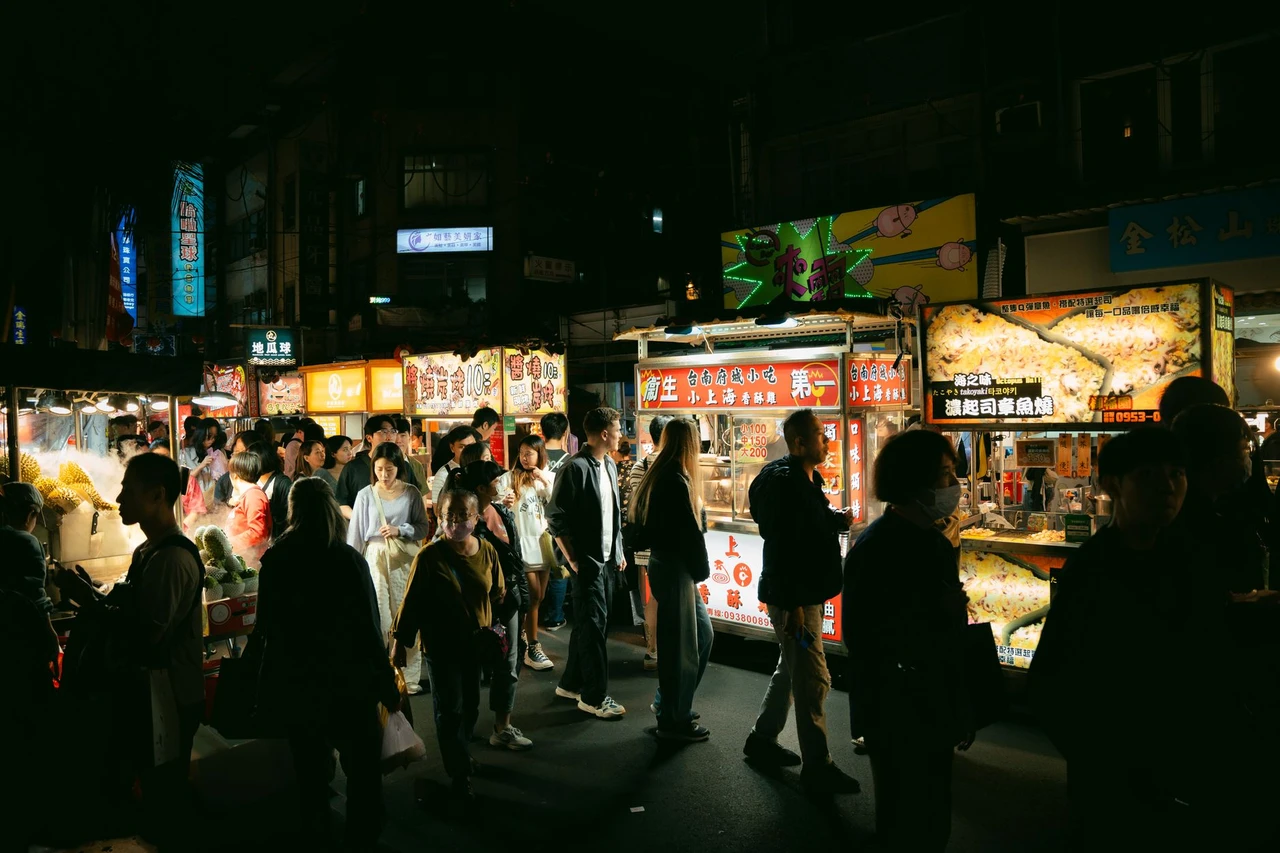
Outside the headline top tier, several long-established street food destinations continue to anchor "best of" lists year after year, and deserve a place in any serious 2026 planning shortlist. Marrakech's Djemaa el-Fna square transforms every evening as dozens of food stalls set up in the same spot, serving grilled meats, snail soup, and fresh orange juice under a haze of smoke and lantern light — a scene UNESCO itself has recognized as an intangible cultural heritage practice, not just a tourist attraction. Taipei's Shilin Night Market remains one of the most consistently recommended food markets in Asia, known for oyster omelets and its own version of stinky tofu, while Kuala Lumpur's Jalan Alor turns into a solid kilometer of open-air seafood and noodle stalls after dark.
In India, Old Delhi's Chandni Chowk continues to draw comparisons to Ho Chi Minh City and Bangkok for sheer density and variety — parathas, chaat, and jalebi sold from stalls that have operated in the same lanes for generations. None of these four cities topped the 2026 survey outright, but all four are frequently cited across multiple 2026 food-destination rankings as reliable, don't-skip stops for any serious street food itinerary.

How to Eat Street Food Safely and Respectfully
Food Safety Basics
The single best predictor of a safe street food stall isn't how it looks, but how busy it is — high turnover means ingredients don't sit around, and a queue of locals is generally a better signal than a stall with no customers at all. Favor vendors who cook food to order in front of you over pre-made items that have been sitting out, especially anything involving raw seafood or dairy in hot climates. Bottled or boiled water, ice from a reputable source, and freshly peeled fruit are safer bets than tap water or pre-cut fruit that may have been rinsed in it.
Etiquette and Tipping
Norms vary sharply by country: tipping street vendors is not generally expected in much of Southeast Asia or Mexico, while rounding up to the nearest convenient note is common practice and appreciated. In Morocco, a polite greeting before ordering goes a long way, and haggling — common in Djemaa el-Fna's market stalls — is generally not expected at food stalls with posted prices. Wherever you are, eating standing up or on simple stools alongside locals, rather than asking a vendor to package food to take back to a hotel restaurant, is both more authentic and more respectful of how the stall actually operates.
Budgeting for a Street Food Trip
One of street food's most consistent advantages worldwide is cost: a full meal from a street stall typically costs a fraction of an equivalent sit-down restaurant dish, which is precisely why cities built around street food culture — Ho Chi Minh City, Bangkok, Mexico City — remain some of the best-value food destinations on earth even as formal restaurant prices rise. Budgeting a modest daily allowance for street food, and treating a handful of sit-down meals as the exception rather than the rule, is a realistic way to eat well on a mid-range travel budget in any of the cities covered above.
Frequently Asked Questions
What city has the best street food in the world in 2026?
According to Time Out's 2026 survey of roughly 24,000 local residents, Ho Chi Minh City, Vietnam ranked first with a 63% local approval rating, followed by a tie between Mexico City and Manila at 58%.
Is street food safe to eat while traveling?
Generally yes, provided you follow a few basic precautions: choose busy stalls with high turnover, favor food cooked fresh in front of you, and be cautious with tap water, ice, and pre-cut fruit in destinations where water quality is uncertain.
Which country was ranked the world's best food destination for 2026?
Travel And Tour World's separate Top 50 Food Destinations report for 2026 ranked Mexico first overall, ahead of Italy and Spain, based on its global culinary reputation across both street food and fine dining.
Do you need to tip street food vendors?
Tipping expectations vary by country. In much of Southeast Asia and Latin America, tipping street vendors isn't standard practice, though rounding up the bill to the nearest convenient note is a common and appreciated gesture.
What's a realistic daily budget for eating street food while traveling?
Costs vary by destination, but street food is consistently one of the most affordable ways to eat well while traveling, typically costing a fraction of an equivalent restaurant meal — a major reason cities like Ho Chi Minh City, Bangkok, and Mexico City remain popular with budget-conscious food travelers.
From Ho Chi Minh City's newly crowned street stalls to Marrakech's centuries-old night market, the 2026 street food rankings are a genuinely useful starting point for planning a food-first trip — but the real test is always on the ground, at the next busy stall with a line of locals out front. If Southeast Asia is on your radar after reading this, pair a Ho Chi Minh City food crawl with a slower stop in Quy Nhon, or go deeper on Thailand and Mexico with this tenant's existing Bangkok foodie guide and Mexico food guide. Wherever you go next, follow the crowds, eat where the turnover is fast, and let 2026's rankings be a starting point rather than the whole itinerary.