Big Sky, Montana Travel Guide 2026: Inside the World's #1 Trending Destination
Every January, Expedia crunches a year's worth of flight and lodging searches from millions of travelers to spot where the world's attention is actually shifting, not just where influencers say it is. For 2026, the number one spot on that data-driven list didn't go to a European capital or a tropical island. It went to Big Sky, Montana, a small resort town roughly an hour from Bozeman and less than an hour from Yellowstone National Park's north entrance, where search interest jumped 92% year over year. That is the kind of signal worth paying attention to: real booking behavior, not a marketing campaign. We dug into what's actually driving that surge, cross-checked it against Big Sky's own tourism office and outdoor-recreation press, and built this guide around what a first-time visitor genuinely needs to know for a summer trip: how to get there, what to do, where Yellowstone fits in, what it costs, and when to go. If you've never considered Montana as a summer destination before, 2026 is the year the data says otherwise.
Why Big Sky Is Suddenly Everywhere
Expedia's 2026 trending destinations report, based on data from roughly 24,000 travelers worldwide and a full year of flight and lodging searches on its platform, ranked Big Sky the number one trending destination globally, ahead of Okinawa (Japan) in second place and Sardinia (Italy) in third. Expedia's own writeup points to a combination of factors behind the jump: an evolving dining scene, growth in family-friendly offerings, and a busier calendar of community events and cultural activities layered on top of the outdoor recreation the area has always been known for.
None of that is new marketing spin. Big Sky has quietly been building out its Town Center, expanding restaurant options, and adding free public programming like the long-running Music in the Mountains concert series, which runs Thursday evenings from June through September at Len Hill Park. What changed in the data is that travelers noticed all at once, likely helped along by post-pandemic interest in shoulder-season and nature-based travel, and by Big Sky's position as a genuinely walkable alternative to bigger, pricier gateway towns near other national parks.
It also helps that Big Sky solves a real logistical problem: Yellowstone is enormous, often crowded at its main entrances, and hard to "do" from a single base. Big Sky sits close enough to the West Yellowstone entrance for an easy day trip while still functioning as a legitimate destination on its own, with its own trail network, river, and mountain to justify multiple nights.

Getting There: Bozeman Yellowstone International Airport
Most visitors fly into Bozeman Yellowstone International Airport (BZN), Montana's busiest airport and one that has added direct routes from a growing list of US cities in recent years as interest in the Yellowstone region has climbed. From BZN, Big Sky is about a 45-50 minute drive south on US Highway 191, a scenic route that follows the Gallatin River Canyon the entire way, with pull-offs for photos and, in early summer, a decent chance of spotting elk or deer near the road at dawn or dusk.
Rental cars are the practical choice; there is no public transit link from the airport, though some hotels and resorts offer shuttle service if booked in advance. If you're combining Big Sky with a longer Yellowstone trip, note that the drive from Big Sky to the park's West Entrance (via West Yellowstone) takes about 1.5 hours, while the Yellowstone's more famous northern attractions like Mammoth Hot Springs are reachable but represent a longer day.
Do not expect to "wing it" on accommodation. Because Big Sky is still a relatively small town experiencing a genuine surge in demand, rooms in July and August, and again in the winter ski season, book out well in advance. If your travel dates are flexible, June and September offer noticeably better availability and lower rates than peak midsummer.
Summer in Big Sky: What There Is Actually to Do
Hiking for every level
Big Sky's trail network is one of its biggest, and most underrated, summer assets. Ousel Falls Trail is the easy, family-friendly option: a 1.6-mile round trip through forest to a genuinely pretty waterfall, manageable with young kids or a stroller-adjacent pace. At the other end of the spectrum, Beehive Basin Trail is a 6.6-mile round trip climb into alpine terrain that has been repeatedly named among the best day hikes in the country, ending at a basin ringed by peaks over 10,000 feet. Between those two, there are dozens of maintained trails covering meadows, ridgelines, and lakes.
Lone Peak from the top, without climbing it
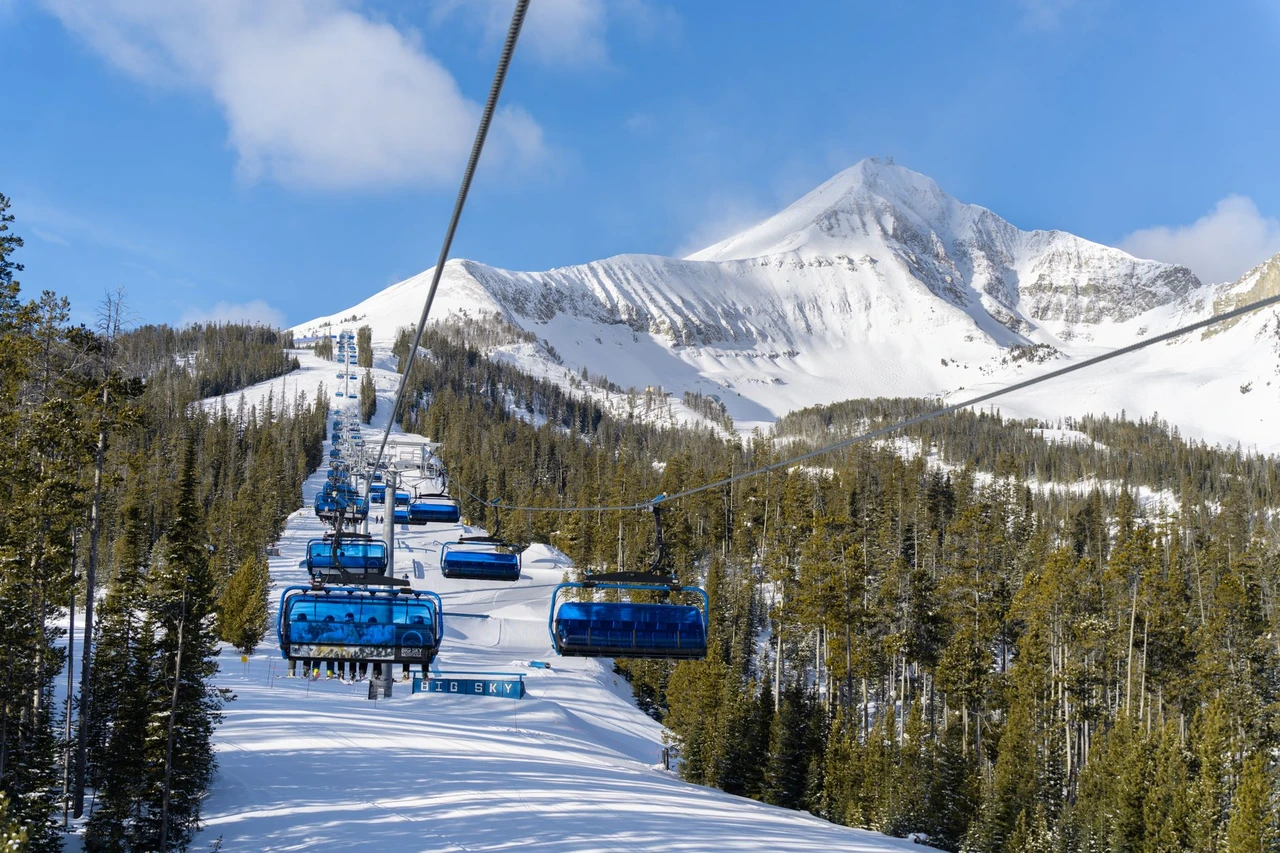
You don't have to be a mountaineer to stand on top of Lone Mountain. In summer, Big Sky Resort runs its lift infrastructure, including the Lone Peak Tram, for sightseeing rather than skiing, carrying visitors up to roughly 11,166 feet for a 360-degree view of the Greater Yellowstone Ecosystem. On a clear day, guides say you can pick out terrain in three states. It's worth packing a windbreaker even in July; the summit sits well above the treeline and the wind doesn't care what season it is.
Biking, rafting, and the Gallatin River
The same resort infrastructure that supports winter skiing doubles as a lift-served mountain biking network in summer, with trails for beginners and experienced riders alike. Down in the valley, the Gallatin River, the same river that runs alongside Highway 191 on the drive in, is a genuine draw for fly fishing (this stretch of water has real cachet among anglers) and for whitewater rafting outfitters based in town.
Day trips beyond Big Sky itself
Earthquake Lake, formed in minutes by a 1959 magnitude 7.5 earthquake that triggered a massive landslide, and the well-preserved 1860s gold rush ghost town of Virginia City are both manageable half-day trips from Big Sky, and they give visitors a very different, quieter side of Montana than the resort town itself.
The Yellowstone Day Trip, Done Right
Using Big Sky as a Yellowstone base is one of the report's most-cited reasons for the destination's rise, and it genuinely works better than staying inside the park's often fully booked lodges. The West Entrance, reached via the town of West Yellowstone, puts you within reach of the park's greatest hits in a single long day, though splitting the visit across two days is far less rushed.
Grand Prismatic Spring and the neighboring Excelsior Geyser are the park's most photographed features for a reason: the spring's rainbow coloring comes from heat-loving microbial mats, and no photo quite prepares you for how large it is in person. The Grand Canyon of the Yellowstone, with its Upper and Lower Falls, is a short walk from parking and worth building real time into your schedule for, not just a drive-by stop.
Summer is also prime wildlife-viewing season. Bison are the animal you are all but guaranteed to see, often uncomfortably close to the road, and early morning or dusk drives through the park's open valleys give reasonable odds of spotting elk and, with more patience and a good pair of binoculars, bears or wolves at a safe distance. Whatever you do, do not approach wildlife for a photo; rangers deal with entirely preventable injuries every single summer from visitors who get too close to bison.

Food, Budget, and When to Go
The "evolving dining scene" Expedia specifically flagged is visible in Big Sky's Town Center, where restaurants now range well beyond standard ski-town pub fare. Expect everything from bison ribeyes and wood-fired pizza to Northern Italian handmade pasta and Thai-inspired plates at some of the newer resort restaurants, alongside plenty of casual cafés and taco spots for a lower-key lunch after a hike. Reservations at the higher-end dining rooms are genuinely necessary during June through September; some open their books 90 days ahead.
Budget-wise, Big Sky is not a cheap destination, and the surge in demand hasn't made it cheaper. Realistic planning numbers for July and August put a comfortable mid-range hotel or condo at $250-$450 per night, with peak-season fine dining running $60-$100 per person before drinks. Camping and Forest Service cabins nearby, along with self-catering condo rentals, are the two most effective ways to bring costs down, and Yellowstone itself charges a standard $35 per-vehicle entrance fee valid for seven days.
For timing, June through early September is the practical summer window; wildflowers peak in July, the Music in the Mountains concert series runs the same months, and snow can still linger on higher trails into June some years. Late September brings fall colors and thinner crowds but a real risk of early mountain weather, so pack layers regardless of when you go.
Frequently Asked Questions
Is Big Sky, Montana expensive to visit?
It's a mid-to-high budget destination, especially in peak summer (July-August) and winter ski season. Mid-range lodging typically runs $250-$450 per night in summer. Traveling in June or September, and self-catering in a condo rental, are the two most effective ways to control costs.
How far is Big Sky from Yellowstone National Park?
Big Sky sits about 45-50 minutes from Bozeman Yellowstone International Airport and roughly 1.5 hours by car from Yellowstone's West Entrance via the town of West Yellowstone, making it a realistic day-trip base for the park.
What is Big Sky, Montana known for?
Historically, world-class skiing and snowboarding on Lone Mountain in winter. In summer, the same resort infrastructure supports hiking, lift-served mountain biking, and sightseeing via the Lone Peak Tram, alongside fly fishing and rafting on the Gallatin River.
What is the best time of year to visit Big Sky?
June through early September for summer activities and hiking, with July offering peak wildflowers. Winter (roughly December through March) is prime ski season. Shoulder months (June, September) offer better availability and lower prices than peak midsummer.
Do you need a car to get around Big Sky?
Yes, in almost all cases. There is no public transit link from Bozeman airport, and reaching Yellowstone, trailheads, and day-trip sites like Virginia City requires a rental car, though some hotels offer limited shuttle service if arranged in advance.
Planning Your Trip
Big Sky earned its spot at the top of Expedia's 2026 trending destinations list on the strength of real search and booking data, not hype, and a visit backs that up: a legitimately walkable resort town, a genuinely excellent trail system, and one of the best access points to Yellowstone anywhere in the region. Book accommodation as early as you can, especially for a July or August trip, and build at least one full day into your itinerary purely for Yellowstone rather than trying to squeeze the park into a few rushed hours.
If Big Sky has you thinking about other places currently seeing a genuine surge in traveler interest rather than manufactured hype, our guides to Adelaide, Australia and its new direct US flight route, Kalymnos, Greece's rise as a climbing destination, and Quy Nhon, Vietnam's new spot on the world stage cover three more places the data says are worth watching this year. For a different kind of only-in-nature experience, our guide to the Northern Lights is a good next stop.