Fiji Travel Guide 2026: New Flights Open the South Pacific
Fiji has topped bucket lists for decades, but 2026 is the year the South Pacific nation actually got easier to reach from North America. Fiji Airways is expanding its Nadi-Vancouver service to three weekly, year-round flights starting June 16, 2026, upgrading to Airbus A350 aircraft from September 8, 2026, and deepening its codeshare partnership with WestJet to open connections from cities across Canada and the western United States. At the same time, a new Nadi-Gold Coast route is drawing more Australian traffic, and Fiji remains rated Level 1 "Exercise Normal Precautions" by the US State Department, the safest rating a destination can receive. This guide draws on airline route announcements, official safety advisories, and current visa rules to help you plan a 2026 trip to Fiji, from choosing the right island group to budgeting in Fijian dollars.
Why 2026 Is the Year to Visit Fiji
For years, the biggest obstacle to a Fiji holiday for North American travelers was the flight itself: limited routes and long layovers through Los Angeles or Sydney. That is changing. Fiji Airways confirmed it is boosting its Vancouver service to three weekly flights, running year-round rather than seasonally, from June 16, 2026. From September 8, 2026, those flights move to the wide-body Airbus A350, adding capacity and comfort on the transpacific route. The airline has also expanded its codeshare agreement with WestJet, giving travelers from Calgary, Toronto, and other Canadian cities a single-ticket connection into Nadi via Vancouver.
On the other side of the Pacific, Fiji Airways launched a new Nadi-Gold Coast route on June 11, 2026, flying three times weekly on a Boeing 737 MAX 8 and adding more than 53,000 seats a year for Australian travelers. Interestingly, the airline has scaled back its ultra-long-haul Nadi-Dallas Fort Worth nonstop service, citing high fuel costs and lower-than-expected demand, which suggests North American traffic is increasingly funneling through West Coast gateways like Vancouver and Los Angeles rather than direct heartland routes. For travelers, the practical upshot is more frequent, better-timed connections into Fiji than at almost any point in the last decade.
Best Time to Visit Fiji
Fiji's dry season runs from May to October, coinciding with the South Pacific's cooler, less humid months and the best diving and snorkeling visibility of the year. Because it is also peak season, expect the highest resort rates and busiest dive boats between June and August. The sweet spot for most travelers is the shoulder period: May, early June, or September into October, when the weather is still reliably dry and sunny but crowds and prices ease off. If you are booking a 2026 trip around the new June Vancouver and Gold Coast flight schedules, you will land right at the start of this ideal window.
The wet season, November through April, brings higher humidity, occasional tropical cyclones (mainly December to April), and lower prices. It is not a bad time to visit if you are comfortable with the possibility of rain showers and want to save on accommodation, but it is a riskier window for anyone with a tight itinerary.
Nadi, the Mamanuca Islands, and the Yasawa Islands
Nadi: Your Gateway to Fiji
Almost every international flight lands at Nadi International Airport on the main island of Viti Levu. Nadi town itself is unglamorous, but it is the launch point for two of Fiji's most photographed island chains, and Denarau Island, a purpose-built resort marina a short drive away, is where most large resorts and the main ferry port for outer islands are based.
The Mamanuca Islands
The Mamanucas are the closest island group to Nadi, reachable by a 20-to-90-minute boat transfer, which makes them ideal for day trips or short resort stays. Monuriki Island, part of this chain, is where the film Cast Away was shot, and it remains a popular day-trip stop for its white sand and clear water. Beachcomber Island and Castaway Island are popular for snorkeling and a lively, sociable resort atmosphere, while Malolo and Mana Islands offer a quieter, more upscale pace.
The Yasawa Islands
Further north and less developed, the Yasawas are a string of volcanic islands strung along a single ferry route (the Yasawa Flyer), popular with both backpackers and honeymooners. Expect dramatic limestone cliffs, the Sawa-i-Lau limestone caves, and some of Fiji's best beaches, with fewer crowds than the Mamanucas because the islands are simply harder to reach in a single day.

Suva and Fijian Culture
Fiji's capital, Suva, sits on the opposite side of Viti Levu from Nadi and rarely appears on resort brochures, but it is worth a stop for anyone interested in Fijian life beyond the beach. It is the South Pacific's largest city, with a working harbor, colonial-era architecture, the Fiji Museum, and Suva Municipal Market, one of the best places in the country to see the range of produce, kava root, and handicrafts that fuel daily Fijian life.
Culturally, no visit to Fiji is complete without understanding kava (yaqona), the earthy, mildly numbing ceremonial drink made from ground pepper-plant root. If you stay at a village-run homestay or join a village tour, you may be invited to a sevusevu, a formal kava ceremony used to welcome guests; accepting the bowl, clapping once before and three times after drinking, and saying "bula" is standard etiquette. The wider "Bula spirit," Fiji's reputation for warmth and hospitality, genuinely shapes how the country markets and delivers tourism, and it shows in village encounters far more than in resort lobbies.

Taveuni and the Outer Islands
For travelers with more than a week, Fiji's outer islands reward the extra flight or ferry time. Taveuni, nicknamed the "Garden Island" for its dense rainforest and volcanic soil, is home to Bouma National Heritage Park and the three-tiered Tavoro Waterfalls, along with Lavena Coastal Walk. Just offshore, the Somosomo Strait and Rainbow Reef are consistently ranked among the world's best soft-coral diving sites, with visibility and color that rival anywhere in the Pacific.
Kadavu, south of Viti Levu, offers similarly excellent diving around the Great Astrolabe Reef with a fraction of the visitor numbers, while Pacific Harbour on Viti Levu's southern Coral Coast has built a reputation as Fiji's "adventure capital," known for white-water rafting on the Navua River and shark diving with resident bull sharks. None of these are quick add-ons; budget at least a domestic flight or a half-day boat transfer and a couple of nights to do any of them justice.
Budget, Currency, and Practical Tips
Fiji uses the Fijian dollar (FJD), trading at roughly 2.2 FJD to 1 USD as of August 2026. US, UK, Canadian, Australian, and most EU passport holders do not need a visa for tourism; current rules allow a visa-free stay of up to 120 days, provided your passport is valid for at least six months beyond your arrival date and you can show an onward or return ticket. Always check the Fijian government's official immigration site before booking, since entry rules can change.
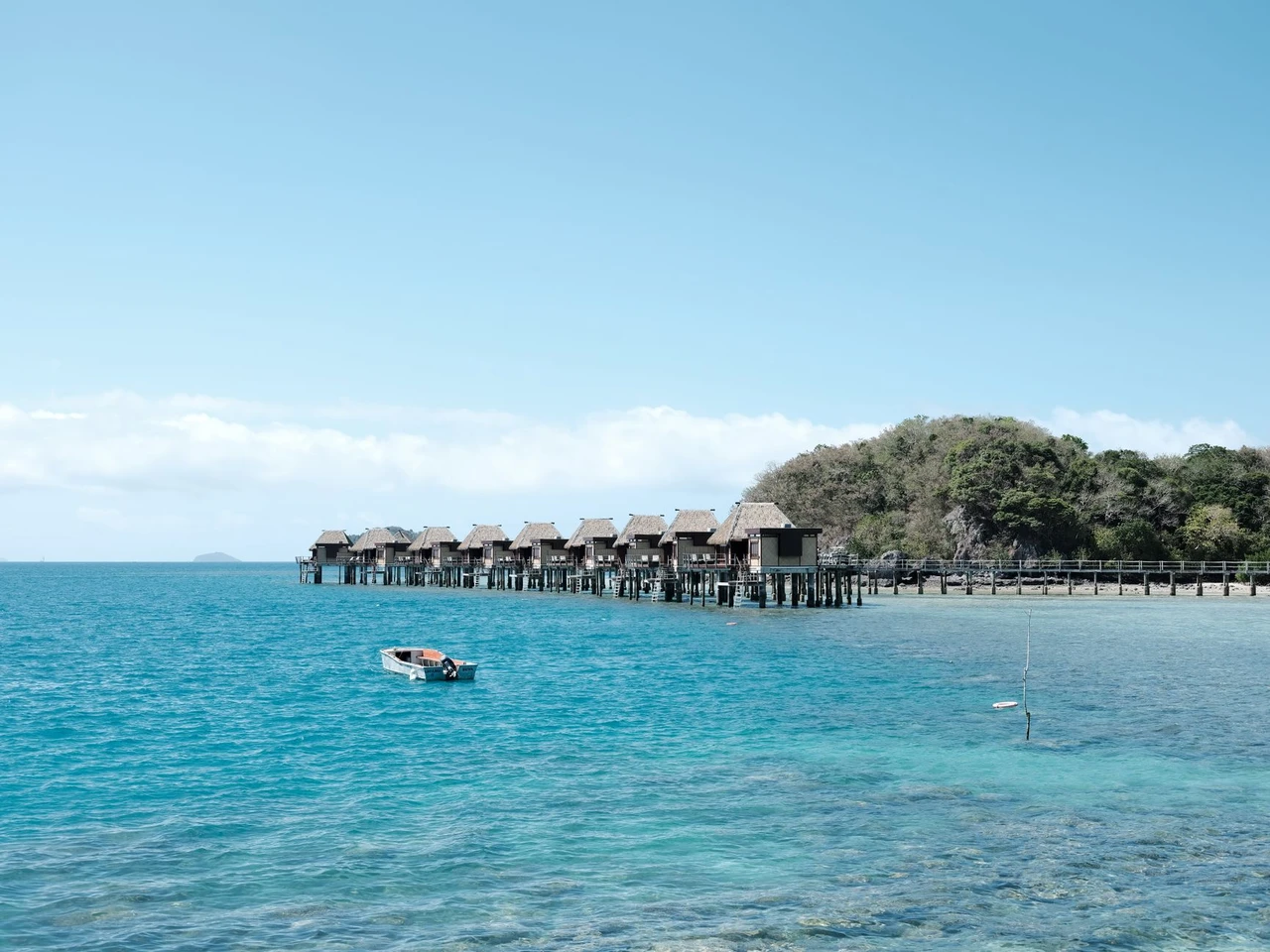
Budget varies enormously by island. A backpacker-style Yasawa Islands hop with dorm accommodation and boat transfers can run under $80 USD a day, while an overwater-bungalow stay in the Mamanucas or Denarau easily exceeds $500 a night. A realistic mid-range budget, mixing a few nights at a mid-tier resort with a village homestay or a Coral Coast guesthouse, lands somewhere around $150-250 USD per person per day including meals and activities.
Fiji's Level 1 safety rating from the US State Department means normal precautions apply. The most common issues are opportunistic and property crime, like bag snatching and petty theft in areas where tourists gather, including on hiking trails at Colo-i-Suva Forest Park, which carries a more specific Level 2 caution. Keep valuables out of sight, avoid walking alone at night in Nadi or Suva, and don't physically resist a robbery attempt. Driving is on the left, and an International Driving Permit is recommended if you plan to rent a car on Viti Levu.
Frequently Asked Questions
Do I need a visa to visit Fiji in 2026?
Most US, UK, Canadian, Australian, and EU citizens can enter Fiji visa-free for stays of up to 120 days, provided their passport is valid for at least six months and they can show proof of onward travel. Always confirm current requirements with Fiji's immigration authority before you fly, since policies can change.
What is the best month to visit Fiji?
May, early June, and September through October offer the best balance of dry-season weather and lower prices. June through August is peak dry season with the best diving conditions but also the highest rates and busiest resorts.
How do I get from Nadi to the outer islands?
The Mamanuca Islands are reachable by boat transfer from Denarau Marina in 20 minutes to 1.5 hours depending on the resort. The Yasawa Islands are served by the Yasawa Flyer catamaran, which takes most of a day to reach the northernmost islands. Taveuni and Kadavu generally require a short domestic flight from Nadi or Suva.
Is Fiji expensive to visit?
It can be, but it doesn't have to be. Budget travelers using dorm accommodation and local transport in the Yasawas can get by on under $80 USD a day, while overwater bungalow resorts in the Mamanucas can run several hundred dollars a night. Mid-range travelers should budget roughly $150-250 USD per person per day.
Is Fiji safe for tourists?
Yes. The US State Department rates Fiji Level 1, "Exercise Normal Precautions," its safest travel advisory tier. The main risks are opportunistic theft and pickpocketing in tourist areas, so standard travel precautions apply, particularly around Colo-i-Suva Forest Park, which carries a more specific caution about trail robberies.
Plan Your Fiji Trip
With Fiji Airways' expanded Vancouver service, new Gold Coast flights, and a wide-body upgrade all landing in 2026, this is genuinely one of the easier years in recent memory to get to the South Pacific from North America or Australia. Whether you split your time between a Mamanuca resort and a Yasawa Islands boat trip, or head further out to Taveuni's reefs, Fiji rewards travelers who budget enough time to get past the airport resorts and into village life.
If Fiji has you thinking about other under-the-radar island escapes, read our guide to Zanzibar in 7 Days for another Indian Ocean alternative, or our Kalymnos, Greece travel guide if you're comparing island-hopping options closer to Europe. Planning to combine Fiji with mainland Australia? Our Adelaide travel guide makes a natural add-on given the new Gold Coast-Nadi route. And if you're weighing a Fiji trip solo, our 2026 solo travel guide covers safety planning that applies just as well to the South Pacific.