Georgia Travel Guide 2026: Tbilisi and the Rise of the Caucasus
Georgia has spent years as a quiet favorite among adventurous travelers, and in 2026 the secret is officially out. Tripadvisor's Travelers' Choice Awards named Tbilisi the world's second most-searched trending destination for the year, right behind a wave of renovated museums, reopened landmarks, and a growing reputation as one of Europe's most affordable, most dramatic corners. This Georgia travel guide for 2026 pulls together everything a first-time visitor actually needs: when to go, how to get in, what a realistic budget looks like, and which regions beyond the capital deserve a spot on the itinerary. Every recommendation here is built around verifiable, practical details, from entry requirements to seasonal weather, so you can plan with confidence rather than guesswork. Whether you're drawn by Tbilisi's sulfur bathhouses, the glacier-capped peaks of the Greater Caucasus, or a wine tradition older than almost any other on Earth, Georgia rewards travelers who go in with a plan.
Why Georgia Is 2026's Breakout Travel Destination
Tbilisi's rise to the number two spot on Tripadvisor's 2026 list of trending destinations didn't happen by accident. The city has spent the past few years restoring landmarks like the Chess Palace and Vera Park, expanding institutions such as the Shalva Amiranashvili Museum of Fine Arts, and opening new contemporary art spaces alongside its centuries-old cobbled Old Town. The result is a capital that feels genuinely alive: sulfur bathhouses that have operated for generations sit a short walk from new galleries, and tree-lined Rustaveli Avenue still anchors the city's cultural life around its opera house and theaters.
Beyond the capital, Georgia benefits from a rare combination that few destinations can offer at once: glacier-capped Caucasus peaks, a Black Sea-adjacent climate mild enough for year-round travel, and a wine culture recognized by UNESCO as one of the oldest continuous winemaking traditions in the world. For travelers who have already ticked off the Balkans or Central Asia, Georgia represents the next logical, still-uncrowded frontier in the Caucasus.
Best Time to Visit Georgia
Shoulder Season: Late April to May, and September to October
Most travel experts agree that Georgia's shoulder seasons offer the best overall balance of weather, crowds, and cost. Late April through May brings mild temperatures, typically in the 20-24°C range, with relatively little rainfall, making it ideal for both city exploring and early mountain hikes. September and October mirror that comfort, with the added bonus of Kakheti's grape harvest, known locally as rtveli, bringing the wine region to life.
Peak Summer, Winter, and Budget Timing
July and August can be uncomfortably hot in Tbilisi, with temperatures regularly climbing past 35°C, though the mountain regions of Kazbegi and Svaneti stay noticeably cooler and busier with hikers. January and February are the coldest months, bringing heavy snowfall to the highlands, but they're also when accommodation prices in Tbilisi tend to drop significantly compared to summer rates, making winter a strong option for travelers prioritizing budget over hiking access.
Visa-Free Entry, Currency, and Budget Basics
One of Georgia's biggest draws for international travelers is how easy it is to enter. Citizens of more than 90 countries, including all European Union member states, the United States, the United Kingdom, Canada, Australia, and New Zealand, can enter visa-free for stays of up to a year, one of the most generous entry policies of any country. Always confirm your specific nationality's requirements before booking, since policies can change.
The local currency is the Georgian Lari (GEL). Georgia remains one of the more affordable countries in Europe and the Caucasus to visit: budget-conscious travelers typically get by on roughly $50-60 a day covering guesthouses, local food, and public transport, while a more comfortable mid-range trip, with private tours, better hotels, and wine tastings included, runs closer to $130-140 a day. Both figures will vary with season and how much of the Kakheti wine region or mountain trekking you add to your trip.
Tbilisi Old Town: Sulfur Baths, Narikala Fortress, and Rustaveli Avenue
Start any Georgia itinerary in Tbilisi's Old Town, where narrow cobblestone lanes wind past balconied wooden houses, Orthodox churches, and the domed rooftops of the historic Abanotubani sulfur bathhouse district. Bathing in Tbilisi's natural hot sulfur springs is a centuries-old ritual, and several bathhouses still welcome visitors for a soak and traditional scrub. Above the Old Town, Narikala Fortress offers the best panoramic view of the city and the Kura River below, easily reached by cable car.
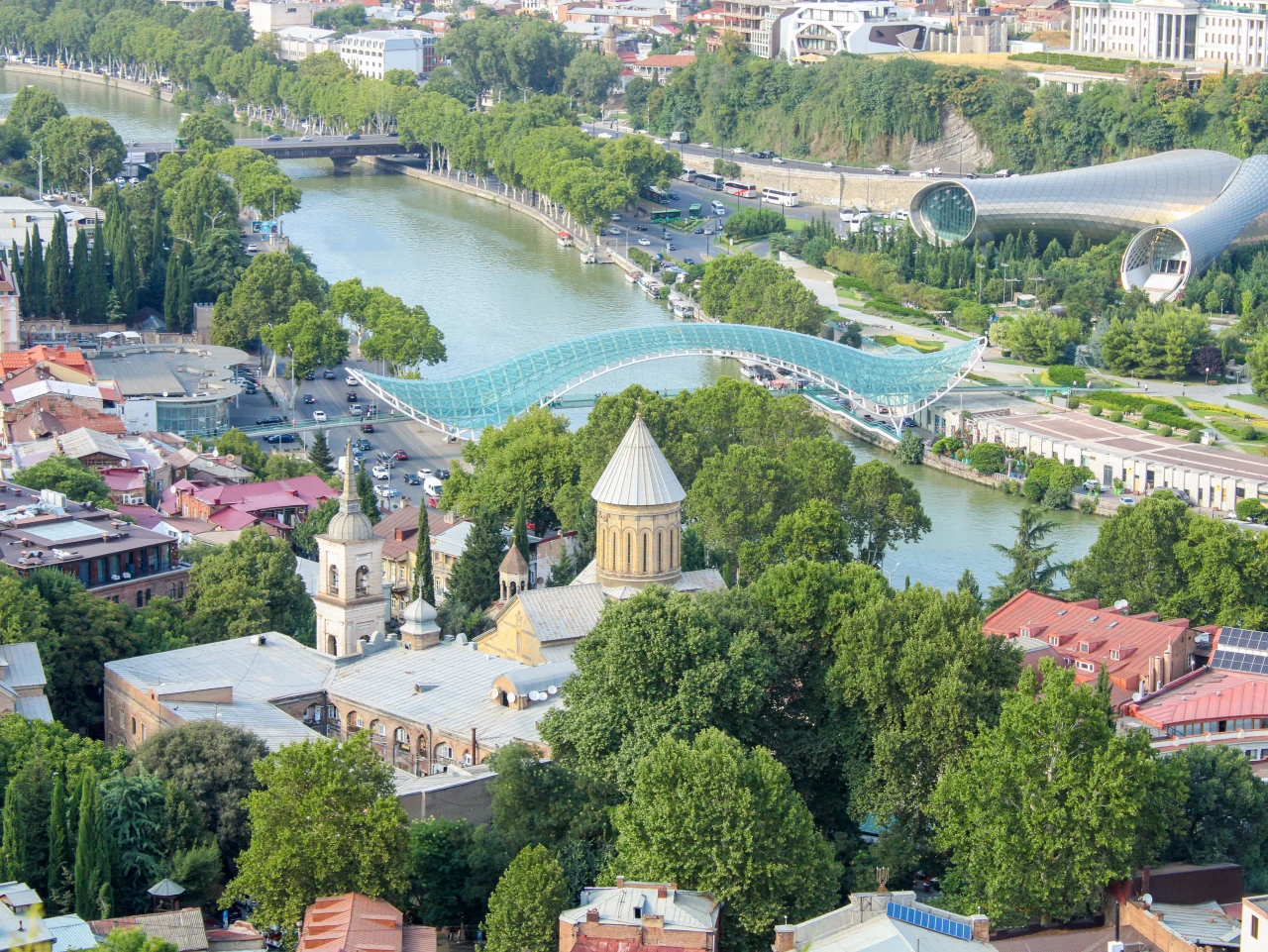
Modern Tbilisi is just as compelling. Rustaveli Avenue, the city's grand boulevard, is lined with the Tbilisi Opera and Ballet Theatre, the Rustaveli Theatre, and museums including the newly expanded Shalva Amiranashvili Museum of Fine Arts. The Bridge of Peace, a striking glass-and-steel pedestrian bridge over the Kura River, has become one of the city's most photographed modern landmarks and a good orientation point between the Old Town and the newer districts.
Beyond the Capital: Kazbegi and the Greater Caucasus

A few hours' drive north of Tbilisi along the Georgian Military Highway brings you to Kazbegi (officially Stepantsminda), home to Georgia's most photographed landscape: the Gergeti Trinity Church, perched on a hillside with Mount Kazbek's snow-capped 5,047-meter summit rising behind it. The area is a genuine hiking hub, with trails leading through the Juta Valley toward the Chaukhi massif and out to the Gveleti waterfalls, making it an easy add-on for travelers who want mountain scenery without committing to a multi-day trek.
Svaneti: Georgia's Medieval Mountain Kingdom
For travelers with more time, the northwestern highland region of Svaneti is Georgia's most dramatic detour. Its villages, centered on the towns of Mestia and the remote, UNESCO-recognized village of Ushguli, are famous for centuries-old stone defensive towers that once protected local families from invaders and blood feuds. Svaneti's isolation historically kept it disconnected from the rest of Georgia for months at a time in winter, and that same remoteness is exactly what makes it feel so distinct today: alpine scenery, unique local cuisine, and a mountain culture found nowhere else in the country.
Kakheti: 8,000 Years of Georgian Winemaking

East of Tbilisi, the Kakheti region is considered the birthplace of wine as we know it. Georgian winemakers have used the traditional qvevri method, fermenting and aging wine in large egg-shaped clay vessels buried underground, for roughly 8,000 years, a practice recognized by UNESCO as part of humanity's Intangible Cultural Heritage. The region is home to more than 500 indigenous grape varieties, far more than most wine-producing countries, and small family-run wineries throughout the countryside offer tastings alongside homemade Georgian food. The hilltop town of Sighnaghi, with its preserved 18th-century architecture and sweeping views over the Alazani Valley, makes an excellent base for a day or two of wine touring.
A Sample 8-Day Georgia Itinerary
For a first visit, a week to ten days is enough to combine the capital, the mountains, and the wine country without rushing. Days 1-3 can be spent in Tbilisi, covering the Old Town, sulfur baths, Narikala Fortress, and a day trip to the ancient former capital of Mtskheta. Days 4-5 head north to Kazbegi for the Gergeti Trinity Church and a hike into the Juta Valley. Days 6-7 shift east to Kakheti for wine tastings around Telavi and a night in Sighnaghi. Travelers with extra time can extend the trip with 2-3 additional days in Svaneti, though the longer drive or domestic flight to Mestia is worth factoring into the schedule.
Frequently Asked Questions
Is Georgia safe to visit in 2026?
Georgia is generally considered safe for tourists, including at night in central Tbilisi, though standard travel precautions around belongings and awareness of surroundings still apply, as they would in any capital city.
Do I need a visa to visit Georgia?
Citizens of more than 90 countries, including the EU, US, UK, Canada, Australia, and New Zealand, can enter Georgia visa-free for up to a year. Check your specific nationality's requirements before you travel, since rules can change.
What currency does Georgia use?
Georgia uses the Georgian Lari (GEL). Cards are widely accepted in Tbilisi and larger towns, but carrying some cash is useful in rural areas like Svaneti and smaller Kakheti villages.
Is Georgia expensive to visit?
No. Georgia remains one of the more affordable countries in the Caucasus and wider Europe, with budget travelers typically spending around $50-60 a day and mid-range travelers around $130-140 a day.
What is Georgia best known for?
Georgia is best known for its ancient wine tradition using the qvevri clay-vessel method, its dramatic Caucasus mountain scenery around Kazbegi and Svaneti, Tbilisi's sulfur baths and Old Town, and its distinctive cuisine and hospitality culture.
Planning Your Georgia Trip
Georgia's combination of visa-free access, low cost of travel, and a genuine mix of city, mountain, and wine-country experiences explains exactly why it landed on Tripadvisor's 2026 trending list. Book accommodation in Tbilisi and Kazbegi early if you're traveling in the May or September shoulder seasons, since both are increasingly popular booking windows. If Georgia's rise to the top of the 2026 travel conversation has you thinking about other underrated destinations, take a look at our guides to North Macedonia and Kyrgyzstan, two more Silk Road-adjacent destinations having a moment this year, or check our roundup of Europe's cheapest weekend getaways if budget is your main priority. For a Mediterranean alternative in the same shoulder-season window, our guide to the best time to visit Malta is worth a read too. Wherever you land, 2026 is shaping up to be the year to go before everyone else catches on.