Mexico Food Guide 2026: Inside the World's #1 Culinary Destination
When a global panel of food-travel researchers named the world's best culinary destination for 2026, it wasn't Italy or France that came out on top — it was Mexico. Travel And Tour World's Top 50 Food Destinations ranking, released in July 2026, placed Mexico first overall, ahead of Italy in second place and Spain in third, based on criteria including culinary heritage, regional diversity, street-food culture, fine dining, local ingredients and cultural authenticity. For anyone who has eaten a taco al pastor carved straight off a trompo in Mexico City or tried a mole negro in Oaxaca, the ranking won't come as a shock.
This guide breaks down exactly why Mexico earned the top spot, where to eat in its two most essential food cities — Mexico City and Oaxaca — and the practical details (visas, currency, safety, timing) you need to plan a trip built around eating well. Every claim here is drawn from the 2026 ranking data and current, verifiable travel information, not guesswork.
Why Mexico Just Became the World's #1 Food Destination for 2026
Travel And Tour World's 2026 ranking evaluated destinations across nine categories: culinary heritage, regional diversity, street food, fine dining, sustainability, local ingredients, beverage traditions, cultural authenticity and overall traveller experience. Mexico topped the list for the breadth of what it offers within a single country — Michelin-recognized fine dining in Mexico City, centuries-old Indigenous cooking techniques in Oaxaca, seafood-driven coastal cuisine along both coasts, and a street-food culture that UNESCO already recognized in 2010 when it inscribed "traditional Mexican cuisine" on its Intangible Cultural Heritage list, specifically citing Michoacán's community-based food traditions as a representative example.
That combination — world-class fine dining sitting a few blocks from a taco stand that's been run by the same family for three generations — is what separates Mexico from destinations that are strong in only one register. The 2026 ranking also placed Mexico first specifically within the Americas and Caribbean region, ahead of the United States and Peru, reinforcing that this isn't a one-off list but a consistent read across multiple 2026 rankings, including Michelin Guide's own "best places to travel for food lovers" coverage.
Mexico City: Michelin Stars Meet Street-Food Stalls
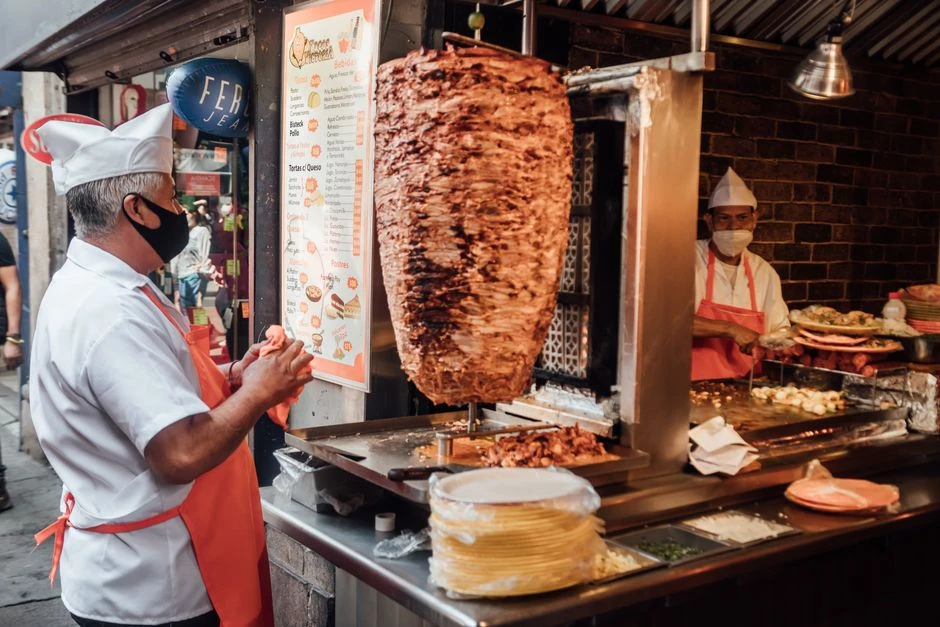
Mexico City is the ranking's headline case study. Within a few kilometres you can eat at a Michelin-recognized tasting-menu restaurant and, an hour later, order tacos al pastor from a cart where the pineapple-and-pork trompo has been spinning since dark. Beyond tacos al pastor, the dishes to prioritize are tamales (steamed corn dough wrapped in husks, sold from carts every morning), pozole (a hominy stew usually served on weekends), esquites (corn kernels in a cup with mayo, cheese, chile and lime) and churros dipped in thick Mexican hot chocolate.
Where to Eat in Roma and Condesa
Roma Norte and Condesa are the two neighborhoods most first-time visitors base themselves in, and for food specifically they play slightly different roles. Roma Norte leans artier and grittier, with the city's best independent restaurants and natural wine bars; Condesa is calmer and greener, still stylish but more residential and park-focused, with a dense cluster of taco and quesadilla carts that come alive after dark. Both neighborhoods are dense enough to eat your way through on foot in a single evening.
Street Food Safety and Etiquette
Street food in Mexico City is generally safe if you follow the same rule locals do: eat where there's a queue of Mexican customers, not just tourists. Breakfast stands selling tamales and atole typically open around 6am and close by mid-morning, while the taquerías that specialize in tacos al pastor tend to run from around 8pm into the early hours. Cash is essential after dark — many stands don't take cards — so keep small bills on hand.

Oaxaca: Mexico's Culinary Capital
If Mexico City is the ranking's proof of range, Oaxaca is its proof of depth. Widely considered Mexico's culinary capital, Oaxaca built its reputation on Indigenous Zapotec and Mixtec cooking techniques that have barely changed in centuries — most famously its moles, tlayudas (large, crisp tortillas topped like an open sandwich), memelas, chapulines (toasted grasshoppers, a genuine regional delicacy rather than a novelty), Oaxacan string cheese (quesillo) and handmade mezcal.
The Seven Moles of Oaxaca
Oaxaca is famous for producing seven distinct traditional moles — negro, rojo, coloradito, amarillo, verde, chichilo and manchamantel — each built from a different combination of dried chiles, spices, nuts and, in the case of mole negro, chocolate. Mole negro is the most iconic and the most labor-intensive, often taking a full day and dozens of ingredients to prepare. Seeking out a market comedor (food stall) that specializes in just one or two moles, rather than a restaurant that offers all seven on one menu, tends to produce the most authentic version of each.
Mezcal 101: Tasting It at the Source
Mezcal, distilled from roasted agave hearts, is produced across several Mexican states but is most closely associated with Oaxaca, where the majority of small-batch palenques (distilleries) are located. Buying it at the source is also simply better value: bottles that retail for roughly 800–1,200 MXN in Mexico City can be found for around 450–700 MXN in Oaxaca itself. A tasting flight at a palenque or a dedicated mezcalería, guided by someone who can explain the difference between espadín and more unusual wild agave varieties, is worth building an afternoon around.

Planning Your Trip: Visa, Currency, Safety and Best Time to Go
US, UK, EU and most other Western passport holders do not need a visa for tourist stays in Mexico. On arrival you'll receive an FMM (Forma Migratoria Múltiple) visitor permit; note that as of 2026 the paper FMM is being phased out at major airports in favor of a passport stamp with a manually written number of authorized days, so it's worth confirming the exact date written in your passport before you leave the airport.
The currency is the Mexican peso (MXN); as of late July 2026 the exchange rate sits at roughly 17.5 pesos to the US dollar, though it fluctuates daily so it's worth checking closer to your travel date. On safety, the pattern is consistent across independent travel-safety sources: Mexico City's most visited neighborhoods — Roma Norte, Condesa, Polanco, Coyoacán and San Ángel — see very little violent crime against tourists, and the realistic risks are petty theft, taxi scams and pickpocketing rather than anything more serious. Use ride-hailing apps rather than hailing taxis on the street, especially at night.
For food travel specifically, aim for the dry season between November and April, when Mexico City and Oaxaca see the least rain and outdoor food markets and street stalls run at full capacity. Oaxaca's Guelaguetza festival (late July) and Día de los Muertos (early November) are two of the best times to combine food with major cultural events, though both come with higher prices and larger crowds.
A Sample 7-Day Mexico City and Oaxaca Food Itinerary
Days 1–3: Base yourself in Roma Norte or Condesa in Mexico City. Spend mornings at a local market like Mercado Roma or Mercado Medellín, afternoons exploring Polanco or the historic center, and evenings working through the neighborhood's taco carts and at least one fine-dining meal. Days 4–7: Fly or take the roughly 6-hour bus south to Oaxaca City. Base yourself near the Zócalo or in the Jalatlaco neighborhood, spend a full day on a mezcal-focused day trip to the palenques outside town, visit the Saturday tianguis (open-air market) in nearby Tlacolula, and dedicate at least one evening to a comedor specializing in mole negro. This split gives you both ends of what earned Mexico its 2026 ranking — the fine-dining-meets-street-food energy of the capital, and the Indigenous culinary depth of Oaxaca — without rushing either city.
Frequently Asked Questions
Is Mexico really the best food destination in the world in 2026?
According to Travel And Tour World's 2026 Top 50 Food Destinations ranking, yes — Mexico placed first globally, ahead of Italy and Spain, based on criteria spanning culinary heritage, street food, fine dining and cultural authenticity.
How many days do you need for a Mexico food trip?
A week is enough to properly cover both Mexico City and Oaxaca, as in the itinerary above. If you only have long-weekend time, Mexico City alone offers enough range — street food to Michelin-recognized dining — to justify the trip.
Is street food in Mexico City safe to eat?
Yes, if you follow local habits: choose stalls with a steady queue of local customers, eat freshly cooked food rather than items that have been sitting out, and carry small cash since many stands don't accept cards.
Do I need a visa to visit Mexico for food tourism?
US, UK, EU and most Western passport holders do not need a visa for tourist visits; you'll receive an FMM entry permit or passport stamp on arrival instead.
What's the best time of year to go for food and festivals?
November through April is the dry season and the most reliable window for street markets. Late July brings Oaxaca's Guelaguetza festival, and early November brings Día de los Muertos, both excellent but busier and pricier.
Final Thoughts
Mexico's 2026 ranking as the world's top food destination isn't a marketing headline — it's the natural result of a country that pairs globally recognized fine dining with street food and Indigenous culinary traditions that go back centuries. Whether your trip centers on a single taco crawl through Roma and Condesa or a full week that ends with a mezcal tasting in Oaxaca, this is a destination where the food alone justifies the plane ticket.
If you're planning a bigger 2026 trip, pair this guide with our Bangkok food guide for another destination where street food defines the city, our Georgia travel guide for a very different but equally food-and-wine-driven trip through the Caucasus, or our Zanzibar in 7 Days guide if you're building out a full year of travel. And if the Balkans' best-value city break sounds more your speed, our Sarajevo city break guide is a great next read.