Okinawa Travel Guide 2026: Japan's Trending Subtropical Escape
Ask most travelers to picture Japan and they'll describe Tokyo's neon crossings or Kyoto's temple gardens. Few think of coral reefs, Blue Zone villages, and a rebuilt royal castle floating somewhere south of the Japanese mainland — yet that's exactly what's pulling record numbers of visitors to Okinawa in 2026. Expedia's own Unpack '26 travel trends report named Okinawa the second-most in-demand destination in the world for the coming year, right behind Big Sky, Montana, after flight and accommodation searches for the island chain jumped 71% year over year. That's not a marketing claim; it's booking-platform search data, the same kind of signal that correctly flagged Big Sky, Tbilisi, and Quy Nhon as breakout destinations before they became mainstream. This guide is built for travelers who want to get ahead of that curve: what's actually driving the surge, how to get there, what to do once you land, and how Okinawa's subtropical islands differ from anywhere else in Japan.
Why Okinawa Is 2026's Breakout Destination
Okinawa's jump to #2 on Expedia's 2026 Destinations of the Year list isn't a one-off. The prefecture was singled out alongside Big Sky and Sardinia as one of the report's top overall picks, and it was also flagged under Expedia's Smart Travel Health Check framework — developed with input from the World Travel & Tourism Council — as a destination actively managing its growth through sustainable tourism practices rather than simply absorbing an unmanaged crowd surge.
Three forces are converging at once. First, Shuri Castle, the seat of the former Ryukyu Kingdom and Okinawa's most recognizable landmark, is finishing a multi-year reconstruction after a devastating 2019 fire, with the restored main hall set to reopen to the public in late 2026. Second, Okinawa's forests and coastal waters were formally recognized by UNESCO as a World Natural Heritage Site in 2021, putting the island's biodiversity on the global travel map in a way it never had been before. Third, "Blue Zone" wellness travel — visiting the handful of regions worldwide associated with unusually high concentrations of centenarians — has become a genuine booking trend, and Okinawa is one of the five places most commonly cited in that conversation. Individually, none of these would be a headline. Together, they explain why search interest more than doubled in a single year.
Getting to Okinawa and Getting Around
Naha Airport, on the southern end of Okinawa's main island, is the gateway for almost every visitor. It has direct international connections from several East Asian hubs and frequent domestic flights from Tokyo, Osaka, and Fukuoka (roughly 2.5 to 3 hours from Tokyo Haneda). If you're arriving from outside Asia, the practical routing for most travelers is a connection through Tokyo or Osaka rather than a nonstop flight, since long-haul nonstop service into Naha remains limited.
Once you're on the ground, the Yui Rail monorail connects Naha Airport to the city center and Shuri Castle in about 30 minutes, which covers the basics. But Okinawa's main island is roughly 70 miles (110 km) long, and most of what makes the region special — the beaches, the aquarium, the Blue Zone villages of the north — sits well outside the monorail's reach. A rental car is the standard way to explore beyond central Naha, and if your itinerary includes the outer islands, you'll want to budget time for inter-island ferries or short domestic flights out of Naha to reach places like the Kerama Islands or the more remote Yaeyama group further south.
Visa and Entry Requirements
Japan allows visa-free entry for tourism stays of up to 90 days for passport holders from the United States, United Kingdom, most of the EU, Canada, Australia, and a long list of other countries — the same rule that applies anywhere else in Japan, since Okinawa is a full prefecture rather than a separate travel jurisdiction. Always confirm your specific nationality's requirements before booking, since visa-waiver eligibility can change.
Shuri Castle and Okinawa's Ryukyu Kingdom History
For roughly 450 years, Okinawa wasn't part of Japan at all — it was the independent Ryukyu Kingdom, a maritime trading power that absorbed influences from China, Japan, and Southeast Asia into a genuinely distinct culture, visible today in everything from the islands' architecture to their language and cuisine. Shuri Castle, the royal seat, burned down in October 2019 in a fire that destroyed the main hall and shocked the country. Reconstruction has followed traditional Ryukyu building techniques as closely as possible, and the rebuilt main hall is scheduled to reopen to visitors in late 2026, making this genuinely one of the best years in a decade to see the site mid-transformation or freshly restored, depending on when you visit.
Beyond Shuri, Naha's Kokusai Street is the easiest introduction to Okinawan culture: Ryukyu glasswork, bingata textile dyeing, and awamori (Okinawa's distinct rice-based spirit, distinct from mainland Japanese sake) are all sold and demonstrated along the strip. You'll also notice shisa — lion-dog guardian statues placed on rooftops and gateways across the islands to ward off bad luck — almost everywhere you go; they're as central to Okinawan visual identity as torii gates are to the rest of Japan. For a heavier, essential counterpoint, the Okinawa Prefectural Peace Memorial Museum and Peace Memorial Park in Itoman document the Battle of Okinawa, one of the bloodiest engagements of the Pacific War, fought largely on this island in the spring of 1945. The park's Cornerstone of Peace monument lists the names of everyone who died in the battle, regardless of nationality — a sober, worthwhile stop before heading back to the beaches.

Beaches, Diving, and the Kerama Islands
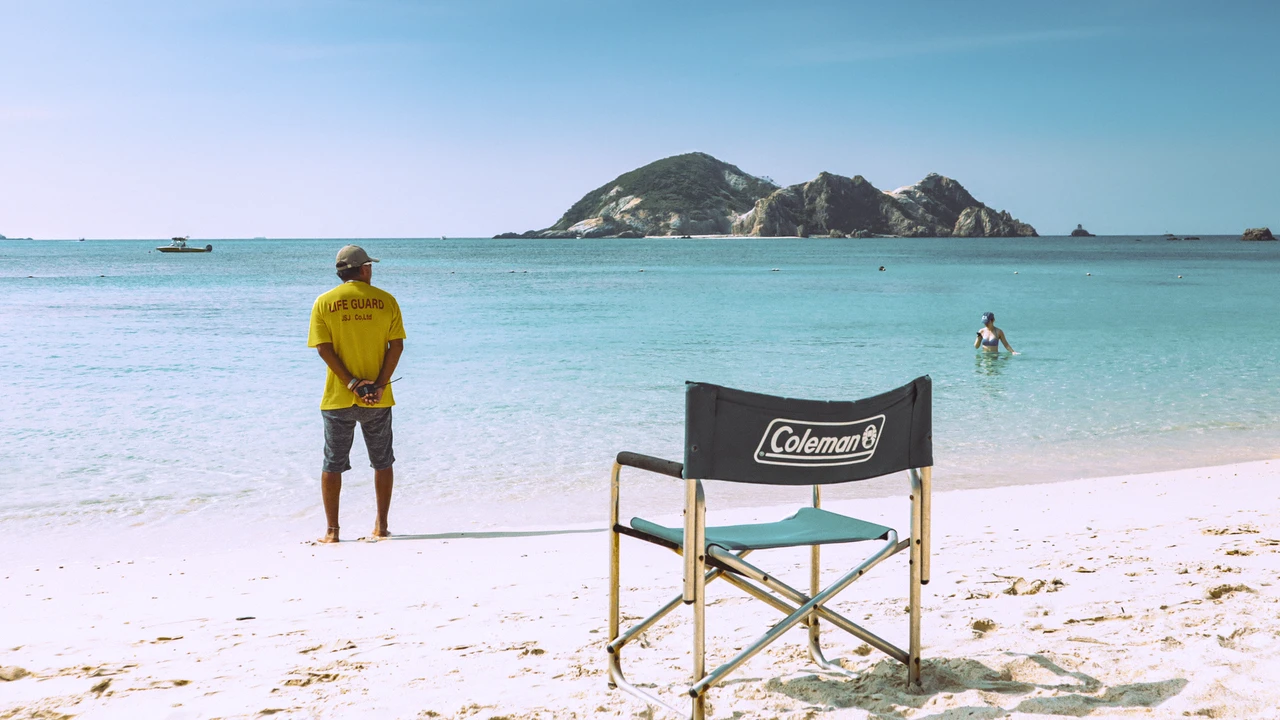
Okinawa's main island has good beaches, but the water clarity that put the region on divers' radars really shows up in the outer islands. The Kerama Islands, a national park roughly 40 minutes by high-speed ferry from Naha, are known for some of the clearest coastal water in Japan and coral reefs healthy enough that the area is regularly used as a benchmark for reef conservation efforts elsewhere in the country. Winter visitors (roughly December through April) can add humpback whale watching to a Kerama day trip, as the pod migrates through these waters to breed.
Churaumi Aquarium and Ocean Expo Park
On the main island's northern coast, Ocean Expo Park is home to Churaumi Aquarium, one of the largest aquariums in the world and the anchor of most first-time visitors' itineraries. Its Kuroshio Tank holds whale sharks and manta rays in a single enormous acrylic-paneled display, and the surrounding park includes a public beach and botanical garden, making it an easy full-day stop if you're staying anywhere on the northern half of the island.
The Okinawa Blue Zone: Longevity, Food, and Yanbaru's Rainforest
Okinawa is one of the handful of places in the world commonly cited as a "Blue Zone" — a region researchers and journalists have pointed to for unusually high numbers of residents living past 100, particularly in the villages of the northern Yanbaru region. Ogimi Village, sometimes called the "Village of Longevity," is the most frequently cited example. Locals and researchers alike tend to credit it to a mix of factors rather than any single secret: a diet built around bitter melon (goya), purple sweet potato, and tofu; the practice of hara hachi bu, or eating until roughly 80% full; and moai, the lifelong social support circles Okinawan communities form from childhood, which has been linked to lower stress and stronger community ties into old age. Worth noting for the skeptically minded traveler: some researchers have challenged parts of the original Blue Zone data in recent years, so treat the culture and cuisine as genuinely worth experiencing on their own merits rather than a guaranteed formula.
Yanbaru itself, the subtropical forest covering the northern third of the main island, was inscribed as a UNESCO World Natural Heritage Site in 2021 alongside Amami-Oshima, Tokunoshima, and Iriomote islands, protecting habitat for species found nowhere else on Earth, including the flightless Okinawa rail and the Okinawa woodpecker. A guided walk through Yanbaru National Park is the easiest way to see both the ecology and the slower pace of life that the longevity research keeps circling back to.

Best Time to Visit and a Sample Itinerary
Spring (March through May) and autumn (late September through November) offer the best combination of warm-but-manageable temperatures, lower humidity, and thinner crowds. Midsummer (July through September) is peak typhoon season in the region, and while storms don't hit every week, it's worth building flexibility into any itinerary during those months. Winter (December through February) is mild by most standards and is actually the best window for whale watching around the Kerama Islands, even though the water is too cool for most people to swim comfortably.
A first trip works well over 5 to 6 days: two days in and around Naha covering Shuri Castle, Kokusai Street, and the Peace Memorial Park; a day trip to the Kerama Islands for snorkeling or whale watching depending on season; two days on the northern half of the main island for Churaumi Aquarium and a Yanbaru forest walk; and a final day left open for whichever beach town you liked best. Travelers with more time often extend south to the Yaeyama Islands (Ishigaki and Iriomote) by a short domestic flight, though that's realistically a second trip's worth of content on its own.
Frequently Asked Questions
Is Okinawa part of mainland Japan?
Okinawa is a prefecture of Japan today, but it was historically the independent Ryukyu Kingdom until it was formally annexed in 1879. That separate history still shapes the islands' architecture, language, food, and customs, which is why many visitors describe it as feeling culturally distinct from mainland Japan even though it's fully part of the country administratively.
Do I need a car in Okinawa?
If you're only staying in central Naha, you can get by with the Yui Rail monorail and taxis. But most of Okinawa's best-known attractions — Churaumi Aquarium, the Yanbaru forests, and many beaches — are outside the monorail's coverage, so a rental car is strongly recommended for anyone spending more than two or three days on the main island.
When will Shuri Castle be fully reopened?
The restored main hall is targeted to reopen to visitors in late 2026, following the 2019 fire that destroyed the original structure. Some surrounding areas of the castle complex may still be under partial restoration after that date, so check current visitor information before your trip if seeing the fully completed site is a priority.
Is Okinawa expensive compared to the rest of Japan?
Okinawa is generally comparable to or slightly cheaper than mainland tourist hubs like Kyoto or Tokyo for food and local transport, though beachfront resort accommodation on the main island and in the Kerama Islands can run higher during peak spring and autumn weeks. Renting a car and self-driving is usually more economical than relying on taxis for multi-day stays.
What's the best month to see whales near Okinawa?
Humpback whales migrate through the waters around the Kerama Islands roughly from December through April, with peak sighting odds typically in January and February. This overlaps with Okinawa's mildest, least humid season, making winter a legitimate alternative to the more popular spring and autumn shoulder seasons if whale watching is a priority.
Okinawa's combination of a once-in-a-decade castle reopening, UNESCO-recognized rainforest, and genuinely distinct island culture is exactly the kind of story that tends to look obvious in hindsight once a destination breaks out — and the search data suggests 2026 is that moment. If subtropical Japan has you curious about other under-the-radar picks from the same Expedia trending list, our Big Sky, Montana travel guide covers 2026's #1 breakout destination. Comparing island getaways elsewhere in Asia? Our guides to Quy Nhon, Vietnam and Bangkok's best street food are a good next stop, and if Okinawa is your first trip to Japan, pair it with our guide to photographing Kyoto's temples without the crowds for a mainland-plus-island itinerary. Start planning now — shoulder-season flights and Kerama Islands accommodation for spring and autumn 2026 are already booking up.