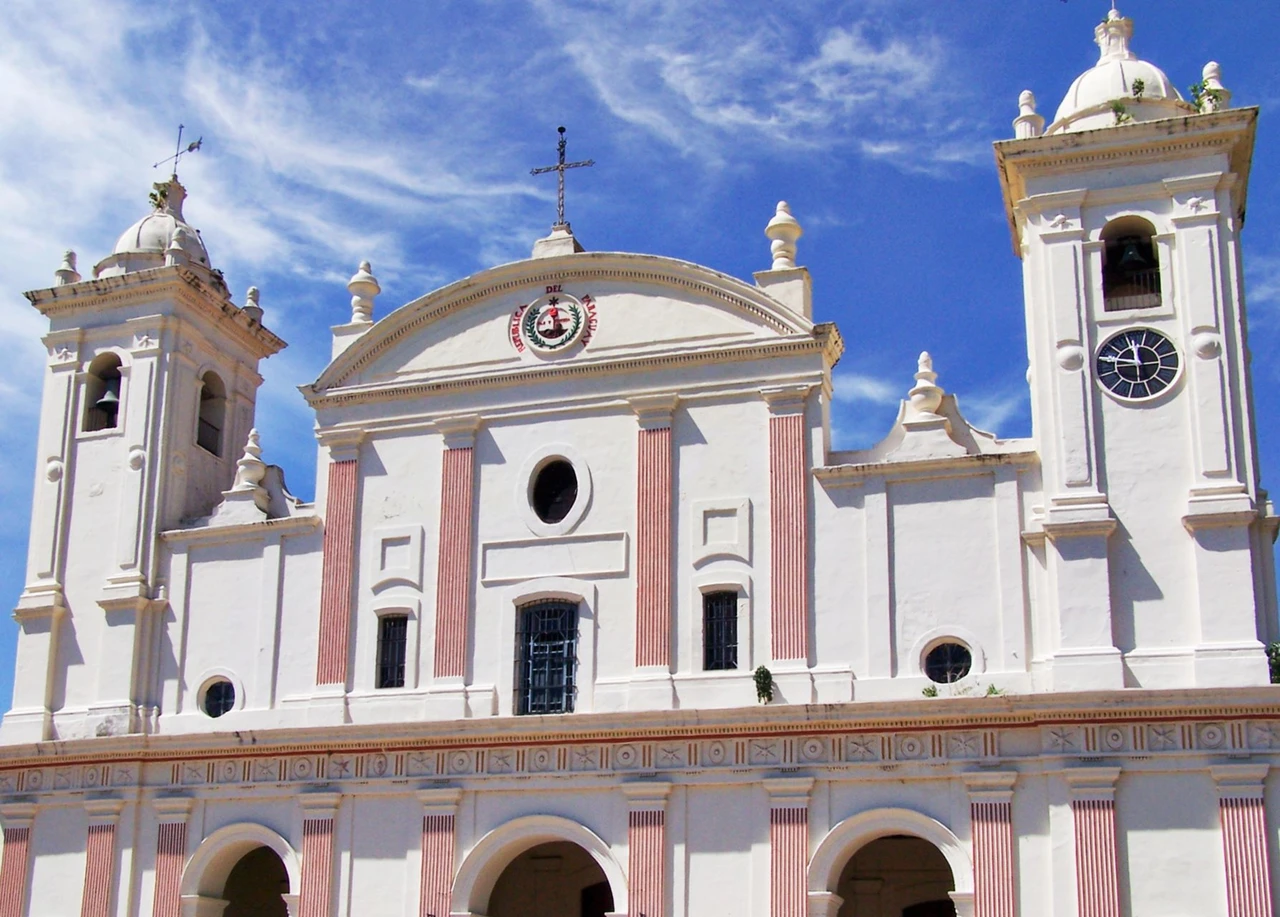
Paraguay Travel Guide 2026: South America's Fastest-Growing Destination
Ask most travelers to point to Paraguay on a map and you'll get a shrug. That is exactly why 2026 is the year to go. According to the UN Tourism Barometer, Paraguay recorded the fastest tourism growth of any country on Earth in the first quarter of 2026 — a 46% jump in international arrivals, with 1.3 million visitors between January and March alone, according to Paraguay's own Ministry of Tourism (SENATUR, reported via the Instituto Paraguayo). Condé Nast Traveler has since named the capital, Asunción, one of the best places to visit in Central and South America for 2026. We track fast-growing, low-competition destinations for this publication daily, and Paraguay is the clearest "get there before everyone else does" pick we've found all year. This guide covers exactly why the surge is happening, what to actually do in Asunción, the UNESCO-listed Jesuit ruins near Encarnación, the record-breaking Itaipú Dam, and everything you need to know about visas, currency, safety, and timing before you book.
Why Paraguay Is Suddenly the Fastest-Growing Destination in the World
Landlocked between Argentina, Brazil, and Bolivia, Paraguay has spent decades in the shadow of its more famous neighbors — travelers fly over it on the way to Iguazu Falls or the beaches of Rio without a second thought. That is changing fast. The UN Tourism Barometer's Q1 2026 report placed Paraguay at the top of the world's tourism growth rankings, repeating a strong 2025 performance (53% growth in the same period the year before) rather than a one-off blip. Paraguay's government tourism office attributes the surge to a mix of factors: a newly launched Investor Pass residency program drawing longer-stay visitors, waterfront redevelopment along the Paraguay River in Asunción, and a growing regional MICE (business and convention) tourism sector highlighted by Asunción's hosting of FIEXPO Latin America 2026.
For leisure travelers, the appeal is more straightforward: genuine affordability, almost no crowds at UNESCO World Heritage sites that would otherwise be swarmed, and a culture — built on the indigenous Guaraní language, which is co-official with Spanish and still spoken daily by most Paraguayans — that hasn't been reshaped around tourism at all. If you've already worked through Argentina, Chile, and Brazil, or you simply want to say you got somewhere before the search-volume charts catch up, this is the moment.
Asunción: Where to Start Your Trip
Most itineraries begin in Asunción, one of South America's oldest cities (founded 1537) and its most underrated capital. The redeveloped Costanera de Asunción waterfront promenade along the Paraguay River is the best introduction to the city's recent transformation — a decade ago this stretch was largely inaccessible; today it's lined with parks, cycling paths, and river views. From there, the historic center holds the Palacio de los López (the presidential palace, best seen lit up at night), the Panteón Nacional de los Héroes, and the Manzana de la Rivera museum complex.
Food is where Asunción quietly wins people over. Start every day the way locals do: with tereré, ice-cold yerba mate served in a guampa cup with a metal bombilla straw — practically the national ritual — and chipa, a cheese-and-cassava-starch bread roll sold on nearly every corner. The Mercado 4 market is the place for a real, unpolished look at daily Paraguayan life and inexpensive local lunches. Asunción's dining scene has also expanded rapidly in the last two years, with a new wave of restaurants reinterpreting Guaraní-influenced staples like sopa paraguaya (a savory cornbread, despite the name) and bori bori soup.
The UNESCO Jesuit Ruins Near Encarnación
Paraguay's single biggest bucket-list attraction is also one of South America's least visited UNESCO World Heritage Sites. Between the 17th and 18th centuries, Jesuit missionaries and Guaraní communities built a network of self-governing mission towns across the region. Two of the best-preserved survive near the southern city of Encarnación: La Santísima Trinidad de Paraná (usually just called Trinidad), the larger and more elaborate of the pair, with its carved stone church façade and central plaza still largely intact, and the smaller Jesús de Tavarangüe a short drive away. Both were jointly inscribed as a UNESCO World Heritage Site in 1993. A combined ticket typically covers Trinidad, Jesús de Tavarangüe, and a third, more remote site, San Cosme y Damián, valid across three days if you want to see all of them properly.
Encarnación itself, on the Paraná River across from Argentina, is worth a night or two beyond the ruins — it hosts one of South America's biggest Carnival celebrations outside Brazil each February, with a purpose-built Sambódromo parade ground, and makes a relaxed base for exploring the missions by rented car or organized day tour.

Ciudad del Este and the Itaipú Dam
On the opposite side of the country, hard against the borders of Brazil and Argentina, Ciudad del Este is home to the Itaipú Dam — jointly operated by Paraguay and Brazil and, by generating capacity, one of the largest hydroelectric plants on the planet. Guided tours take visitors across the structure itself, and after sunset the dam runs a sound-and-light show against the spillway that draws a steady stream of visitors despite Paraguay's otherwise low tourist numbers. Because Ciudad del Este sits at the "Triple Frontier" where Paraguay, Brazil, and Argentina meet, it's also a realistic base for combining a Paraguay trip with a visit to Iguazu Falls, roughly a short drive away on the Argentine or Brazilian side — a practical reason many travelers now build Paraguay into a wider regional itinerary rather than treating it as an isolated add-on.

Practical Travel Info: Visa, Currency, Safety, and Best Time to Visit
Visa and entry requirements
Paraguay is visa-free for tourism for US, UK, and most EU citizens under a visa-waiver arrangement currently confirmed through August 2027, allowing stays of up to 90 days (extendable once for a further 90 days through Paraguay's Directorate General of Immigration). Your passport needs at least six months of validity remaining on entry, and immigration officers can ask for proof of onward or return travel, so keep a return ticket accessible. As with any visa-waiver program, rules can shift, so confirm current requirements with the nearest Paraguayan consulate or embassy shortly before you travel.
Currency and budget
Paraguay's currency is the guaraní (PYG). Cash is still king outside Asunción's larger hotels and restaurants, and ATMs are common in Asunción, Encarnación, and Ciudad del Este but sparser elsewhere. Overall, Paraguay remains one of the least expensive countries in South America for food, transport, and mid-range accommodation, part of why the "affordability" theme comes up so often in 2026 coverage of the country.
Best time to visit
Paraguay's climate is subtropical, with hot, humid summers (December–February, often exceeding 35°C/95°F) and milder, drier weather from April through September. Most visitors find April–June and September–November the most comfortable windows for sightseeing in Asunción and touring the Jesuit ruins on foot.
Safety
Paraguay generally sees far less violent crime aimed at tourists than some of its regional neighbors, though standard South American city precautions apply in Asunción and Ciudad del Este: keep valuables out of sight, use registered taxis or rideshare apps at night, and stay alert around the Ciudad del Este border-crossing area, which sees more petty theft than the rest of the country. Check your home country's latest travel advisory before departure.
A Sample 5-Day Paraguay Itinerary
Day 1–2: Asunción — Costanera waterfront, Palacio de los López, Manzana de la Rivera, Mercado 4, and an evening trying sopa paraguaya and tereré. Day 3: Fly or take a long-distance bus south to Encarnación; explore the town and its riverside area. Day 4: Full-day trip to the Jesuit ruins at Trinidad and Jesús de Tavarangüe. Day 5: Travel to Ciudad del Este for the Itaipú Dam day tour and evening light show, with the option to extend the trip across the border to Iguazu Falls if time allows.
Frequently Asked Questions
Is Paraguay safe to visit in 2026?
Yes, for the vast majority of visitors. Paraguay sees comparatively low rates of tourist-targeted crime, though ordinary city precautions apply in Asunción and around the Ciudad del Este border crossing.
Do US and EU citizens need a visa for Paraguay?
No. US, UK, and most EU citizens can enter visa-free for tourism for up to 90 days under a waiver program confirmed through August 2027, provided their passport is valid for at least six months.
What language is spoken in Paraguay?
Spanish and Guaraní are both official languages, and Guaraní — an indigenous language — is spoken daily by the majority of the population alongside Spanish, one of the only countries in the Americas where this is true.
How many days do you need in Paraguay?
Five days is enough to comfortably cover Asunción, the Jesuit ruins near Encarnación, and the Itaipú Dam near Ciudad del Este, which together form the core of most first-time itineraries.
Why is Paraguay tourism growing so fast in 2026?
The UN Tourism Barometer recorded 46% year-over-year growth in international arrivals in Q1 2026, the fastest of any country tracked, driven by new residency/investment programs, waterfront redevelopment in Asunción, and rising recognition from outlets like Condé Nast Traveler.
Ready to Go Off the Beaten Path?
Paraguay won't stay this quiet for long — the same growth curve that put it at the top of the UN Tourism Barometer's 2026 rankings is exactly the kind of trend that tends to fill up UNESCO sites and waterfront cafés within a few short years. If South America's least-visited country has you thinking about other overlooked destinations, take a look at our guides to Tbilisi and the rise of the Caucasus, Kyrgyzstan's yurts and alpine lakes, and Sarajevo's best-value city break — or, for our first-ever feature on another continent entirely, Adelaide, Australia. Start planning now, while Paraguay is still genuinely uncrowded.