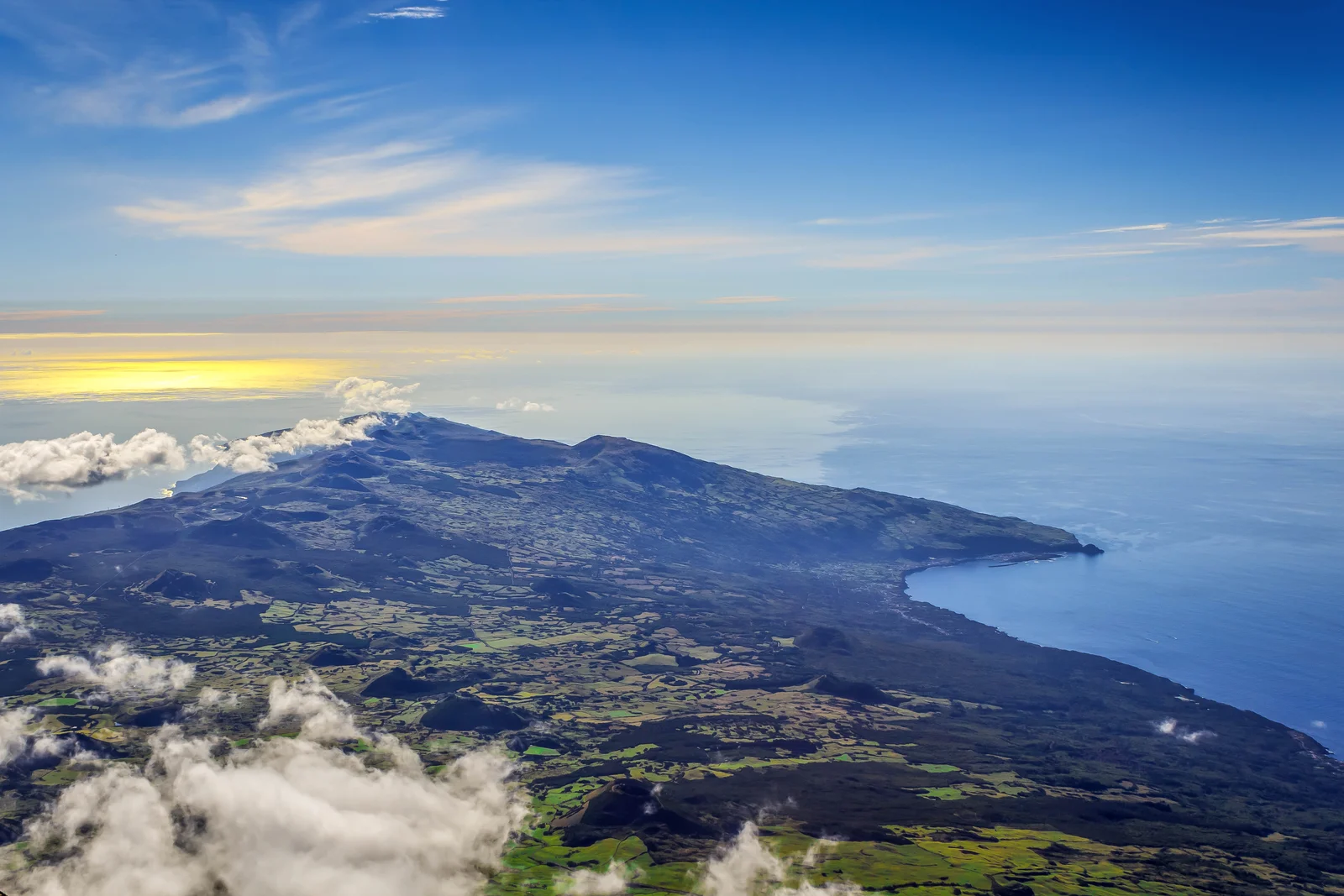
Pico in Winter: The Azores Island Worth Visiting Off-Season
Against the Season
Almost everyone who visits Pico does so in July or August, which is understandable. The volcano floats above the clouds on clear mornings; the black lava vineyards glow in the heat; the whale watching boats are full and reliable; the restaurants are open. Summer in Pico is magnificent. But it is also, increasingly, crowded — and it is not the Pico that those who know the island best consider most extraordinary.
Pico in winter is something else. Wilder, emptier, more honest about what the Azores actually are: an archipelago of nine volcanic islands in the middle of the North Atlantic, 1,500km from the nearest continent, subject to weather systems that arrive with operatic drama and depart just as quickly. To visit Pico in January or February is to understand what the islands are made of — geological and human — in a way that summer never quite allows.
The Volcano in Winter Light
Pico mountain — 2,351 metres, the highest point in Portugal — is visible from the ferry crossing from Faial on clear days: a perfect volcanic cone rising from the sea, its upper third frequently lost in cloud. In summer, it is climbed by hundreds of people each week. In winter, it is a different proposition.
The official climbing season ends in September and resumes in May. Outside these months, the summit is frequently covered in snow or ice, and the mountain can close at any time due to weather. But the weeks of late November and early March — the margins of the season — offer windows of extraordinary clarity. On a cold, windless morning after a front has cleared, the summit path is empty, the views are unlimited, and the sense of being genuinely alone on the highest point in Portugal is an experience of a different order from a summer Sunday with 200 other walkers.
Always check conditions with the mountain guides service (Montanha do Pico) before attempting the summit outside the main season. A guide is not legally required but is strongly recommended — the weather changes with little warning.
Whale Watching: Why Winter Is Different
Pico is one of the finest whale-watching destinations in the world, and this is true in every season. Sperm whales are resident year-round in the deep water off the island's coast — the underwater geography creates upwellings of nutrients that make this one of the richest feeding grounds in the North Atlantic. But winter offers something that summer cannot: the possibility of encounters with species that are less common in the warmer months.
Blue whales — the largest animals on Earth — pass through the Azores in greater numbers between December and March, following food sources south before returning north in spring. Fin whales, sei whales, and occasionally humpbacks are also more frequently sighted in winter. The sea state is less predictable, and boats are smaller and less crowded. The combination produces encounters that feel genuinely wild rather than touristic.
Espaço Talassa and Cetus are the most established whale-watching operators; both run trips in winter with smaller boats adapted for rougher conditions.
The Lajido Vineyards: A UNESCO Landscape in Any Season
The vineyards of Pico's southern coast are among the most extraordinary agricultural landscapes in the world. Vines are planted in currais — small enclosures of black lava walls, built by hand over centuries to protect the vines from Atlantic wind and salt spray, and to absorb heat from the volcanic rock through the day and radiate it at night. The pattern covers the coastline in a grid of irregular cells that from above resembles a map of an ancient city.
Designated a UNESCO World Heritage Site in 2004, the lajido landscape is photogenic in every season. But winter light — low, directional, passing through cloud — handles the contrast between the black lava walls and the silver-grey vine differently from summer: more graphic, more austere, and in some conditions more beautiful. The Pico Wine Museum in Madalena traces the full history of winemaking on the island and offers tastings of verdelho, the principal grape — a white wine of unusual character, faintly mineral, that the island produces better than anywhere else in the world.
Practical Notes for a Winter Visit
- Getting there: SATA Air Açores operates flights from Lisbon and Porto year-round, with reduced frequency in winter. Inter-island ferries run less frequently in winter; check the timetable in advance. The crossing from Faial to Pico takes 30 minutes by ferry.
- Accommodation: Most large hotels close between October and April. Rural guesthouses, private rentals, and a handful of year-round hotels in Madalena and São Roque remain open — book in advance as the selection is limited.
- Weather: Expect rain, mist, and wind, punctuated by periods of extraordinary clarity. A good waterproof jacket is essential. Pack layers — temperatures at the coast range from 12–18°C; at altitude, significantly lower.
- What to do on a bad weather day: The Pico Wine Museum (Madalena), the whale-watching museum (Lajes do Pico), the Gruta das Torres lava tube (one of the longest in the world), and the various cheese producers (Pico's buttery cow's milk cheese is exceptional) all operate year-round.