Quy Nhon, Vietnam Travel Guide 2026: Inside the World's #4 Trending Destination
Every year, Tripadvisor combs through more than eight million listed destinations and businesses on its platform and hands its "Travelers' Choice Best of the Best" award to fewer than 1% of them, based on twelve months of real traveler reviews and ratings. In 2026, the list's fourth spot went to a place most Western travelers have never heard of: Quy Nhon, Vietnam. It landed just behind Madeira, Tbilisi, and Chicago, and ahead of Puerto Escondido, Milan, and Glasgow. If you have spent years bouncing between Da Nang and Nha Trang on a Vietnam itinerary, this is the coastal city about to change that pattern. This guide covers exactly what earned Quy Nhon its new status, how to get there, when to go, and how to spend three unhurried days on some of the last uncrowded beaches on Vietnam's central coast, using only verifiable, up-to-date travel facts.
Why Quy Nhon Just Became Vietnam's Most Talked-About Beach Town
Quy Nhon is the capital of Binh Dinh province, roughly midway between the far busier resort cities of Da Nang to the north and Nha Trang to the south. For most of the last two decades it stayed off the international radar, popular mainly with domestic Vietnamese tourists and a small circle of backpackers who found it via word of mouth. That changed in 2026, when Tripadvisor's "Best of the Best" list singled it out, describing the region as home to "some of Vietnam's most beautiful beaches, all blissfully uncrowded," and recommending visitors "spend 80% of your time doing nothing, and use the other 20% exploring the region's Cham-era temple towers and chowing down on fresh seafood."
That combination is exactly what separates Quy Nhon from its more famous neighbors: a working fishing city with a genuine local rhythm, granite headlands enclosing turquoise coves, and a cluster of centuries-old brick towers that predate most of the temples tourists queue for elsewhere in Southeast Asia. It is not undiscovered anymore, but it is still years behind Da Nang and Nha Trang in terms of crowd levels and development, which is precisely the window international travelers are now rushing to catch.
The Beaches That Earned Quy Nhon Its Reputation
Ky Co Beach, a short boat or motorbike ride from the city center, is the postcard image most people associate with Quy Nhon: clear turquoise water framed by granite boulders and green hills, quiet enough on weekdays that you can have long stretches of sand to yourself. Locals and returning visitors often nickname it "the Maldives of Vietnam" for the color of the water alone.
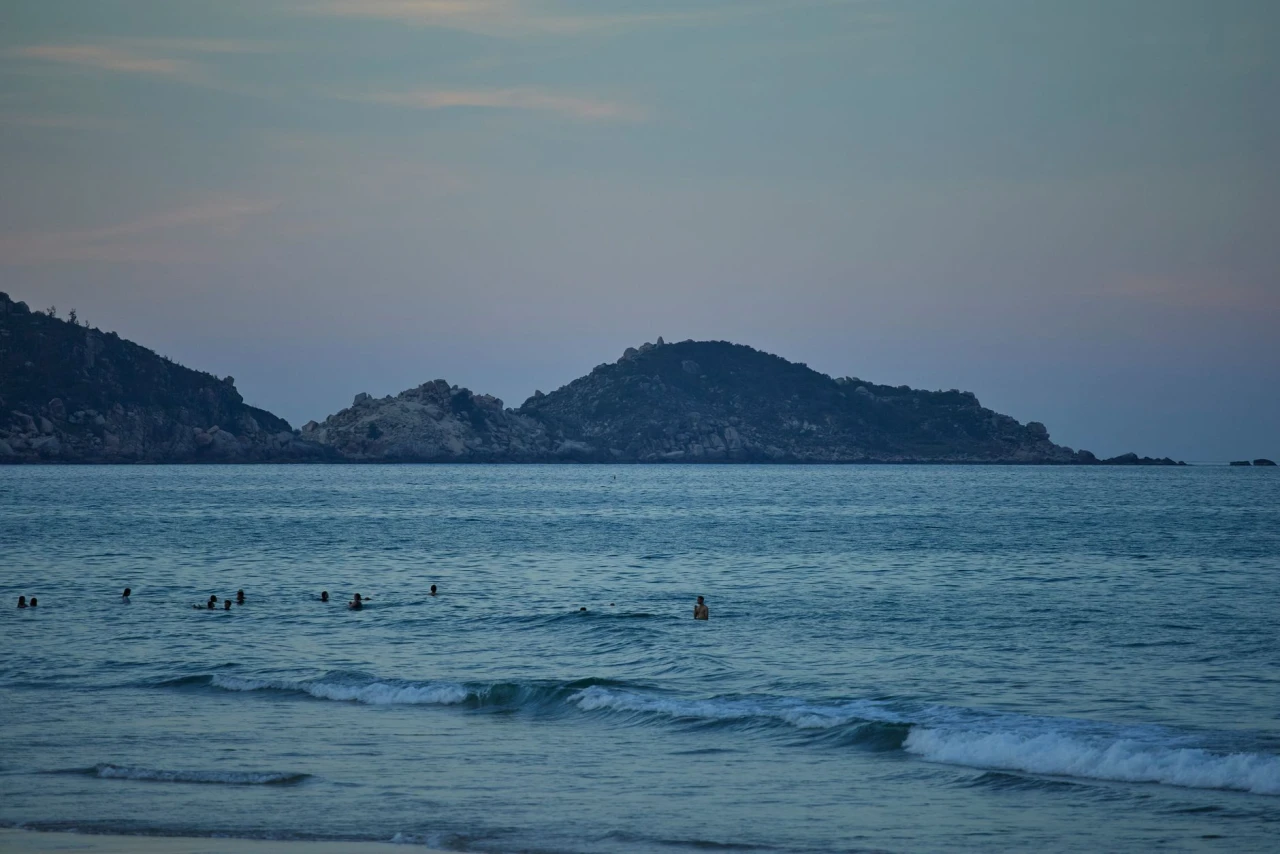
Eo Gio, or "Wind Gap," is a dramatic cliff-lined cove a few kilometers north of the city where waves break against layered rock formations; it is best visited in the early morning or late afternoon when the light rakes across the cliffs. Bai Xep is a smaller, working fishing village beach that has quietly become a favorite among longer-stay travelers for its handful of low-key guesthouses and near-total absence of tour buses. Inside the city itself, Xuan Dieu Street runs along the main municipal beach, which comes alive every evening as locals finish work and head straight into the sea to swim, an authentic slice of daily life rather than a staged tourist scene. For something different, the Phuong Mai peninsula across the lagoon has rolling sand dunes that feel closer to a desert landscape than a tropical coastline.

Cham Heritage: Towers That Predate Angkor Wat
Long before Quy Nhon existed as a Vietnamese city, this stretch of coast was part of the Champa Kingdom, a Hindu-Buddhist civilization that built brick towers across central Vietnam between roughly the 11th and 13th centuries. Binh Dinh province holds one of the densest surviving clusters of these structures anywhere in the country. The Banh It Towers, sometimes called the Silver Towers, sit on a hilltop just outside the city and form one of the most photographed Cham complexes in Vietnam, especially at sunrise or sunset when the reddish brickwork catches the light. The Duong Long Towers, a short drive further inland, are the tallest surviving Cham towers in the country and are decorated with detailed stone and terracotta carvings. Closer to the center, the Thap Doi (Twin Towers) can be visited on a short city detour, making it easy to combine a heritage stop with an afternoon at the beach.
These sites see a fraction of the visitor numbers that Angkor Wat or even My Son near Hoi An receive, which means you can usually explore them at your own pace without fighting through tour groups.

Getting to Quy Nhon and Entry Requirements
Quy Nhon is served by Phu Cat Airport (airport code UIH), located about 35 kilometers north of the city center. Unlike Da Nang or Nha Trang, Phu Cat only has direct domestic connections, from Hanoi and Ho Chi Minh City. The flight from Ho Chi Minh City takes around 1 hour 10 minutes, and from Hanoi around 1 hour 35 minutes; Vietnam Airlines, Vietjet, and Bamboo Airways all operate the route with multiple daily departures, so most international visitors will connect through one of those two hub cities first.
Most nationalities can enter Vietnam on an e-visa, applied for online through the official portal (evisa.xuatnhapcanh.gov.vn) rather than through a travel agency. A single-entry e-visa costs 25 USD and a multiple-entry version costs 50 USD, both valid for up to 90 days, with typical processing time of a few working days. Make sure your passport is valid for at least six months beyond your entry date, since this rule has been strictly enforced since March 2026. The local currency is the Vietnamese dong (VND); if you are carrying more than the equivalent of 5,000 USD in cash, or more than 15,000,000 VND, you are required to declare it at customs.
Best Time to Visit and What to Eat
Quy Nhon has two clear seasons: a dry season running roughly from February to August, and a wetter, stormier season from September through January. The sweet spot most repeat visitors point to is March through early May, when daytime temperatures sit comfortably between 23 and 29°C, the sea stays calm, and the crowds (still relatively light by Vietnam standards) are at their thinnest. If you are planning extended beach days or a boat trip out to Ky Co, it is worth avoiding the September-to-January window, when rain and rougher seas can disrupt outdoor plans.
Food here leans heavily on the sea. Bun cha ca, a fish-cake noodle soup, is considered the signature dish of the region and is served everywhere from street carts to sit-down restaurants. Banh xeo tom nhay, a crispy rice-flour pancake made with "jumping shrimp" caught fresh from the lagoon, is another local specialty worth seeking out. In the evenings, the seafood stalls that line Xuan Dieu Street near the main beach sell that day's catch grilled or steamed to order, at a fraction of the prices found in Da Nang or Nha Trang's more tourist-oriented restaurants.
Where to Stay and a Simple 3-Day Itinerary
Xuan Dieu Street, along the main city beach, has the largest concentration of budget and mid-range hotels within easy walking distance of restaurants and nightlife. The Ghenh Rang and Quy Hoa area, just south of the city, offers a quieter, more resort-style base with easy access to Quy Hoa Beach. For travelers who want to be closest to Ky Co and Eo Gio, the newer resorts on the Nhon Ly peninsula cut down on daily travel time to the best beaches, at the cost of being a short drive from the city center itself.
A simple three-day plan: spend day one settling in around Xuan Dieu Street, visiting the in-town Thap Doi towers, and joining the evening swim crowd on the municipal beach. Dedicate day two to Ky Co and Eo Gio, ideally booked as a single boat-and-cliff combo trip departing early to beat both the heat and the crowds. On day three, head inland to the Banh It and Duong Long towers before finishing the afternoon at the quieter Quy Hoa Beach, a good spot to decompress before an onward flight from Phu Cat.
Frequently Asked Questions About Visiting Quy Nhon
Is Quy Nhon worth visiting in 2026?
Yes. Beyond the Tripadvisor recognition, Quy Nhon offers a rare combination in Vietnam right now: genuinely uncrowded beaches, a walkable and low-key city center, and easy access to Cham heritage sites, all at prices noticeably lower than Da Nang or Nha Trang.
How do I get from Ho Chi Minh City or Hanoi to Quy Nhon?
Fly into Phu Cat Airport (UIH). Vietnam Airlines, Vietjet, and Bamboo Airways all operate multiple daily flights from both cities, with a flight time of roughly 1 hour 10 minutes from Ho Chi Minh City and 1 hour 35 minutes from Hanoi.
Do I need a visa to visit Vietnam?
Most travelers will need an e-visa, obtained in advance through Vietnam's official e-visa portal. It allows stays of up to 90 days and costs 25 USD for a single entry or 50 USD for multiple entries. Apply a few working days before you travel and make sure your passport is valid for at least six months from your entry date.
What is the best time of year to visit Quy Nhon?
March through early May generally offers the best combination of pleasant temperatures, calm seas, and lighter crowds. The dry season overall runs from February to August; the September-to-January period is wetter and stormier and is best avoided for beach-focused trips.
Is Quy Nhon better than Da Nang or Nha Trang?
"Better" depends on what you want. Da Nang and Nha Trang have more infrastructure, nightlife, and direct international flights. Quy Nhon trades some of that convenience for quieter beaches, lower prices, and a slower, more local pace, which is exactly the trade-off that pushed it onto Tripadvisor's global trending list in 2026.
Plan Your Trip Before the Secret Gets Out
Quy Nhon's appeal is built on precisely the thing that tends to disappear once a destination goes fully mainstream: uncrowded beaches, unhurried days, and prices that still reflect a place most international travelers have yet to discover. With Tripadvisor's 2026 recognition already drawing new attention, the window to see it before the crowds catch up is likely measured in a few years rather than a few decades. If Southeast Asia's food scene is more your focus for this trip, our guide to Bangkok's best dishes pairs well as a next stop, and travelers chasing 2026's other under-the-radar destinations should also see our guides to Jaffna, Sri Lanka and Kalymnos, Greece, two more places earning global recognition for their uncrowded charm. Camera-focused travelers heading further into Asia might also enjoy our guide to photographing Kyoto without the crowds. Start planning now, and you can still catch Quy Nhon while it feels like a local secret rather than a checked-off bucket-list stop.