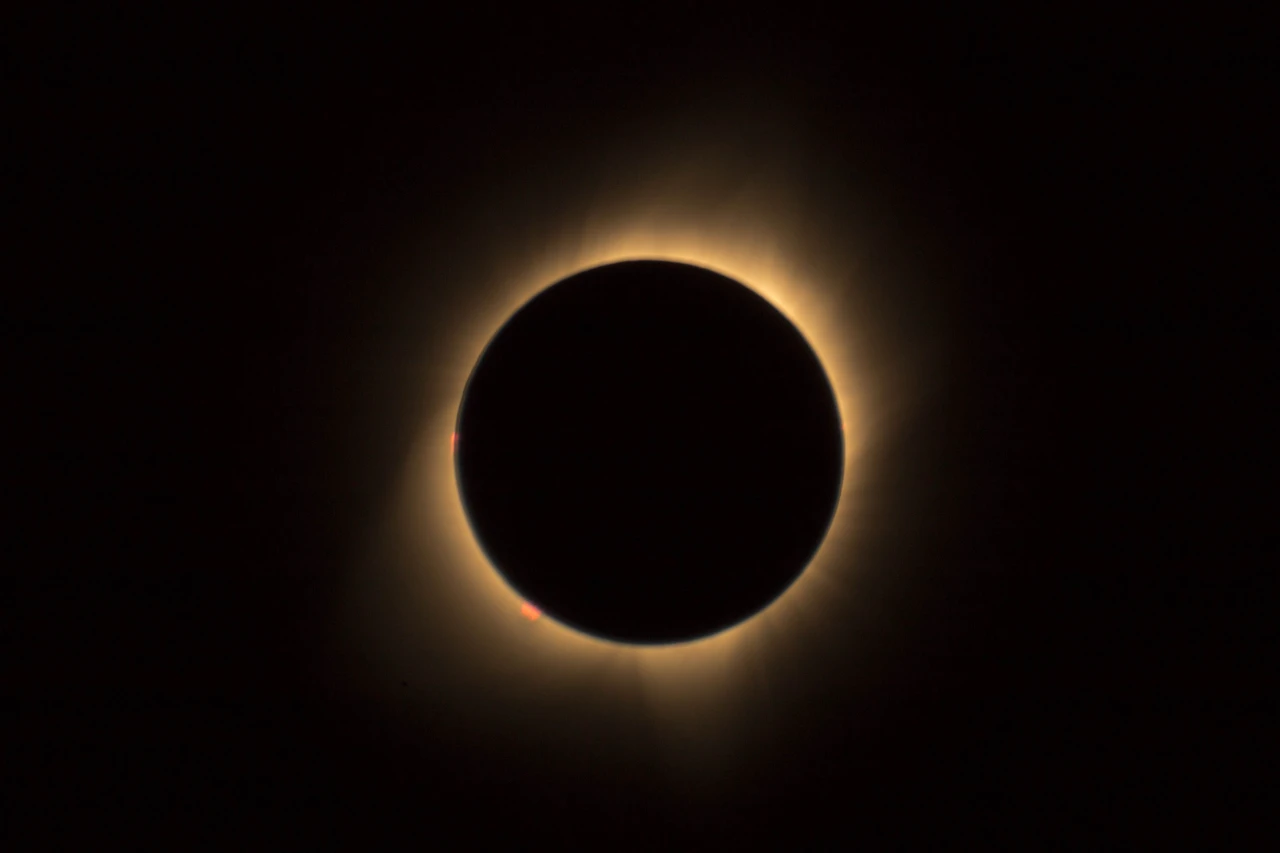
Total Solar Eclipse in Spain 2026: Where to Watch It and How to Plan Your Trip
On the evening of 12 August 2026, the Moon's shadow will race across northern Spain, plunging cities and coastlines into a few minutes of daytime darkness. It will be the first total solar eclipse visible from mainland Spain since 1905, and for anyone who has never chased a total eclipse, this is about as convenient as it gets: no long-haul flight to Antarctica, no remote desert expedition, just a well-connected corner of Western Europe with excellent train links, budget flights, and no shortage of places to stay. At Go Away, we plan travel around real events, real weather windows, and real logistics rather than hype, so this guide sticks to what has been confirmed by astronomers and eclipse-tracking authorities like timeanddate.com, the National Solar Observatory, and Spain's Instituto Geográfico Nacional. Below you'll find exactly where the path of totality falls, which cities only get a partial view, what time to look up, and how to plan a trip around a two-minute astronomical event without wasting the rest of the week.
What Makes the August 12, 2026 Eclipse So Rare
Total solar eclipses happen somewhere on Earth roughly every 18 months, but most tracks cross oceans, polar regions, or sparsely populated stretches of land. The August 2026 eclipse is different: its path of totality clips eastern Greenland and western Iceland before sweeping directly across the northern half of the Iberian Peninsula. Spain last saw a total eclipse in 1905, which means most residents alive today have never experienced totality without traveling abroad for it. That 121-year gap is a big part of why this event has generated so much interest from both astronomy enthusiasts and casual travelers who simply want to see something genuinely rare.
Because the eclipse arrives in the second half of August, it also overlaps with the tail end of Spain's peak summer travel season. That combination, rare astronomical event plus high season, means accommodation in the towns directly under the path of totality is filling up faster than usual for this time of year. If Spain is even loosely on your travel radar for 2026, this is the summer to book early rather than wait.
The Path of Totality: Where in Spain You'll See It Best
The Moon's umbral shadow enters Spain from the Atlantic over Galicia, crosses the northern regions of Asturias, Castilla y León, and the Basque Country, then continues southeast before exiting over the Mediterranean near the Balearic Islands. Not every city in the north gets the same experience, so it's worth understanding the difference between the centerline, the edge of the path, and everywhere outside it.
Best Viewing Cities Ranked by Duration
- Oviedo and Gijón (Asturias): Sitting close to the centerline, these two cities are expected to see the longest totality on the peninsula, close to 1 minute 48 seconds of full darkness.
- León and Valladolid (Castilla y León): Comfortably inside the path, with just over a minute of totality and considerably more open sky for viewing than the Cantabrian coast.
- Vitoria-Gasteiz (Basque Country): Nearer the northern edge of the path, totality here runs to roughly one minute.
- Palma de Mallorca (Balearic Islands): The eclipse exits Spain over the Balearics, giving the islands a shorter but still genuine window of totality, with the added appeal of combining eclipse chasing with a beach holiday.
Cities Outside the Path (Partial Eclipse Only)
This is the detail that catches a lot of travelers out: Madrid and Barcelona both sit outside the path of totality. Visitors in either city will see an impressive partial eclipse, with the Moon covering most of the Sun, but not the full blackout that makes a total eclipse so dramatic. Valencia is also south of the path and will experience a partial eclipse only. If witnessing full totality is the goal, plan to be inside the band running through Galicia, Asturias, León, and the Basque Country, or on the Balearic Islands, on the afternoon of August 12.
When It Happens: Timing, Duration, and What to Expect
Because the eclipse occurs in the evening, close to sunset in Spain, the Sun will already be low on the western horizon when totality arrives, generally around 20:30 local time depending on exact location along the path. That low angle changes the experience compared to a midday eclipse: expect a warm, golden light in the final minutes before totality, a rapid drop in temperature, and a horizon that glows orange in every direction as the shadow's edge passes nearby regions still in daylight. Totality itself lasts under two minutes at every location in Spain, so timing and positioning matter. Arrive at your chosen viewing spot well before the partial phases begin, which start roughly an hour earlier, and keep an eye on the local weather forecast in the days before, since cloud cover along the Atlantic-facing Galician and Asturian coast is the single biggest risk to a clear view.
How to Plan Your Trip: Accommodation, Crowds, and Booking Tips
Eclipse chasers tend to descend on a narrow band of towns, which means accommodation directly on the centerline will be the first to sell out. A few practical tips worth following:
- Book inside the path, but consider smaller towns. Oviedo and León will fill up quickly; nearby smaller towns still inside the path of totality often have more availability and lower prices for the same two minutes of darkness.
- Have a backup viewing location. Because cloud cover is the main threat, experienced eclipse chasers often plan a primary and a secondary site within driving distance of each other, choosing on the morning of the eclipse based on the forecast.
- Combine the eclipse with a longer Spain itinerary. Since totality only lasts a couple of minutes, most visitors build a full week around it, pairing the astronomical event with the Camino de Santiago region in Galicia, the beaches and cider houses of Asturias, or a few extra days on Mallorca.
- Rent a car if you're staying near the coast. Public transport in rural Galicia and Asturias is limited, and having your own vehicle makes it far easier to relocate quickly if the weather turns.
Eclipse Safety: What You Need to Know
Looking directly at the Sun during any partial phase of the eclipse, before and after totality, can cause permanent eye damage, so proper eclipse glasses meeting the ISO 12312-2 safety standard are essential for every partial stage. The only moment it is safe to view the eclipse with the naked eye is during totality itself, when the Moon fully covers the Sun's disc. As soon as the first bright sliver of sunlight reappears, glasses go back on immediately. If you plan to photograph the eclipse, a certified solar filter on your camera lens is just as important as it is for your eyes, and it's worth practicing with your equipment beforehand since totality passes in well under two minutes and there's no second take.
Frequently Asked Questions
What time will the total solar eclipse happen in Spain on August 12, 2026?
Totality arrives in the early evening, close to sunset, at approximately 20:30 local time, though the exact minute varies slightly depending on where you are along the path. Partial phases begin roughly an hour beforehand.
Will Madrid or Barcelona see the total eclipse?
No. Both cities sit outside the path of totality and will only experience a partial eclipse. To see full totality, you need to be within the band crossing Galicia, Asturias, León, the Basque Country, or the Balearic Islands.
What is the best city in Spain to watch the 2026 eclipse?
Oviedo and Gijón in Asturias are expected to have the longest totality on the Spanish mainland, close to 1 minute 48 seconds, thanks to their position near the centerline of the path.
Do I need special glasses to watch the eclipse?
Yes, ISO 12312-2 certified eclipse glasses are required for every partial phase of the eclipse. The only exception is the brief period of full totality, when it's safe to look without protection.
Is the Balearic Islands a good option for watching the eclipse?
Yes. The path of totality exits Spain over the Balearic Islands, including Mallorca, which means visitors there get genuine totality along with the option to combine eclipse chasing with a beach holiday.
Plan Your Eclipse Trip to Spain
A once-in-a-lifetime two minutes deserves a well-planned week around it. If Spain's northern coast is new territory for you, pair the eclipse with a wider Iberian itinerary, our guide to the best hiking trails and waterfalls in the Algarve covers a scenic extension just across the Portuguese border, while our roundup of the 10 cheapest European cities for a weekend getaway is a useful reference if you want to bookend the eclipse with an affordable city break elsewhere on the continent. Travelers who want to turn the trip into something longer might also enjoy our feature on discovering the Azores, another Atlantic destination well worth exploring while you're already in the region. Whichever route you choose, book your accommodation inside or near the path of totality now, before the last rooms in Oviedo, León, and Palma de Mallorca disappear.