Colmar, Alsace: What to See and Where to Stay in the Old Town
17 Nov 2026
Colmar is the Alsatian town that works best on foot: a largely pedestrianised old town with half-timbered houses, canals and museums a few minutes apart. This guide covers what is worth seeing, why it makes sense to sleep in the centre, and how to use Colmar as a base for the Wine Route. Facts come from the Colmar tourist office, the Alsace Wine Route site and travel guides, and are credited as such; always confirm opening hours, prices and dates with the official sources.
What should you see in Colmar on a first day?
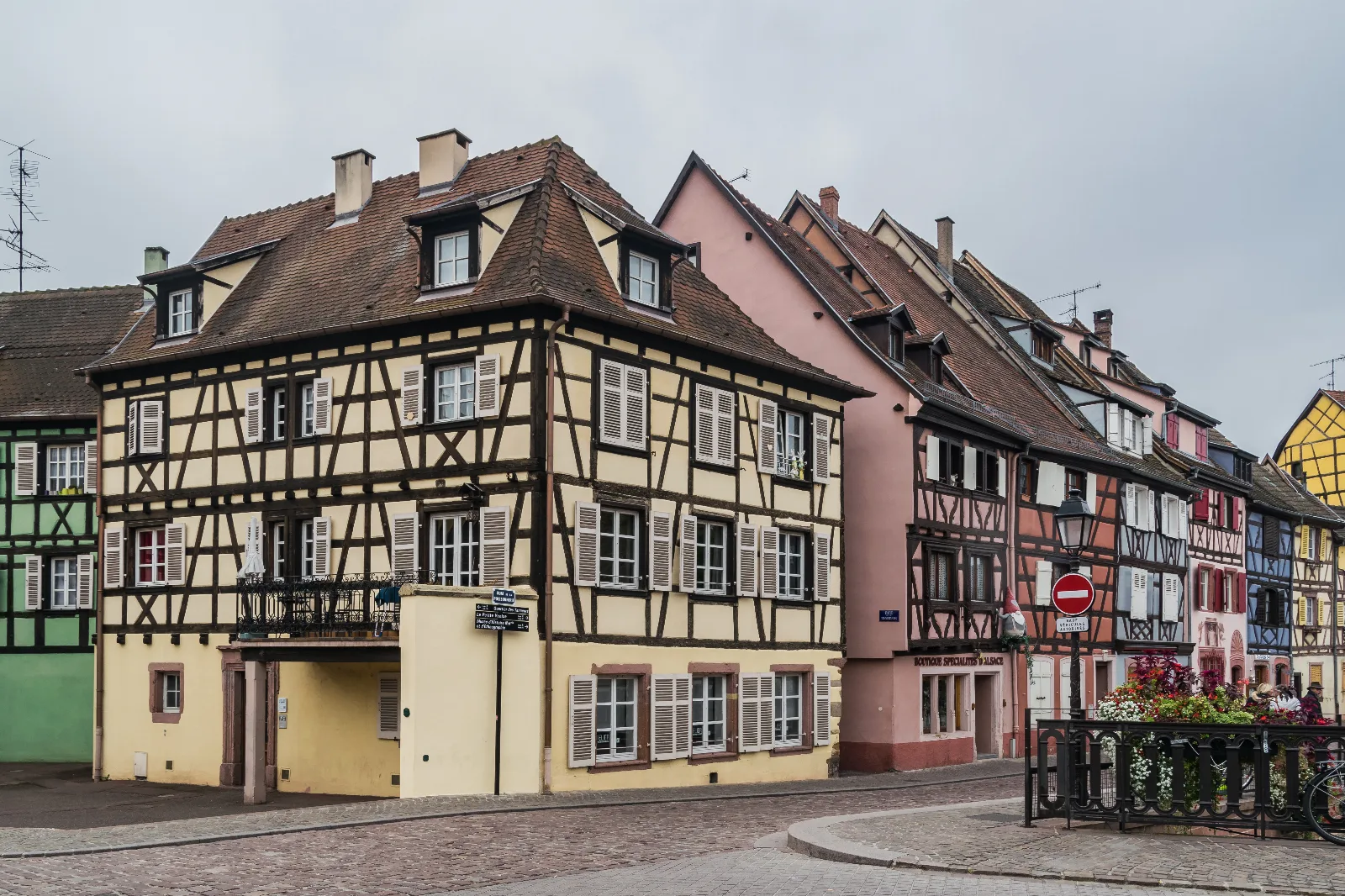
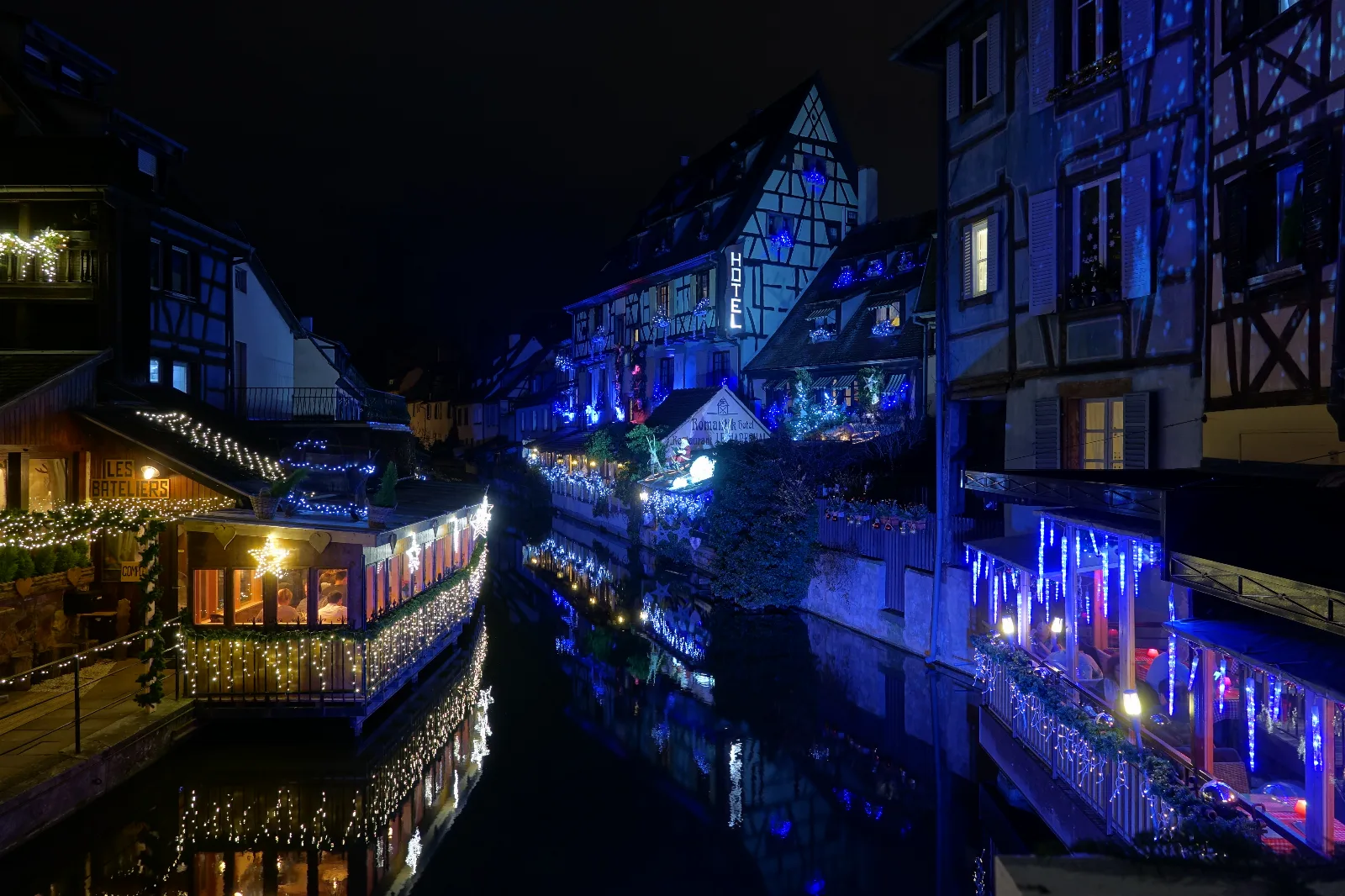
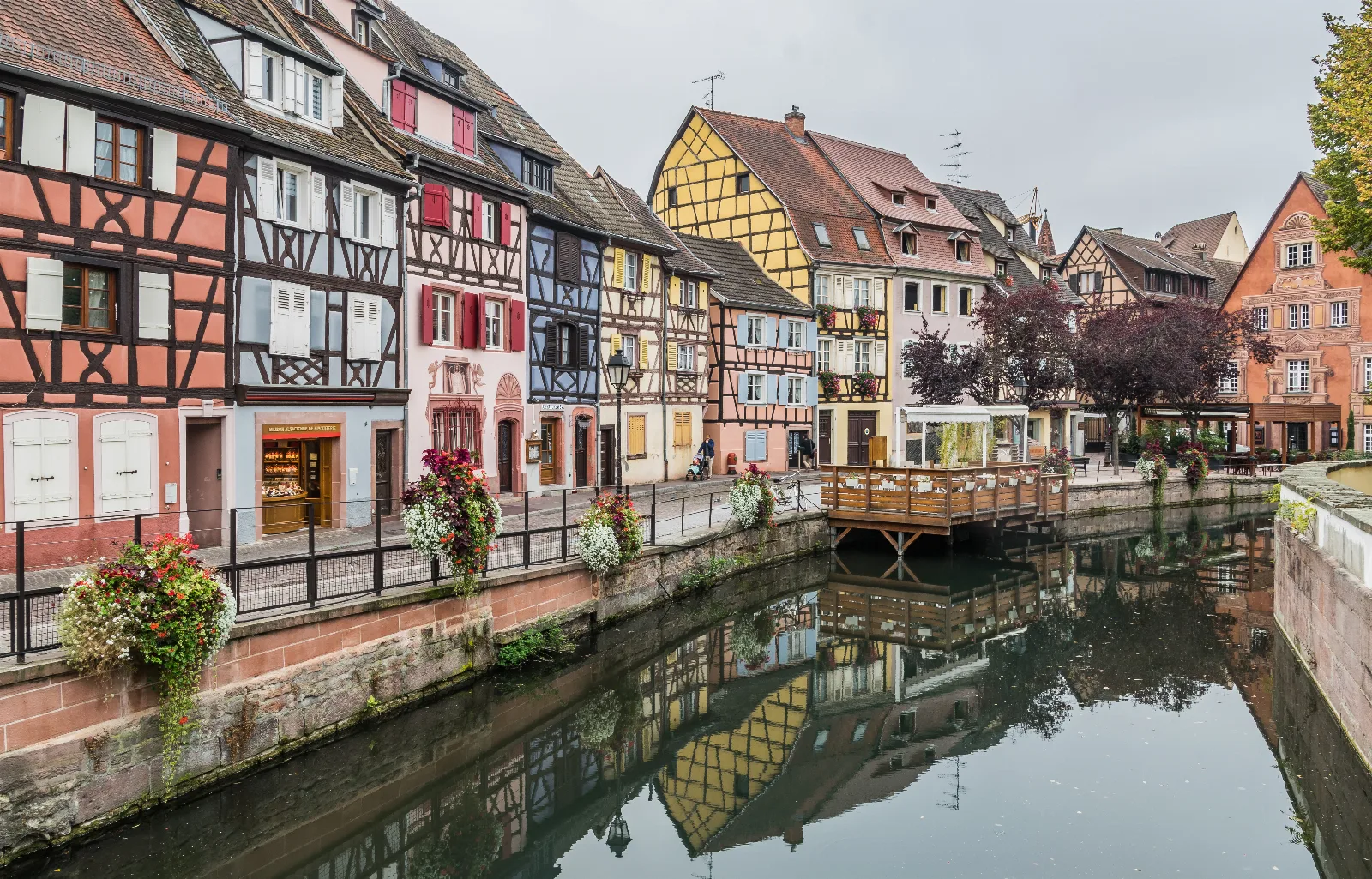
The usual starting point is Petite Venise, the quarter along the Lauch river with colourful half-timbered houses, stone bridges and flower-filled windows. The Colmar tourist office lists it, together with the Maison des Têtes, the Maison Pfister and the Old Customs House (Koïfhus), among the must-sees. Next to it lies the Quai de la Poissonnerie, the former landing of fishermen and boatmen and today one of the most photographed corners of town.
The Maison Pfister, dated 1537 in the sources we read, shows Colmar's move into the Renaissance, with a wooden gallery and painted facade. The Maison des Têtes, dated 1609 by the same source, takes its name from the many carved heads on its front and is topped by a statue of a cooper made by Bartholdi, who was born in Colmar and created the Statue of Liberty. Bartholdi's house and the birthplace of the caricaturist Hansi, whose shop signs still decorate some streets, complete the tourist office's walking list.
One practical tip from travel writers: walk early, before the groups arrive, and step off the main streets. The quieter lanes and small canals repay the detour.
Why does the Unterlinden Museum matter for your plans?
The Unterlinden Museum, housed in a former 13th-century Dominican convent, holds the Isenheim Altarpiece by Matthias Grünewald and Nikolaus Hagenauer, made between 1512 and 1516. The Colmar tourist office describes it as the most visited museum in France outside Paris. Allow a long visit and check opening days and hours on the museum's own website, as they change through the year.
Nearby stands the Saint-Martin collegiate church, built between 1235 and 1365 in Vosges sandstone. It makes a good finish to a rainy afternoon, when museums and churches carry more weight in the plan.
Where should you stay in Colmar?
If you want to see the town without a car, sleeping in the centre pays off. The old town is largely pedestrianised, and being able to go back to your room midday, or step out early into empty streets, is one of Colmar's biggest advantages. On the platform you can look at, for example, L'ambassadeur - Centro de Colmar and Hotel Primo Colmar Centre, both listed in central Colmar. We do not describe star ratings or services here that we have not verified: open each page for the location, photos, cancellation terms and a price for your dates.
An Alsace planning guide compares the two places where most visitors base themselves. Strasbourg, with about 250,000 people, has better train connections, useful if you continue to Switzerland or Germany. Colmar, with about 30,000, is smaller and much easier for parking if you rent a car. The author chose Colmar because she prefers small towns, which illustrates the real criterion: it depends on your itinerary.
How do you use Colmar as a base for the Wine Route?
According to the Colmar tourist office, the Alsace Wine Route is 170 km long, runs from the Marlenheim gate to the Thann gate and was inaugurated in 1953. It is signposted and crosses transitional landscapes between the Rhine plain and the Vosges, with flowered village lanes, medieval ruins and castles such as Haut-Koenigsbourg and Hohlandsbourg. Eguisheim and Riquewihr are the two villages the tourist office text singles out.
Colmar also has a role of its own in wine: the tourist office text notes that the town hosts the CIVA, the Alsace wine commission, and the regional body of the INAO, and that it was shipping wine as early as the Middle Ages. It therefore makes sense to pair a town day with a vineyard day. If you are driving, plan tastings carefully and consult the official wine route site for maps and experiences, including the vineyard cycle route.
Villages hold wine festivals through the year. The tourist office says entry is charged; check the CIVA calendar rather than counting on fixed dates.
When should you go, and how do you get to Colmar?
The guides we consulted point to spring and autumn, with window flowers and the grape harvest, as pleasant seasons, and to late November and December for the Christmas markets. Book far ahead for that period; for a wider look at festive destinations, see our guide to Europe's Christmas markets. Colmar's market dates are announced by the organisers each year, so check the Colmar tourist office before fixing your trip.
For access, a travel platform lists regional TER trains of about 30 minutes from Strasbourg and about 45 minutes from Basel, and about 15 minutes on foot from the station to Petite Venise. Treat these times as indicative and confirm timetables with the rail operators. The nearest airports mentioned are Basel-Mulhouse-Freiburg and Strasbourg.