Vienna Winter Guide: Christmas Markets, Cafes & Museums 2026
25 Oct 2026
Vienna is one of those cities that works in every season, but winter is when it feels most like itself. The grand Ringstraße buildings are lit up, the coffee houses fill with people escaping the cold, and the Advent markets turn squares and palace courtyards into small villages of wooden stalls. If you are weighing up a winter city break for 2026-27, Vienna is an easy choice: compact at its core, well connected by public transport and full of things to do that do not depend on good weather. Below is a practical guide to the Christmas markets, the coffee-house habit, the museums, getting around and the districts worth considering for your stay. You can also browse all the stays we list on the Vienna city page on goaway.pt.
Why Vienna in winter
Winters in Vienna are described as relatively dry and fairly cold, with daily mean temperatures hovering around or somewhat above freezing (the January mean at the Innere Stadt weather station is about 2 degrees Celsius). Snow has become much rarer in the urban core, so do not count on a postcard white city; pack for cold, damp days and plan an itinerary that moves easily between indoors and outdoors.
That suits Vienna well. The historic centre is a UNESCO World Heritage Site (listed in 2001), the Ringstraße was laid out in the second half of the 19th century as a boulevard of grand buildings, monuments and parks, and the museums and cafes are concentrated enough that you can wander between them without long journeys. Searches for Christmas markets in Vienna keep rising year after year, so if you want December, book earlier rather than later.
The Christmas markets
Vienna has a long Advent-market tradition, with sources placing the first December market in the late 13th century and the first Christmas market in its modern form in the 18th. Counts of how many markets there are vary from source to source, from around a dozen to about twenty, so treat any number as approximate. Most open in late November and run through December, closing somewhere between Christmas Day and New Year's Day, with a few staying open for the New Year.
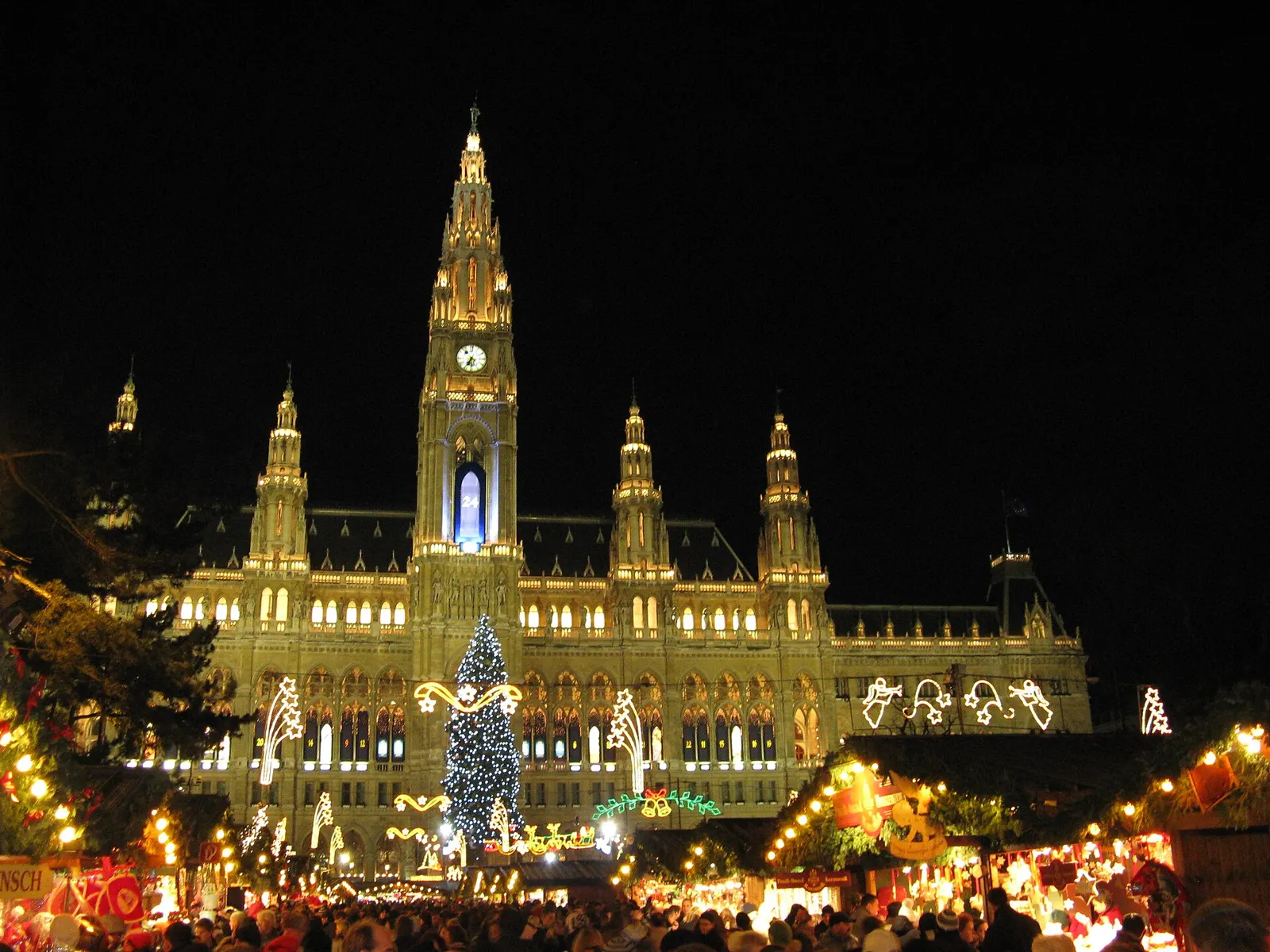
The biggest and best known is the Christkindlmarkt in front of the Rathaus (City Hall), a market that has drawn around three million visitors a year according to Austrian trade sources, complete with an ice rink and a festive park. Beyond it, the markets people most often mention are:
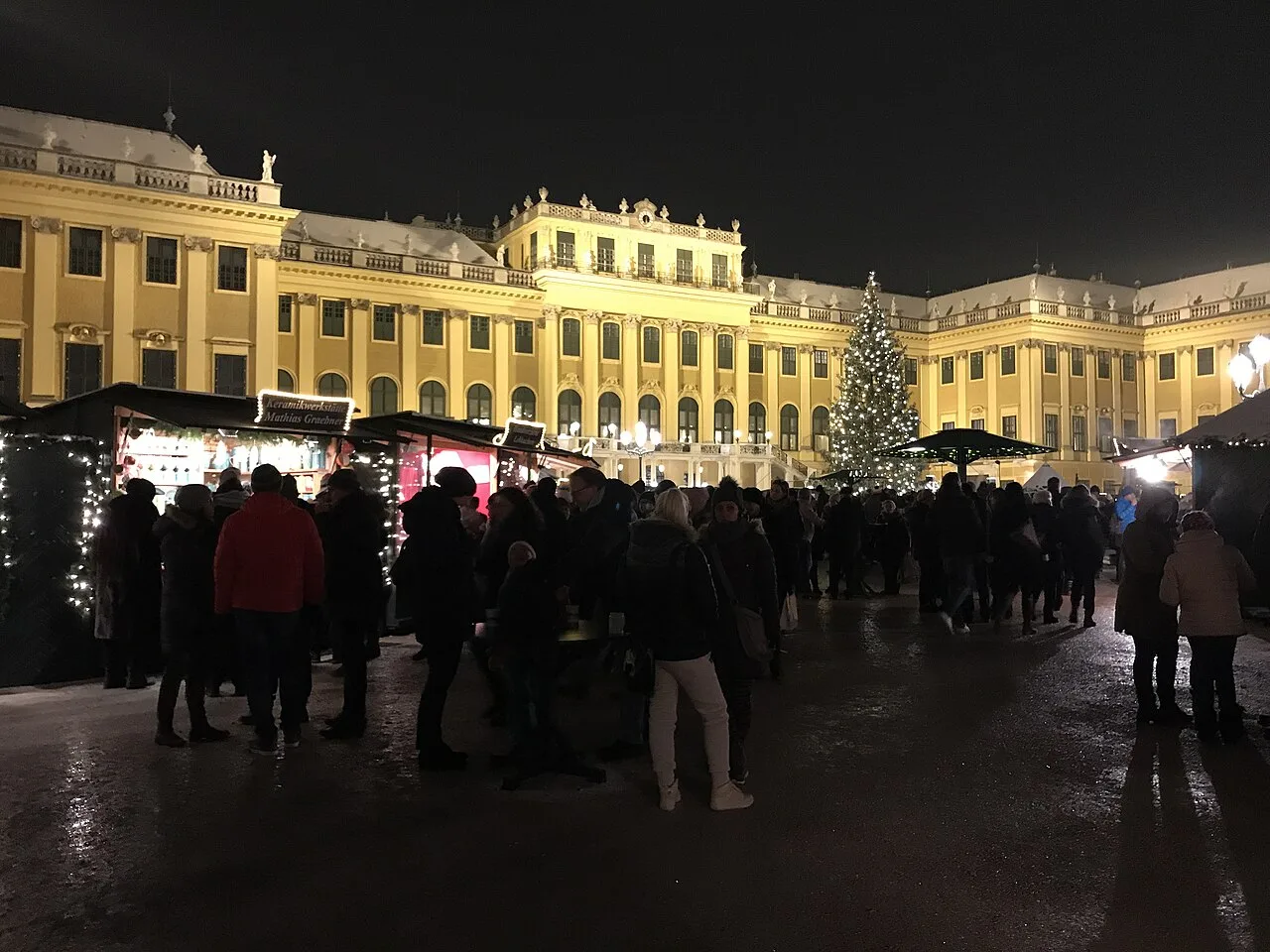
- the market at Schönbrunn Palace;
- Art Advent on Karlsplatz, with a more craft-oriented feel;
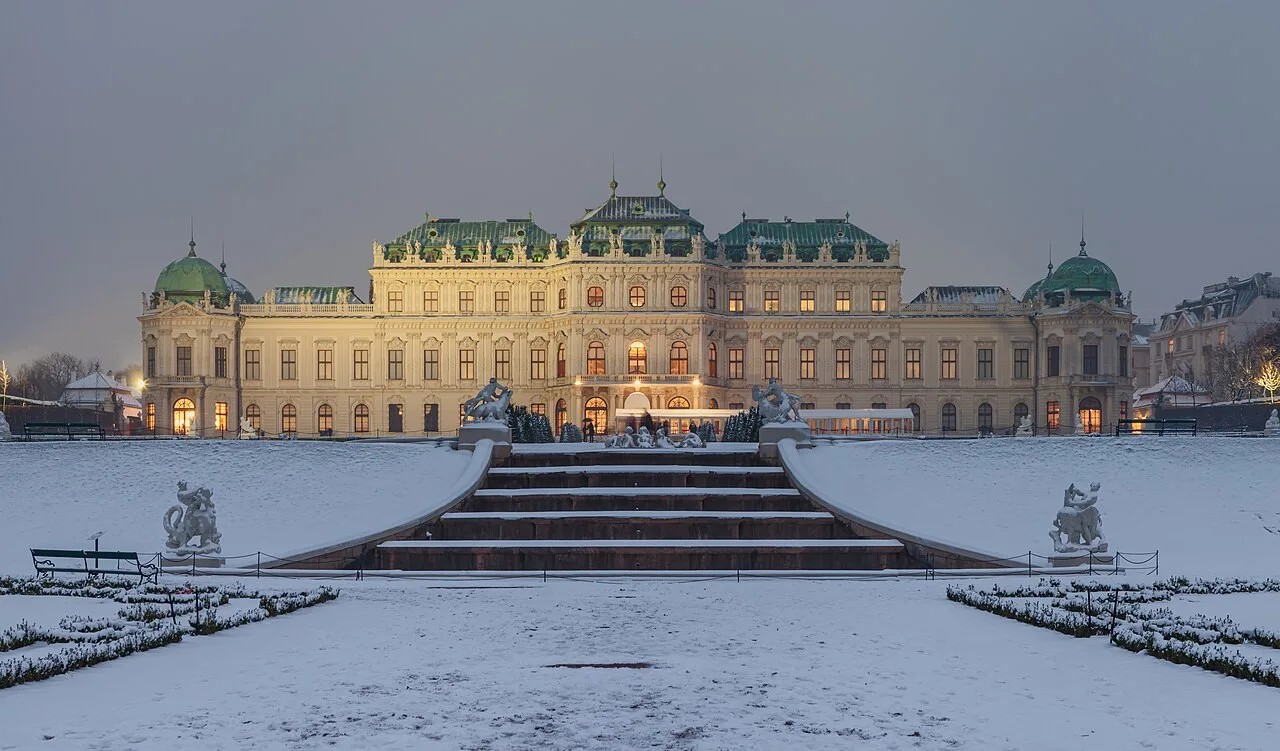
- the Christmas village at Belvedere Palace;
- the Christmas village on Maria-Theresien-Platz, between the two big museums.
Expect Glühwein (mulled wine) and Kinderpunsch, the alcohol-free punch, alongside Kartoffelpuffer (potato pancakes), Lángos, Stollen and Lebkuchen (gingerbread). Opening dates and hours change every year, and we have not seen the 2026 programme, so check the official Vienna tourism website for the exact 2026 dates before you fix your flights. Go on a weekday or in the early evening if you prefer fewer crowds at the Rathaus.
Coffee houses: a winter habit
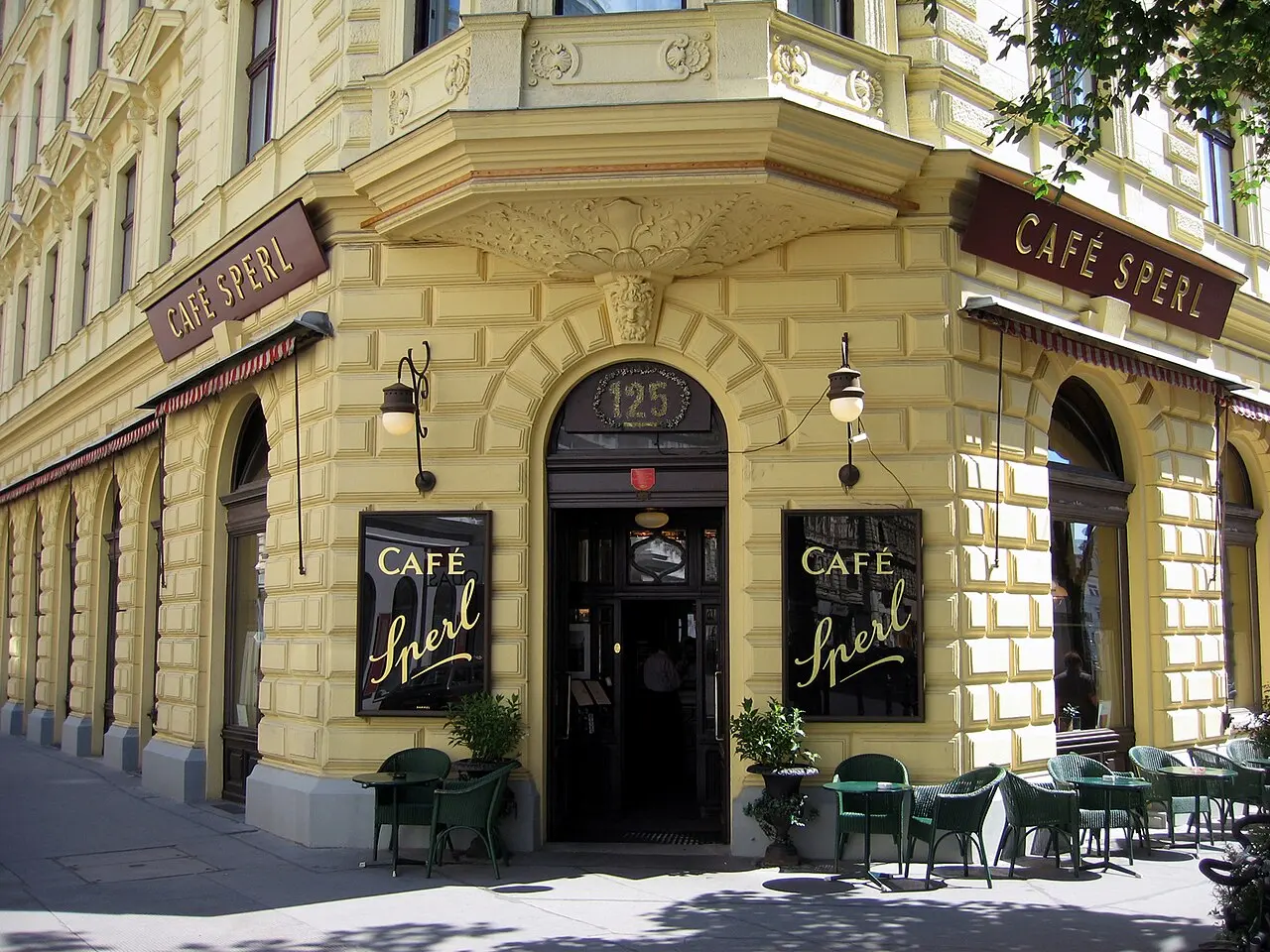
Viennese coffee house culture is on the Austrian UNESCO inventory of intangible cultural heritage (inscribed in 2011), and the inventory describes it as a place where time and space are consumed but only the coffee appears on the bill. That captures the point nicely. You are not expected to order and leave; you can sit with one coffee, a newspaper and a slice of cake for as long as you like.
Typical features include small marble-topped tables, Thonet bentwood chairs, alcoves, newspaper tables and historicist interior details. The tradition is tied to the late 17th century and the aftermath of the Ottoman siege of the city. In winter, a coffee house is the best way to warm up between a museum and a market. Look for the classic old-style rooms rather than only the famous names, and be prepared to wait a little at the best-known ones at peak times.
Museums and indoor plans
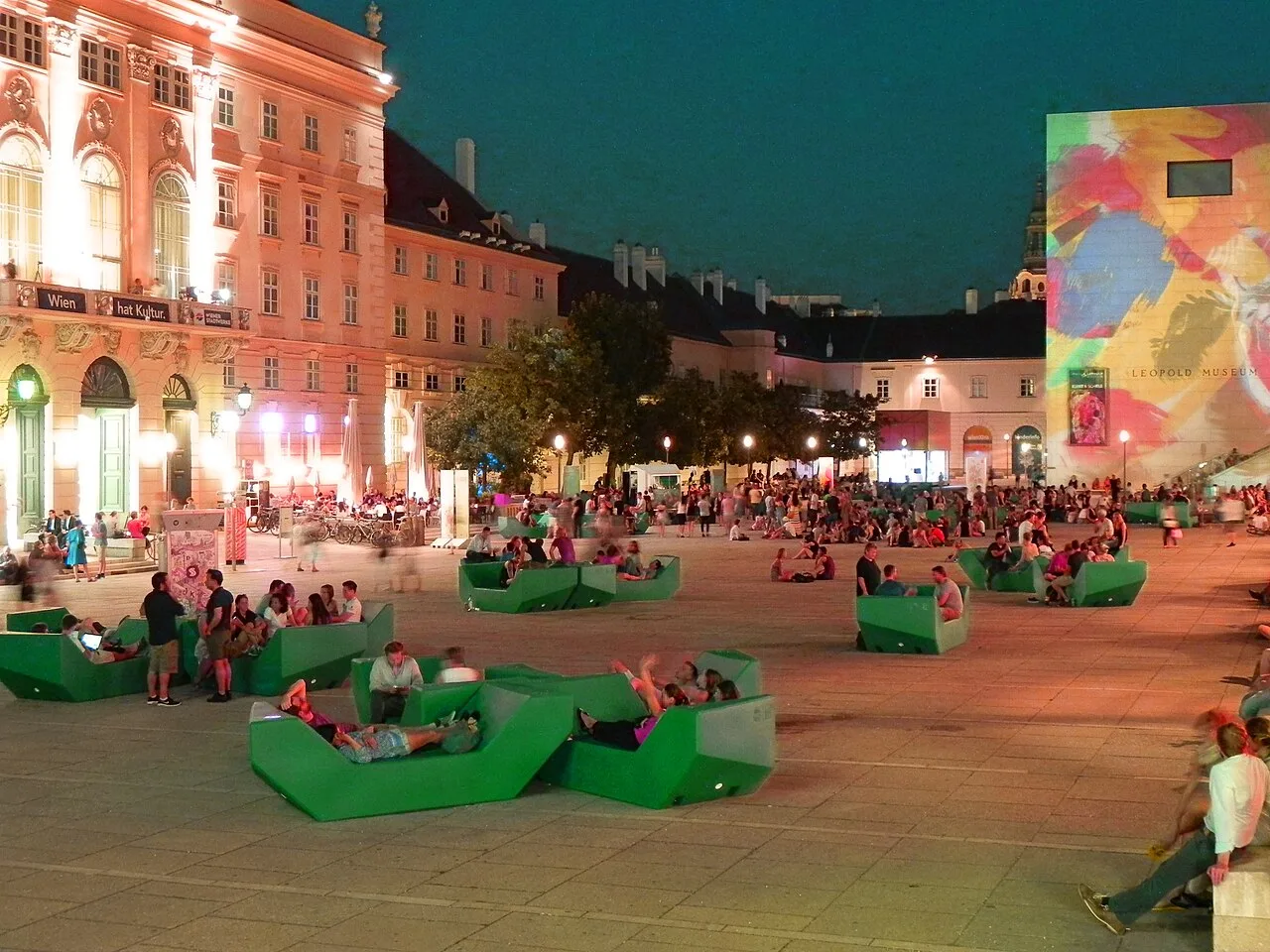
Museums are the natural counterweight to the cold. The MuseumsQuartier in the 7th district (Neubau) opened in 2001 on the site of the former imperial court stables and combines Baroque buildings with contemporary museum architecture. It holds some 61 cultural institutions, including the Leopold Museum and MUMOK, plus the Kunsthalle Wien exhibition space and the ZOOM Children's Museum. The central courtyards are public spaces that can be entered without a ticket, which makes them a pleasant place to pause even on a short visit.
Elsewhere, the Belvedere in the 3rd district and Schönbrunn Palace are two palace landmarks that also host Christmas markets in season. Opening hours and ticket arrangements change, so check each venue's own site before you go, and consider grouping two or three sights per day rather than trying to see everything.
Getting around
Vienna's public transport is run by Wiener Linien and is one of the easiest ways to see the city. The network includes five U-Bahn (metro) lines, 28 tram lines and 134 bus lines. A sixth metro line, the U5, is under construction and was scheduled to open in 2026, so check whether it affects the route you plan to use. Wiener Linien fares are integrated into the regional VOR system, with all city routes lying in its core zone.
Night buses replace daytime services between roughly 00:30 and 05:00, and the U-Bahn has run at 15-minute intervals on weekend nights since 2010. Vienna International Airport is in Schwechat, about 18 km southeast of the centre; check the current train and bus options on the airport and rail operators' websites.
Where to stay: districts to consider
Vienna has 23 numbered districts, and the number loosely reflects when each area joined the city. A few are especially useful for a short break:
- 1st, Innere Stadt: the historic centre, with many historical sites and few residents. Best if you want to walk everywhere.
- 2nd, Leopoldstadt: an island between the Danube and the Donaukanal, home to the Prater and its Giant Wheel.
- 3rd, Landstraße: on the far side of the Donaukanal, including the Belvedere.
- 6th and 7th, Mariahilf and Neubau: small districts along the main shopping street towards Westbahnhof, with the MuseumsQuartier in Neubau.
- 8th and 9th, Josefstadt and Alsergrund: close to the Rathaus and the university, with Sigmund Freud's former residence in Alsergrund.
On goaway.pt you can find options such as Hotel Kaffeemühle, Pertschy Palais Hotel and Mavie Hotel Domenig, all listed for Vienna. Check each listing for its exact location and compare it with the districts above, and keep in mind that a place near a U-Bahn or tram stop can be as practical as one in the very centre.
Plan your stay
Give Vienna three or four days in winter: one for the Ringstraße and the centre, one for museums and a long coffee-house stop, one for a palace and one for the markets in the evening. Confirm the 2026 market dates, check museum hours, and choose a district that matches how you like to travel. Then compare the stays available in Vienna on goaway.pt and book the one that fits.