Bucharest: what to see in 2-3 days and where to stay
24 Nov 2026
Bucharest rewards two to three days, and the most practical base is the historic centre: the Old Town (Centrul Vechi) or the streets around Calea Victoriei. From there the Palace of the Parliament viewpoint, the Old Town churches, the Romanian Athenaeum and the central squares are within walking distance. The city's character is in its layers: Orthodox churches, nineteenth-century concert halls and French-inspired facades standing next to communist-era blocks.
This guide draws on Wikipedia's entries for the city and its best-known building and on a Portuguese travel-blog itinerary updated in February 2026. Opening times and ticket rules change, so confirm them with each venue before you go.
What is Bucharest, and why does its size matter for planning?
Bucharest is the capital and largest city of Romania, standing on the Dâmbovița river in the south-east of the country. It is officially estimated at 1.71 million residents, with 2.33 million in the wider metropolitan area, and covers 239 square kilometres divided into six sectors. It is a big city, but the sights you will want cluster in a compact central area, which is why the choice of where to sleep matters more than almost anything else.
What can you see in one day?
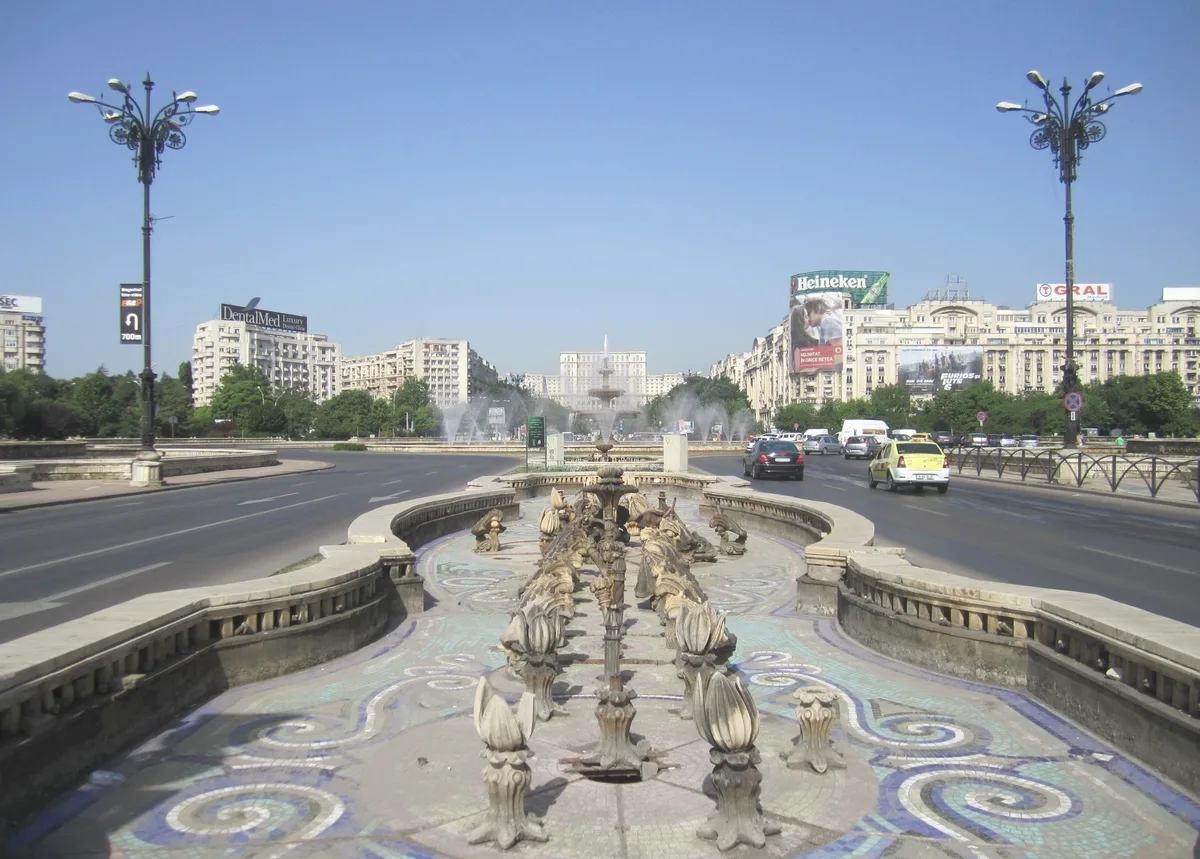
The itinerary this guide is based on starts at Piața Unirii, one of the best places to look toward the Palace of the Parliament. From there it goes to the Patriarchal Cathedral of Saints Constantine and Helen, seat of the Romanian Orthodox Church since the seventeenth century, with the Patriarchal Palace of 1708 beside it. The afternoon belongs to the Old Town and Calea Victoriei, and the day ends at Revolution Square and University Square.
What is in the Old Town (Centrul Vechi)?
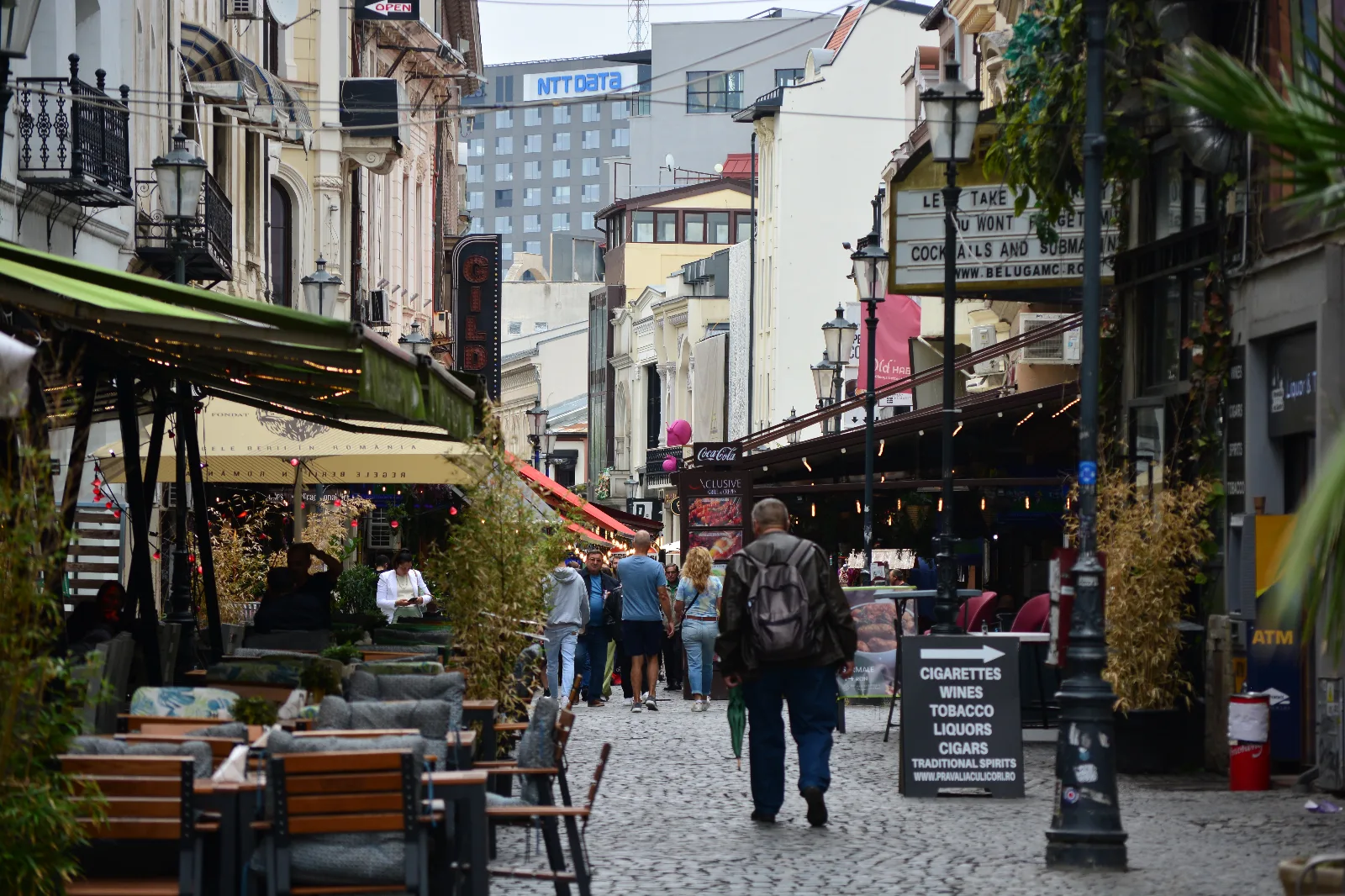
The Old Town is the oldest part of the city and one of the few areas where older buildings survived the communist period. Strada Lipscani has been the commercial heart of Bucharest almost since its foundation. Main stops include:
- Stavropoleos Church, a Greek Orthodox church built in 1724, with a small monastery community.
- Manuc's Inn, the oldest inn in the city and a place to try Romanian dishes such as sarmale (stuffed cabbage), mici (grilled minced-meat rolls) and papanasi (fried doughnuts with sour cream and berry jam).
- Caru cu Bere, a restaurant dating from 1879 with a neo-Gothic interior.
- Carturesti Carusel, a bookshop at number 55 Strada Lipscani with a cafe on the top floor overlooking the old town.
- Macca-Villacrosse Passage, a glass-domed arcade linking the National Bank of Romania with Calea Victoriei.
Why walk along Calea Victoriei?
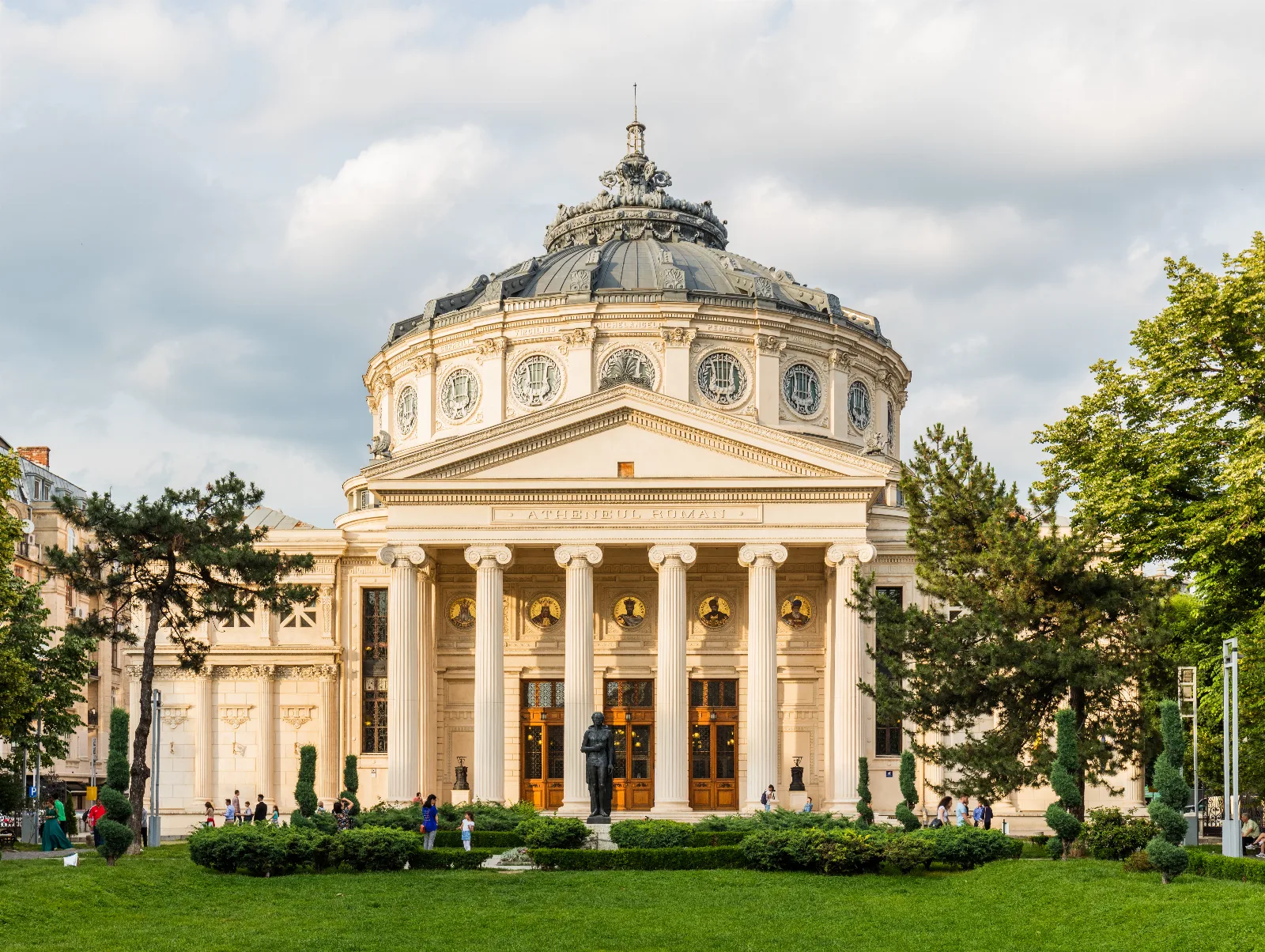
Calea Victoriei, the Victory Avenue, is named after Romania's victory over the Ottoman Empire at the end of the War of Independence in 1878. French influence in the 1930s earned Bucharest the nickname Little Paris, and it is most visible here. Look for the CEC Palace with its glass central dome, the National History Museum in the former post office palace, the Cantacuzino Palace (now the George Enescu National Museum) and the Romanian Athenaeum, a nineteenth-century concert hall whose interior is worth seeing. Our source notes that the avenue is often closed to traffic at weekends; check before relying on it.
Is the Palace of the Parliament worth a visit?
Yes, if you like extreme buildings. The Palace was designed in communist times as the People's House and now houses the Romanian Parliament. It is 84 metres high, has a floor area of 365,000 square metres and is described as the heaviest building in the world and the largest civilian administrative building, with only the Pentagon larger among administrative buildings. Guided visits of the interior exist, and a wing houses a museum of contemporary art with a cafe on the top floor. Check the official visitor information before you go. The unfinished National Cathedral stands right next to it.
Where should you stay in Bucharest?
The itinerary this guide is based on recommends the centre: either Centrul Vechi or near Calea Victoriei. The Old Town puts you among restaurants and evening activity around Strada Lipscani, so expect it to be lively after dark. Staying near Calea Victoriei puts you close to the museums, the Athenaeum and the squares. In both cases you can leave the metro for the Palace and the parks. You can compare the stays listed on our Bucharest page.
How do you get around?
The Old Town and Calea Victoriei are easy to cover on foot. For everything else the same source recommends the metro, because the city is large and its avenues are long.
When is the best time to go?
The source suggests April to June and September to October. July and August can pass 30 degrees Celsius, while the winter from November to the end of March is quite cold, with temperatures below zero and snow. A winter city break is still possible if you plan indoor stops such as the Athenaeum, museums and the Old Town cafes.
What do two and three days add?
On day two, visit the inside of the Palace of the Parliament and the contemporary art museum, see the National Cathedral, and return to the Old Town for Saint Anthony's Church, Saint Dimitrie's Church and the Carturesti bookshop, then Casa Capsa and the Athenaeum on Calea Victoriei. Day three adds the National History Museum, a walk or bike ride in Herastrau Park and the Village Museum, an open-air ethnographic museum with traditional houses and churches brought from different regions of Romania.
If you are building a longer trip across the region, you can compare Bucharest with Budapest and Sofia, or read our Budapest winter guide for another capital with a cold-season focus.