Which of Portugal's Five Coasts Is Right for You
17 Sep 2026
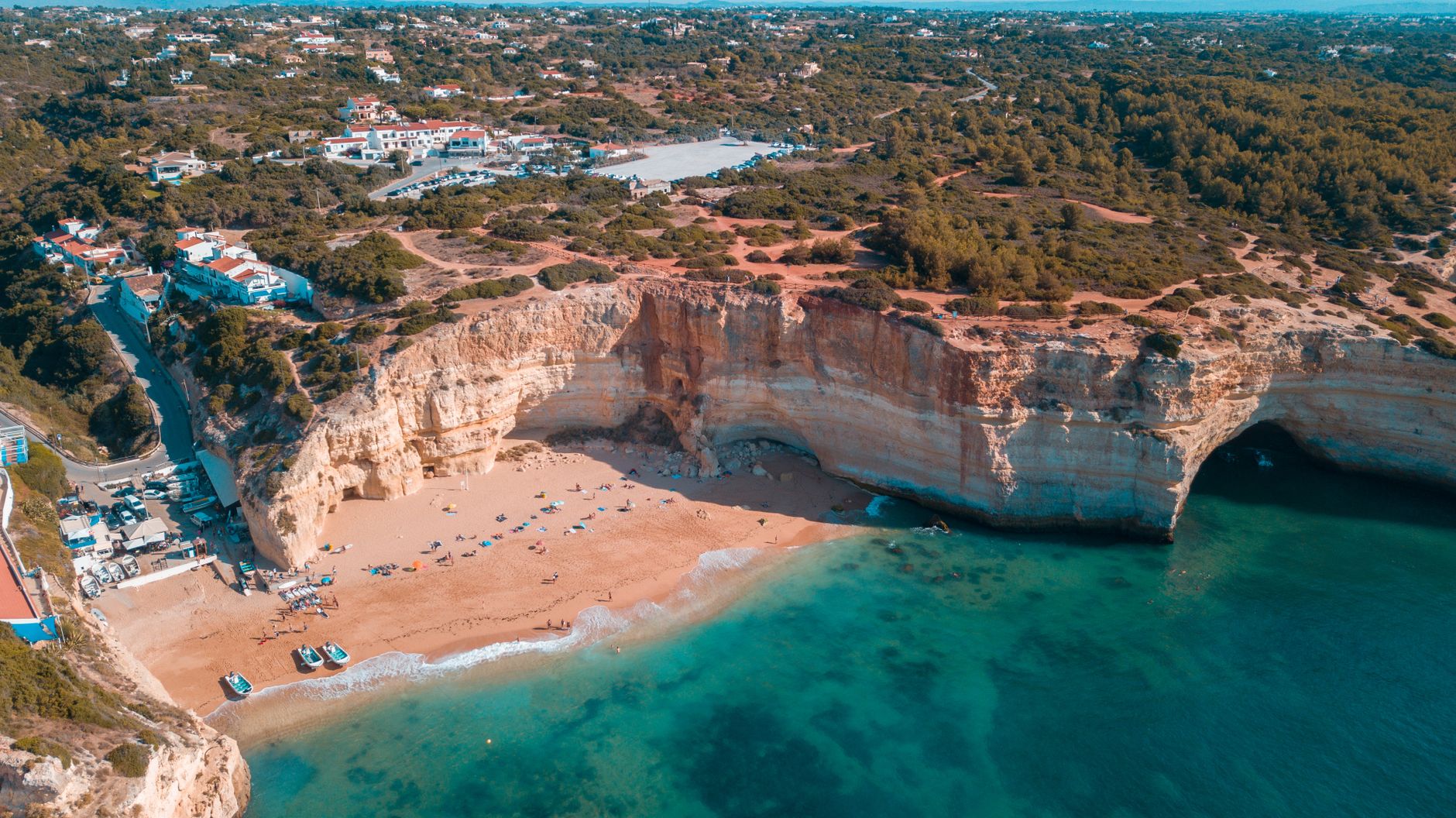
Portugal awarded 396 Blue Flags to its beaches in 2026 — 350 coastal and 46 inland — out of 438 in total. For a country you can drive end to end in six hours, that is an absurd concentration of certified coastline.
The problem for a first-time visitor is not finding a good beach. It is that Portugal does not have one coast, it has five, and they behave nothing like each other. The water temperature, the wind, the crowds and the entire character of a day change depending on which one you pick. Choose wrong and you will spend a week being sandblasted when you wanted to swim.
Here is how to choose. For the beach-by-beach detail — access, facilities, tides, what each one is actually like — the specialist guide is Praias de Portugal, which covers 328 of them.

1. The Algarve — if you want warm water and postcards
The south coast faces the Mediterranean rather than the open Atlantic, and it shows: 21–23 °C in August, against 16–19 °C almost everywhere else. This is the Portugal of ochre cliffs, sea stacks and coves reached down a wooden staircase.
The icons are Praia da Marinha, whose twin arches appear on half the country's tourism posters, and Benagil, whose sea cave — open to the sky through a hole in the roof — you reach only by boat or kayak, never on foot. Camilo near Lagos is 200 steps down to two linked coves. If the small ones feel crowded, Falésia runs for six kilometres and you can always walk away from people.
Where to base yourself: Lagos
If you want one town and five genuinely different beaches inside a few kilometres, it is Lagos. The old town is still walled, the cliffs at Ponta da Piedade are the most sculpted on the coast, and you can walk to a beach from dinner.
Camilo and Dona Ana are the cliff coves — small, golden, reached by long wooden staircases, and the reason Lagos is on every itinerary. Porto de Mós sits at the western end below a headland and is noticeably calmer. Meia Praia is the opposite proposition entirely: four kilometres of open sand curving away from the marina, flat, uncrowded even in August, and the one to choose with small children or a windsurf board. Six kilometres west, Praia da Luz is a self-contained village beach with a gentler entry to the water.
That range is what makes Lagos unusual: most Algarve towns give you one kind of beach. → All beaches in the Lagos municipality
Pick this coast if: you want to swim comfortably, you are travelling with children, or it is October and you still want a beach. → All Algarve beaches
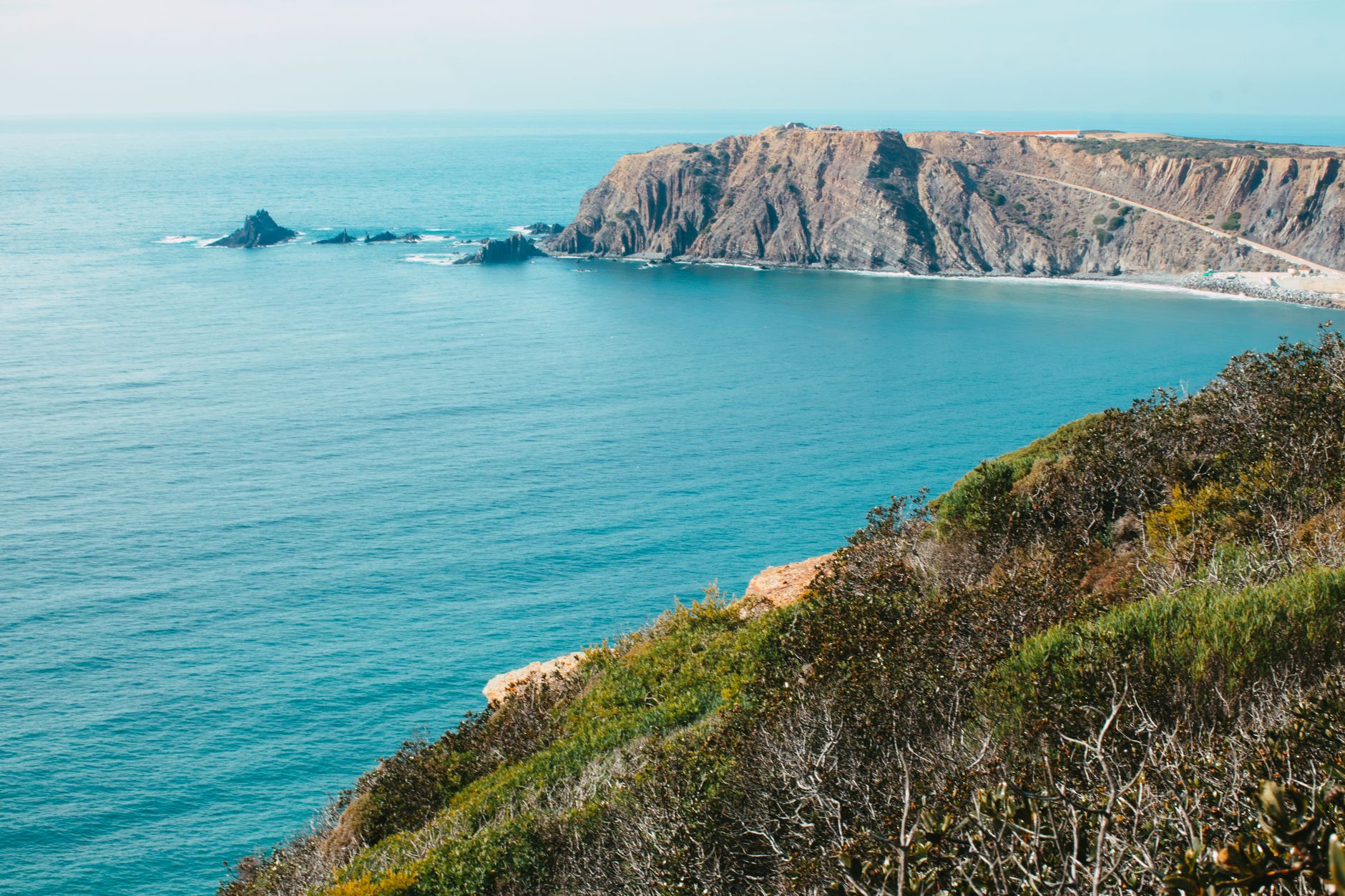
2. The Costa Vicentina — if you want the wild version
Round the corner at Sagres and the coast turns. This is a protected natural park: windswept, empty, and several degrees colder. The swell is serious and the beaches are spectacular precisely because almost nothing has been built on them.
Arrifana is a horseshoe bay below a cliff-top village with one of the most consistent surf breaks in the country. Bordeira is an enormous flat expanse where a stream forms a shallow lagoon at low tide — children in the lagoon, surfers far out. Odeceixe sits where the Seixe river meets the Atlantic and marks the border with the Alentejo: river on one side, ocean on the other, and you choose your temperature.
Pick this coast if: you surf, you walk, or crowds are the thing you are escaping. → All Costa Vicentina beaches
3. The Alentejo — if you want nobody there
Between Odeceixe and Setúbal, Portugal simply stops building. This is the emptiest developed coastline in southern Europe, and that is the entire point of it.
Comporta has become fashionable with prices to match, but the sand is still kilometres of unbroken dune backed by rice fields and umbrella pine. Further south, Vila Nova de Milfontes sits on the Mira estuary and gives you calm river swimming beside an exposed ocean beach — a useful combination with small children.
Pick this coast if: you want space more than facilities. → All Alentejo coast beaches
4. The Lisbon coast — if you are already in the city
Few capitals put a swimmable Atlantic beach half an hour from the centre on a suburban train. Carcavelos is the big, easy one, straight down the Cascais line from Cais do Sodré. Guincho, past Cascais under the Sintra hills, is its opposite: a windsurfing venue more than a sunbathing one, and frequently unswimmable.
Pick this coast if: you have a city trip and one spare afternoon. → All Lisbon coast beaches
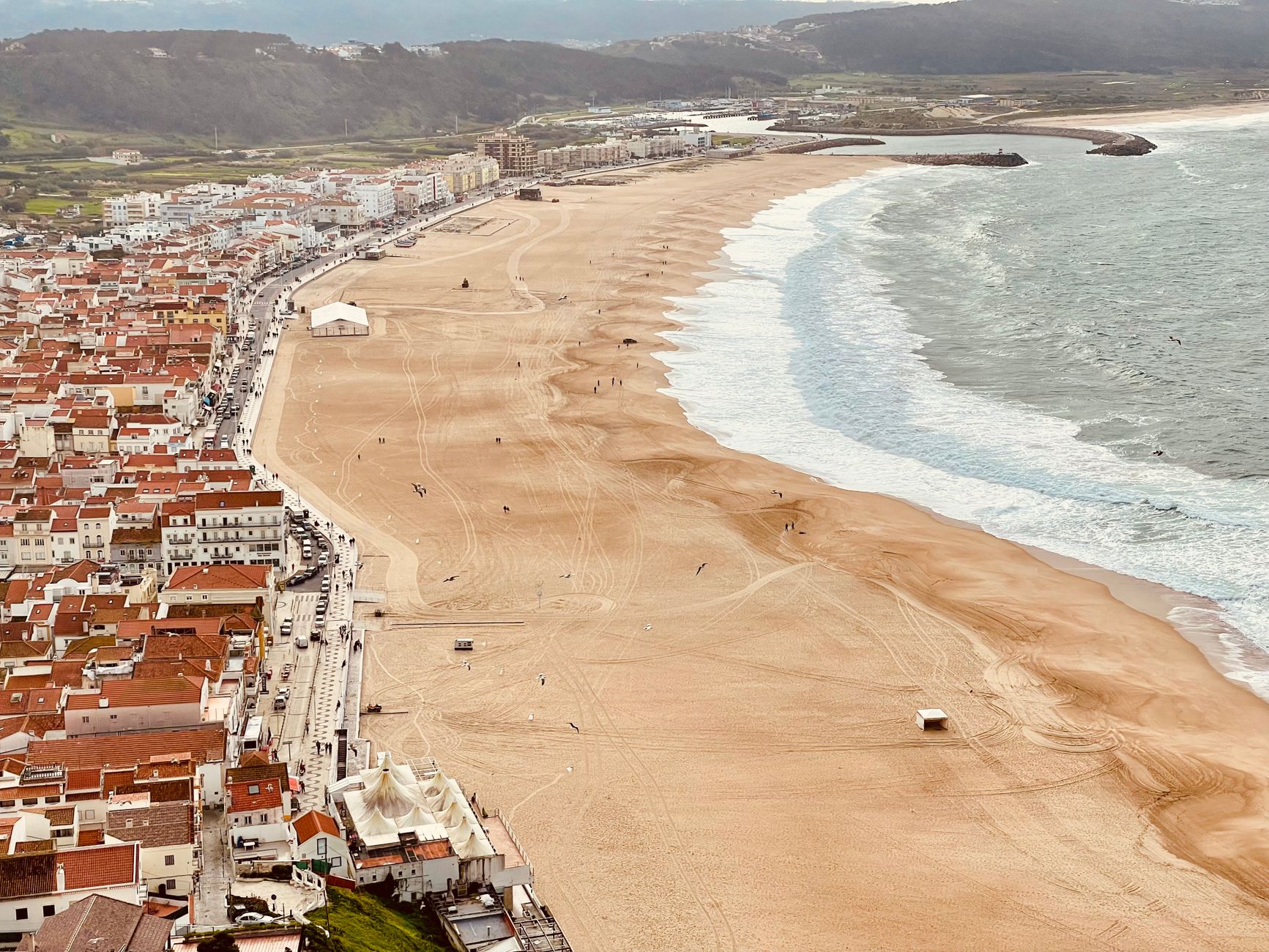
5. Centre and North — if you came for the Atlantic itself
Nazaré needs no introduction: the underwater canyon off Praia do Norte focuses swell into the largest waves ever surfed, and winter has turned a fishing town into a pilgrimage. The town beach is calm and ordinary in summer — the monster is round the headland.
North of there the water rarely passes 18 °C even in August, and the beaches belong to Portuguese families rather than to tourism. → Costa de Prata · Costa Verde
And the islands, which break all of the above
Mainland Portugal is Atlantic-cold. Madeira is volcanic and mostly rocky, but neighbouring Porto Santo has nine uninterrupted kilometres of golden sand and the warmest sea under the Portuguese flag. In the Azores, the beaches are black volcanic sand and the water is cool but astonishingly clear.
Three things nobody tells you
The flags mean exactly one thing each
Green: swim. Yellow: wade, do not swim. Red: stay out. Chequered black and white: the lifeguard is off duty and the beach is unsupervised. Atlantic rip currents here are strong, and the flags are not advisory.
The nortada will ruin your afternoon
From June to September a persistent northerly wind picks up along the west coast most afternoons. It is why a perfect morning turns into a sandblasting by three, and why locals go early. The south-facing Algarve is sheltered from it.
A wetsuit is normal in July
Cold upwelling runs down the west coast all summer. 16–19 °C is not a bad week — it is the standing temperature. Only the Algarve and the islands are genuinely warm.
Once you know which coast you want, Praias de Portugal has the individual beaches: 328 of them, by region and by municipality, with access, facilities and what each one is actually like.